A snub nose is one of the more recognizable nose shapes. It sits short on the face, carries a noticeable upward rotation at the tip, and shows slightly more nostril from the front than most other shapes. The overall appearance is compact and lifted. Many people recognize the shape immediately but struggle to describe exactly what creates it. To explore other nose shapes and how they differ, visit the complete nose types guide here.
This article explains the snub nose from a structural perspective. It covers tip rotation, bridge shape, front view, side view, and natural variation across individuals. A snub nose often shows stronger upward rotation than a button nose, which is why the two shapes are sometimes confused.
Quick Summary
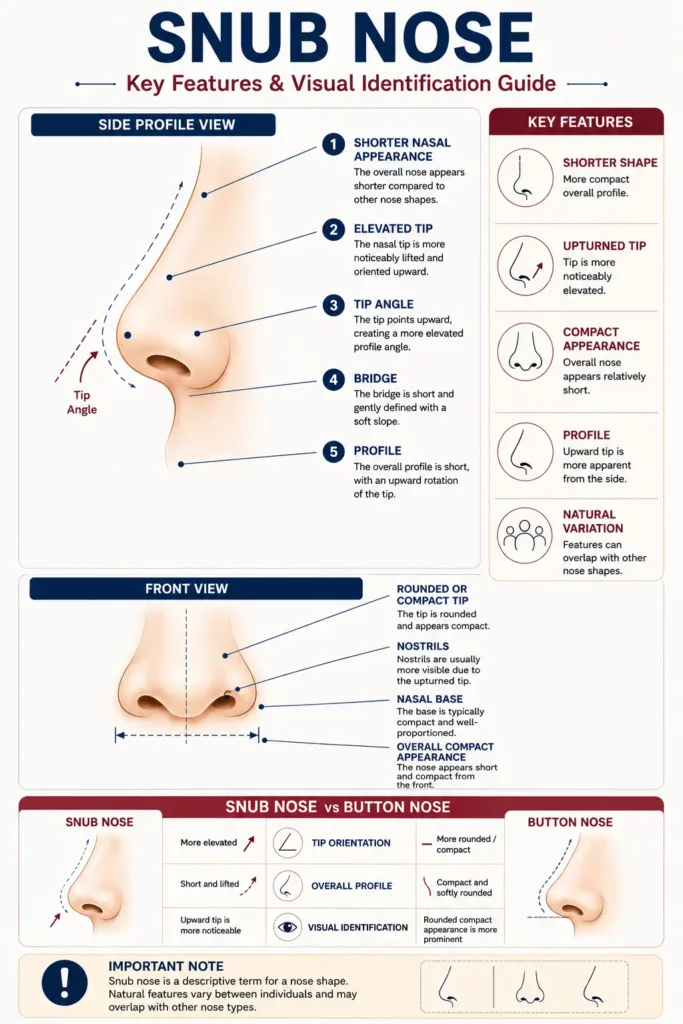
A snub nose is defined by three core traits. The nasal length is short. The tip rotates noticeably upward. The nostrils are partially visible from a straight-on view. The bridge tends to be low or slightly concave, and the tip-to-bridge transition often appears abrupt compared to other shapes. These features combine to give the nose its characteristic lifted, compact look.
Structural Characteristics of a Snub Nose
The snub nose has several consistent structural features. Nasal length is shorter than average. The tip points upward at a visible angle. The nostrils face slightly forward and upward rather than directly downward.
Nasal projection, meaning how far the tip extends from the face, tends to be moderate to low. The tip does not protrude dramatically. It sits close to the face while still maintaining a rounded, defined shape.
Nostril visibility is a key identifying feature. Because the tip rotates upward, the underside of the nose becomes more visible from a neutral frontal angle. This is not a flaw. It is a direct result of how the tip cartilage is positioned.
Bridge height varies between individuals. Some snub noses feature a noticeably low bridge. Others have a moderate bridge that drops sharply before the tip angles upward. This variation affects overall profile appearance but does not change the core shape classification.

Tip Rotation and Nasolabial Angle
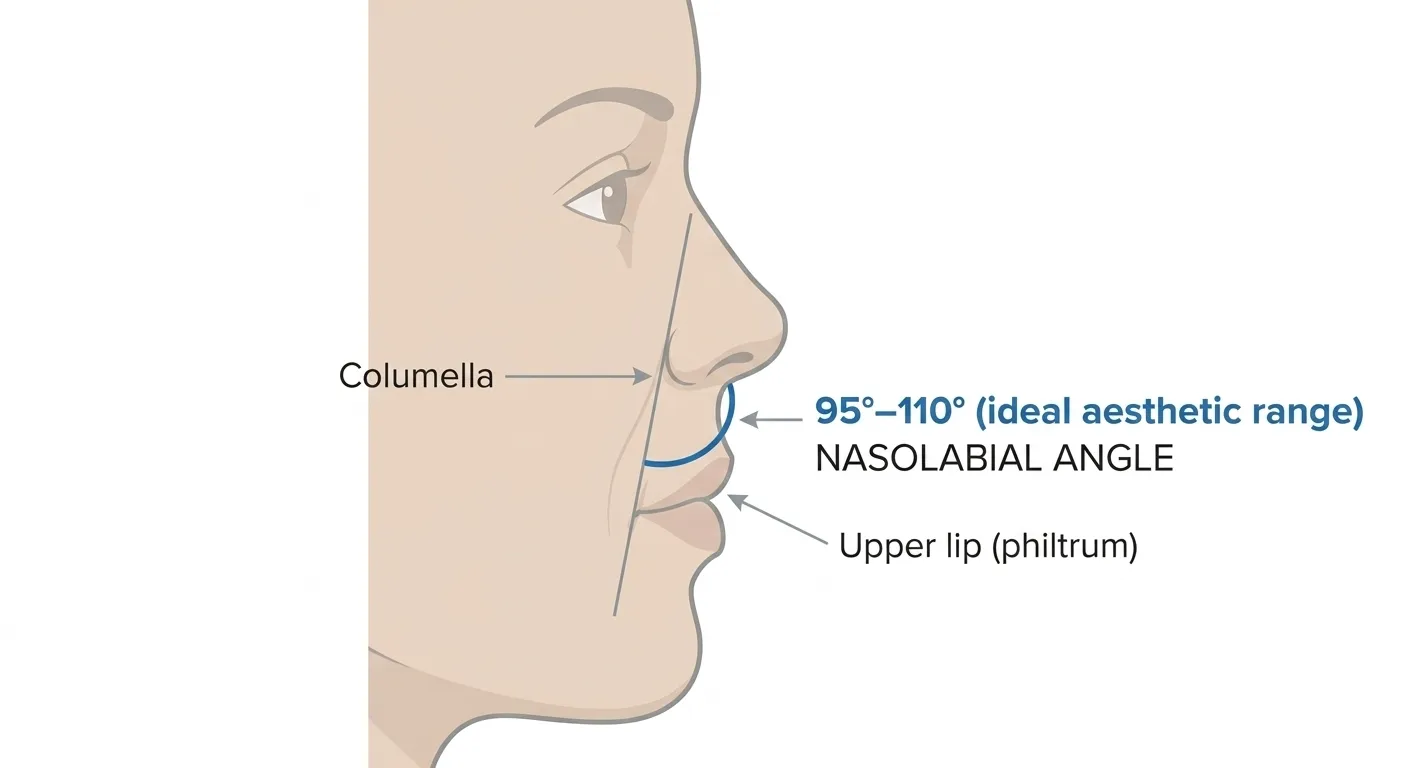
The nasolabial angle measures the angle between the upper lip and the base of the nose. On most faces, this angle falls between 90 and 120 degrees. A snub nose typically carries an angle above 115 degrees. Some reach closer to 130 degrees.
This higher angle is what creates the upward tilt. The tip does not simply sit flat or curve gently. It rotates upward past the midpoint, giving the nose its characteristic lifted appearance. From the side, the tip appears to point slightly toward the sky rather than straight ahead.
The rotation also affects how the columella, the strip of tissue between the nostrils, sits. On a snub nose, the columella often appears shorter than on longer nose shapes. The nostrils fan outward slightly, reinforcing the open, upturned look.
Understanding this angle helps explain why the snub nose looks the way it does. The tilt is structural, not superficial. It comes from the position of the lower lateral cartilage and the angle at which the tip is set.
Bridge and Upper Nose Structure
The nasal bridge on a snub nose tends to sit low or follow a mild concave curve. The dorsal line, running from between the eyebrows down to the tip, does not follow a straight or convex path on most snub noses. It often dips slightly or transitions unevenly before the tip rotates upward.
This creates a visible break in the profile line. The upper nose may appear relatively flat or gently sloped. Then the tip curves or tilts upward more sharply. This contrast between a lower bridge and an upturned tip is one of the defining visual characteristics of the shape.
Some snub noses show a smooth bridge with a gradual slope. Others display a more noticeable shift in angle between the mid-nose and the tip. Both fall within the range of snub nose variation. The bridge alone does not define the shape, but it contributes significantly to the overall profile impression.
Front View Appearance
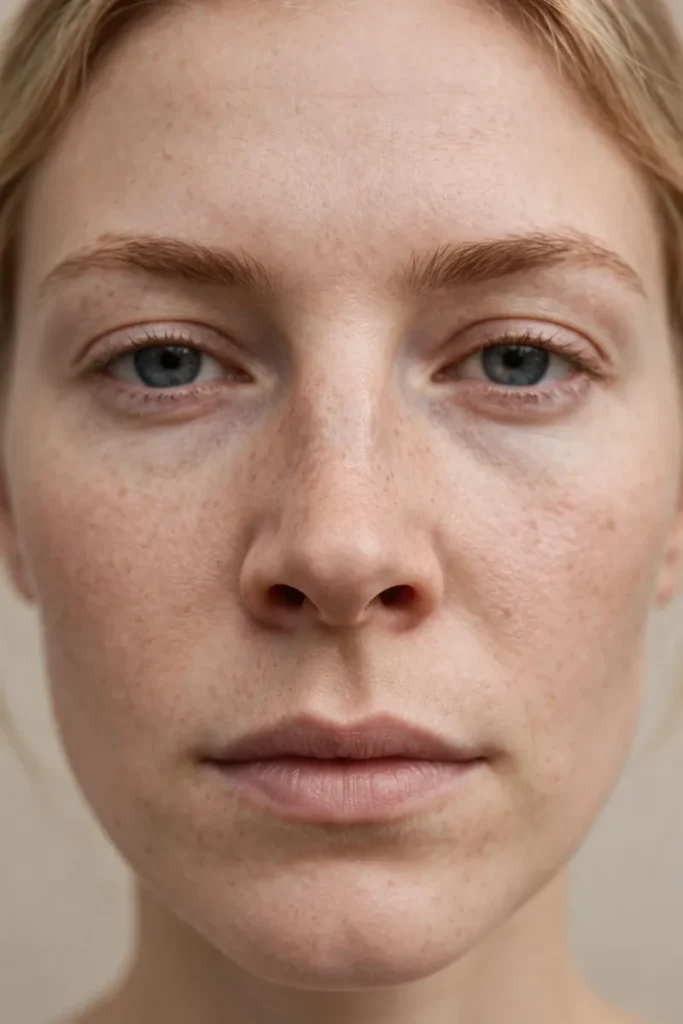
Viewed from the front, a snub nose looks compact and rounded. The tip sits centrally and appears relatively close to the face. Width is moderate, neither especially narrow nor especially wide. The overall impression is of a small, even nose.
Nostril visibility is what sets the frontal view apart. Because the tip tilts upward, the nostrils are slightly exposed even when looking straight at the face. The degree of visibility varies by individual, but it is consistently more pronounced than on a straight or downturned nose shape.
The rounded tip dominates the lower portion of the nose in this view. It appears soft and defined without projecting sharply outward. The transition from tip to nostril is smooth on most snub noses, contributing to an overall balanced appearance from the front.
Side Profile Appearance
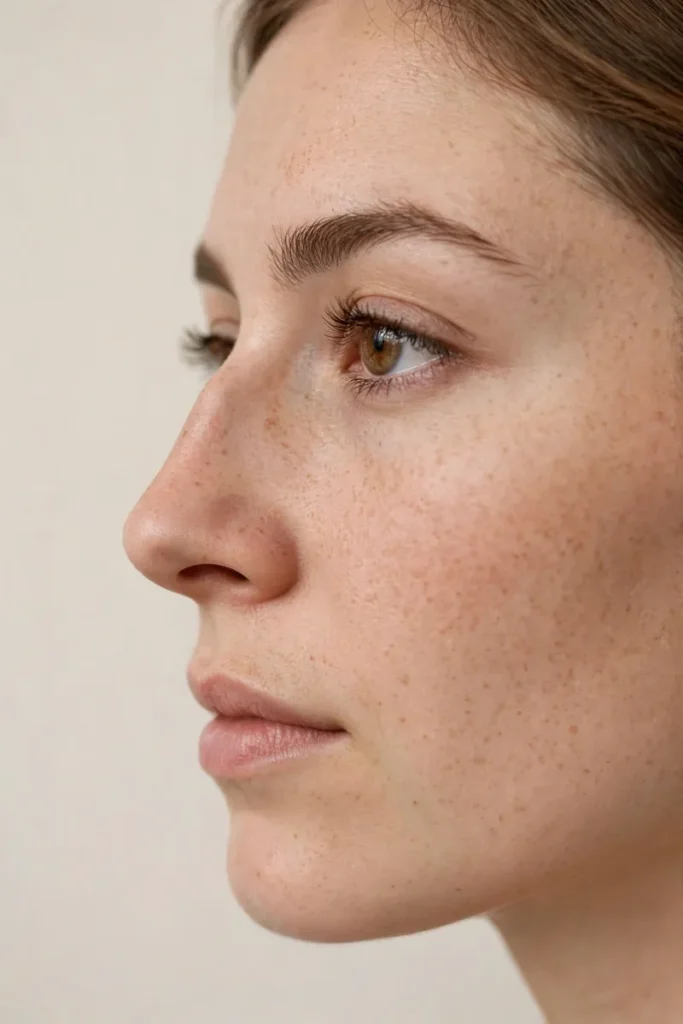
The profile is where the snub nose is most clearly identifiable. The bridge slopes downward from the forehead. Before reaching a conventional tip position, the nose shifts direction. The tip tilts upward rather than continuing straight ahead or curving down.
This creates a distinctive profile shape. The lower portion of the nose appears to lift away from the face. The columella becomes visible from the side. The overall silhouette is shorter than most other nose shapes.
Projection in profile is often modest. The tip does not extend far from the face plane. This reinforces the compact, close-set appearance that makes snub noses recognizable. Lighting and camera angle can affect how dramatic the tilt appears. Overhead lighting tends to accentuate the upward rotation. Straight-on lighting tends to soften it.
Understanding this helps when identifying the shape from photographs. The most reliable angle for identification is always the true side profile.
Natural Variation
No two snub noses are exactly alike. The shape exists on a spectrum, and individual variation is wide. Genetics determine the underlying bone structure and cartilage positioning. Skin thickness affects how soft or defined the tip appears. Facial proportions influence how prominent the shape looks relative to the rest of the face.
Some people have a mild snub shape with a modest upward rotation. Others carry a more pronounced tilt that is immediately visible. Both are snub noses. The label describes a general structural tendency, not a single fixed appearance.
Ethnicity and ancestry also play a role. The snub nose shape appears across many different populations. Its features may combine with other inherited traits, such as a wider or narrower bridge, to create different overall appearances while still retaining the core structural classification.
The cartilage structure at the tip is the most important inherited factor. The angle and strength of the lower lateral cartilages determine how the tip sits and rotates. These structures are set at birth and remain relatively stable throughout life.
Snub Nose vs Button Nose
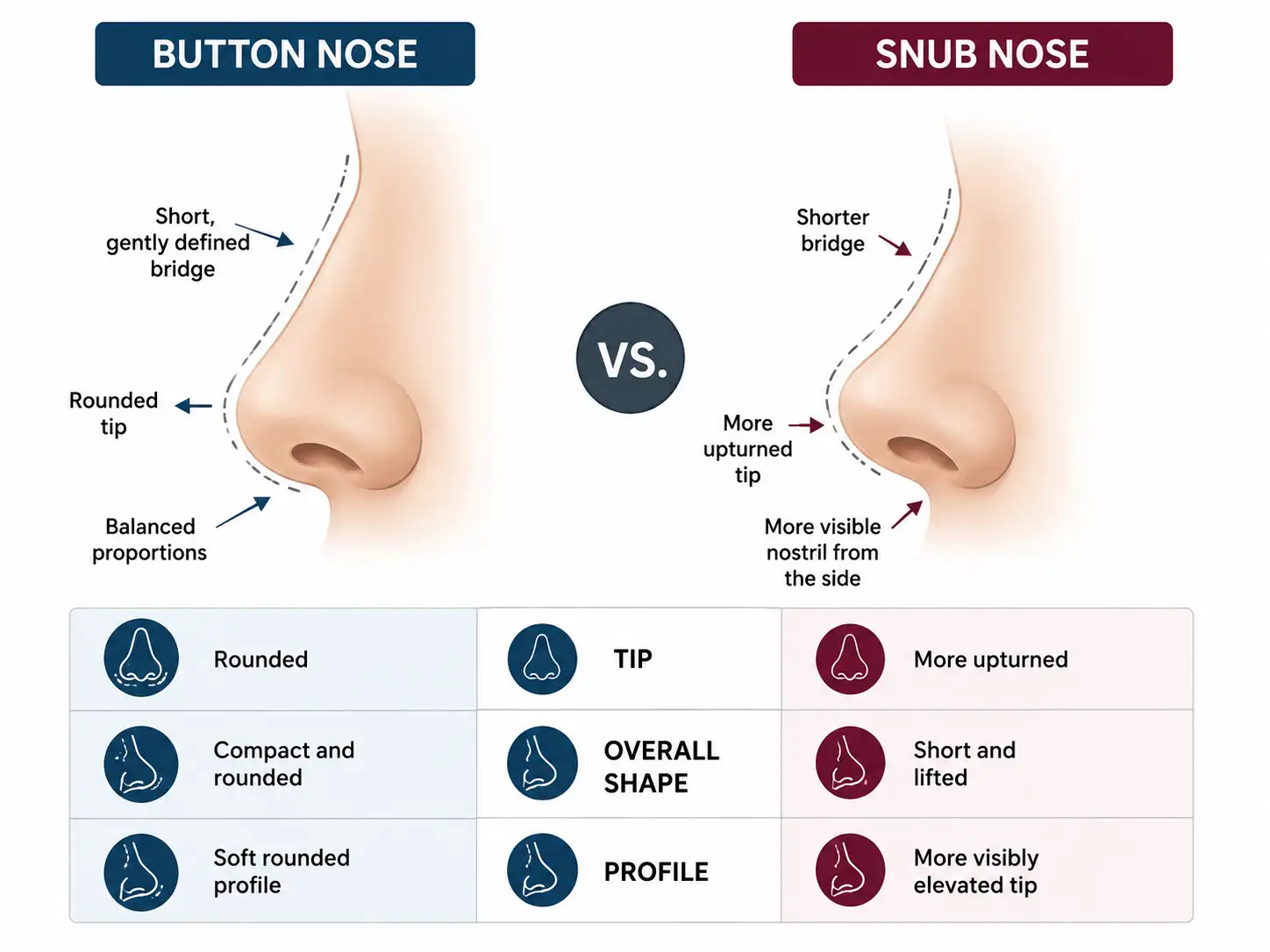
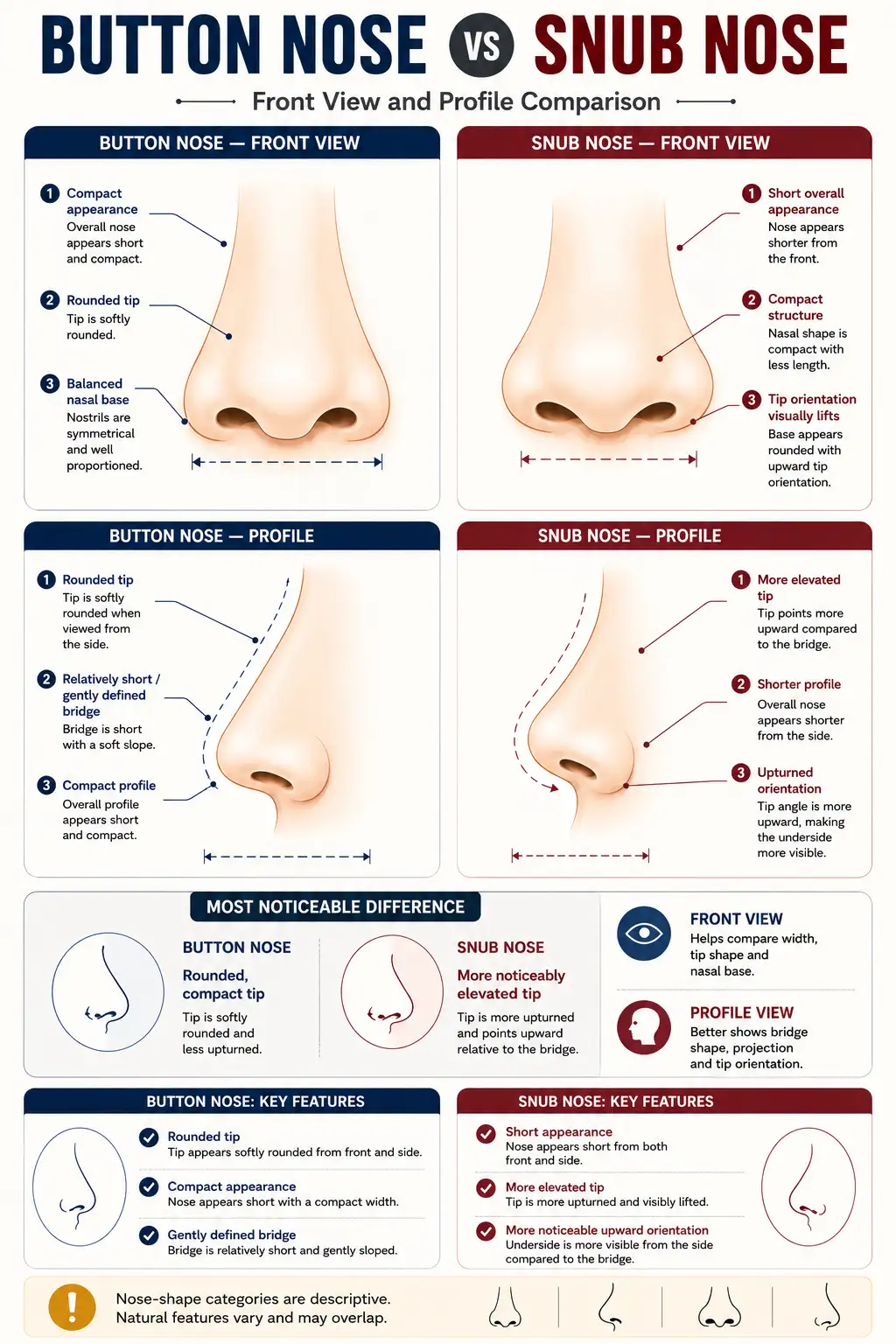
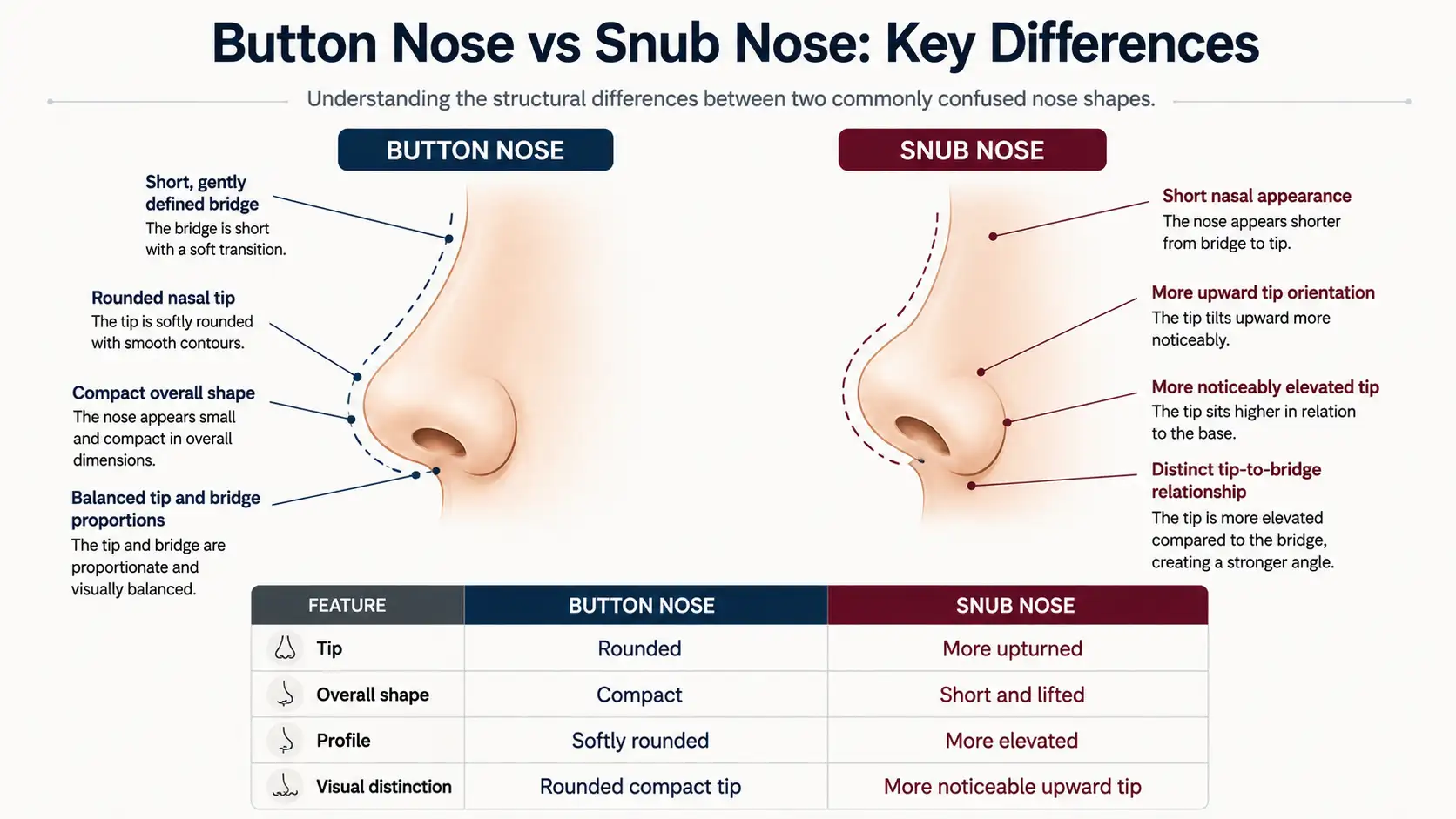
The snub nose and the button nose are closely related shapes. Both are compact. Both feature upward tip rotation. Both show more nostril visibility than longer nose shapes. These similarities lead many people to use the terms interchangeably.
The key structural difference is in the degree of rotation. A button nose shows a softer, more balanced upward curve. The nasolabial angle tends to stay between 100 and 115 degrees. The tip lifts gently and symmetrically. The bridge is typically low and smooth.
A snub nose shows stronger upward rotation than a button nose. The nasolabial angle often exceeds 115 degrees. The bridge-to-tip transition tends to be more abrupt. The tip appears to tilt rather than simply curve.
From the front, both shapes can look similar. The difference becomes clear in profile. A button nose curves. A snub nose tilts. That single distinction separates the two shapes structurally.
For a broader comparison with other nose shapes, explore the full guide to button nose vs other nose shapes.

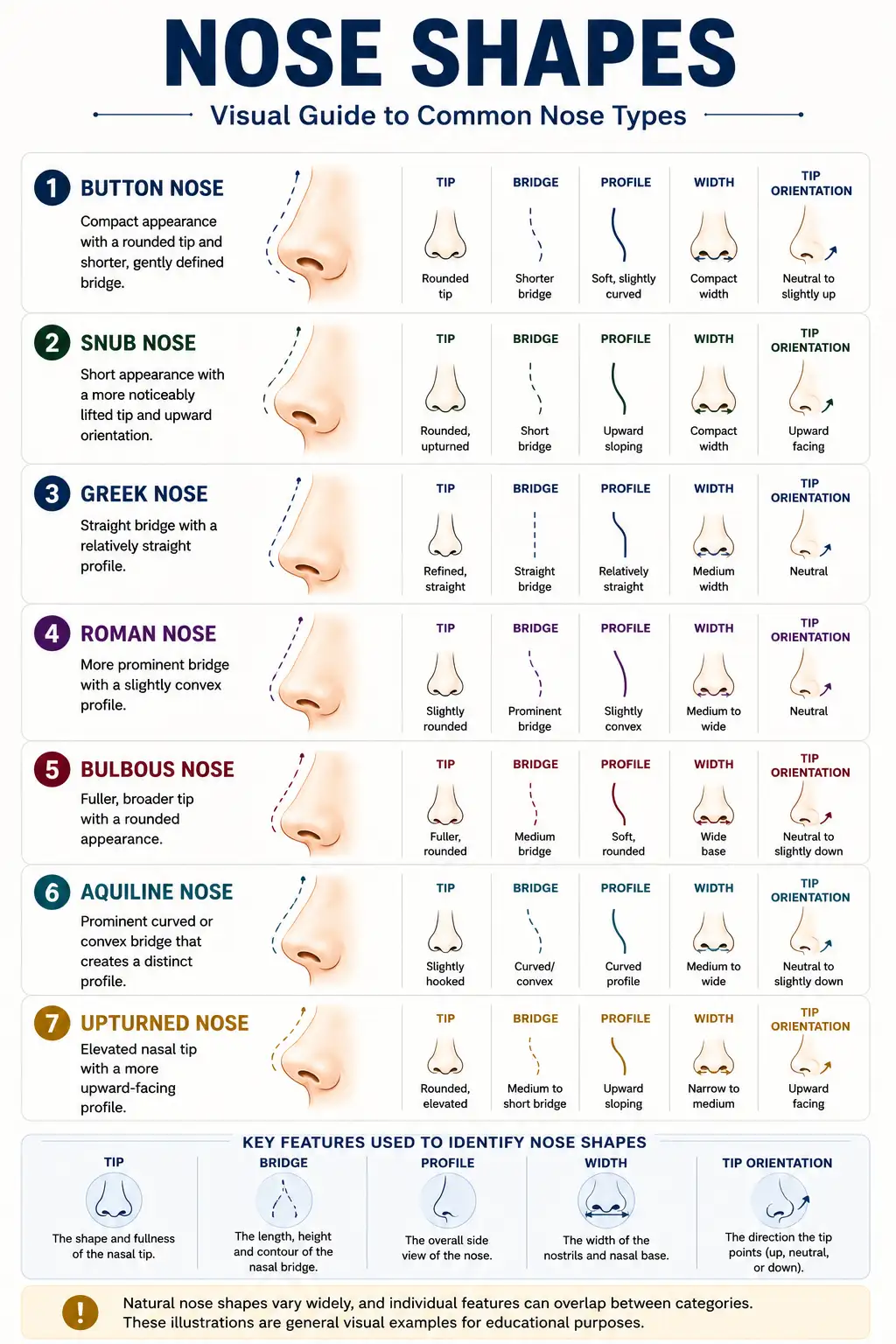
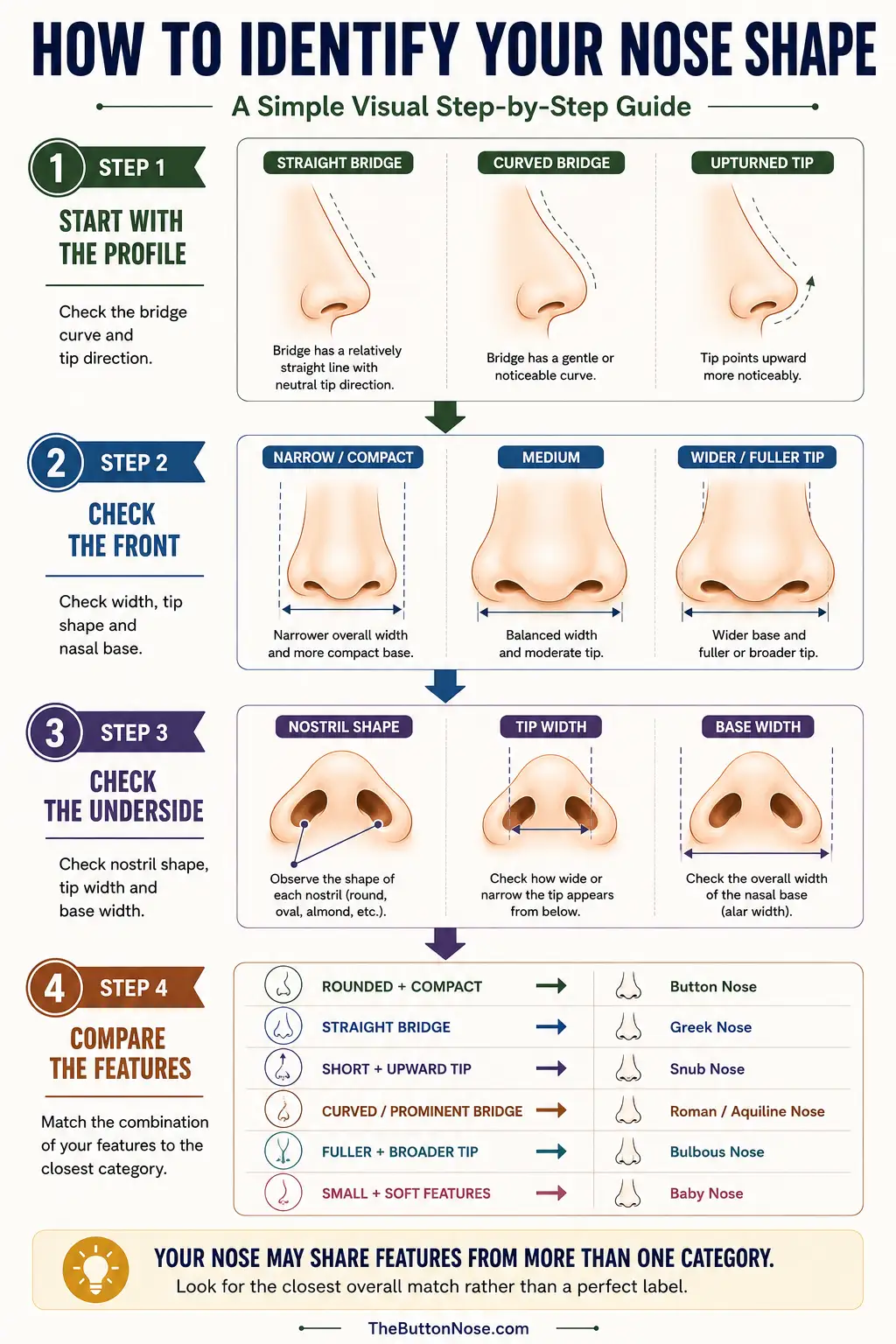
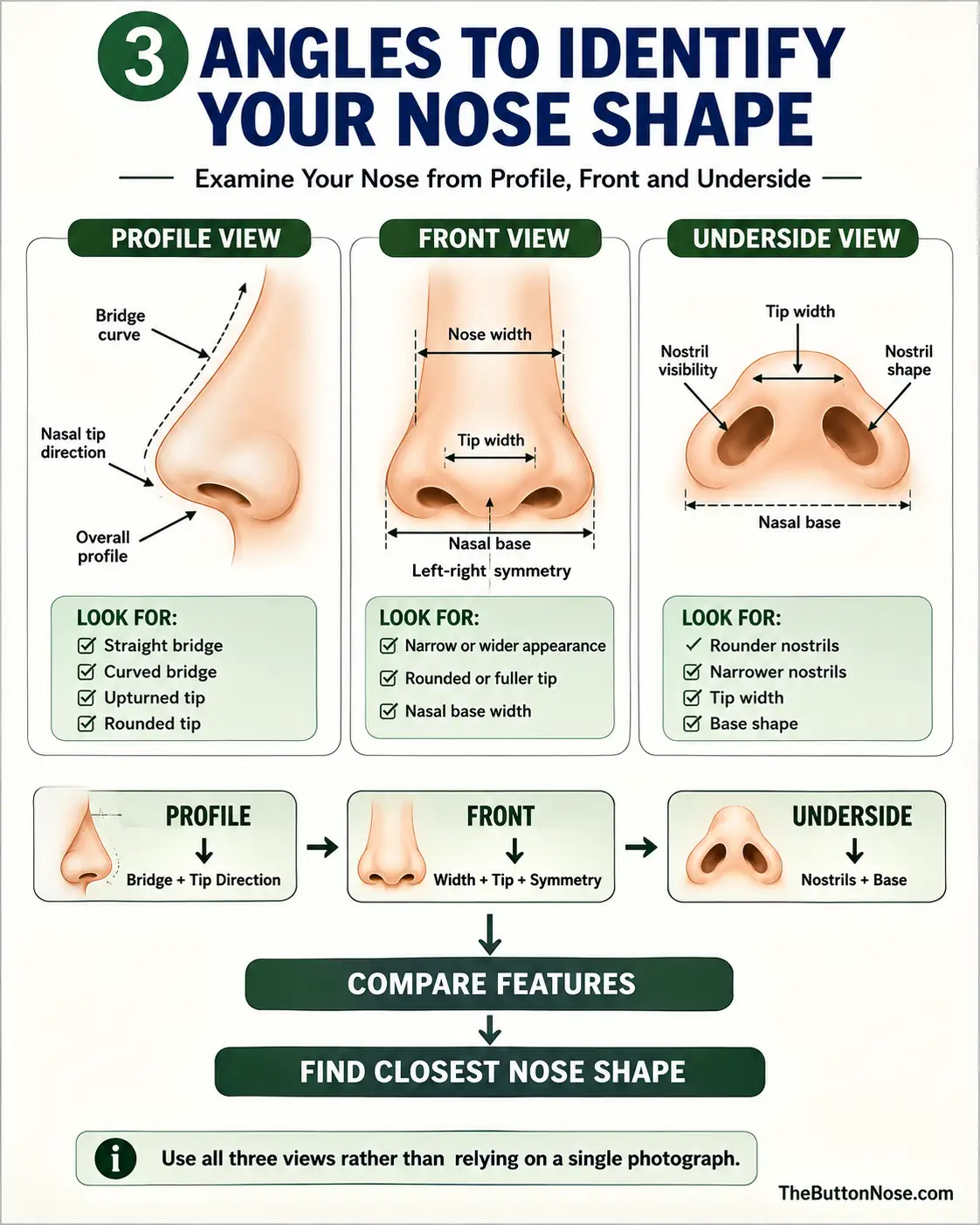
Snub Nose Shape: Quick Identification Checklist
- Short nasal length — the nose sits compact on the face
- Noticeable upward tip rotation, nasolabial angle typically above 115 degrees
- Nostrils partially visible from a straight-on view
- Low or slightly concave bridge with a more abrupt bridge-to-tip transition
- Confirm in a true side-profile photo in even lighting