
An infected nose piercing shows spreading redness, increasing pain, warmth around the piercing, and thick yellow or green discharge — symptoms that get worse instead of better. This is different from normal healing, which brings only mild soreness, light redness, and clear fluid that dries into a crust for the first few days.
If your symptoms match infection, do not remove the jewelry on your own — taking it out can close the hole and trap bacteria inside. Keep cleaning with sterile saline and see a doctor promptly, especially if you develop a fever.
This guide gives general information and is not medical advice. See a doctor for diagnosis and treatment. For the full picture, start with our complete nose piercing guide.
Signs of an Infected Nose Piercing
Watch for these warning signs, especially if they appear after the first week or keep intensifying:
- Spreading redness — redness that grows outward from the piercing instead of fading.
- Increasing pain or throbbing — normal soreness eases; infection pain builds.
- Warmth — the skin around the piercing feels hot to the touch.
- Thick discharge — yellow, green, or gray pus, rather than clear fluid.
- Swelling that worsens — a lump that keeps growing instead of shrinking.
- Fever or red streaks — spreading outward from the site. See a doctor right away.
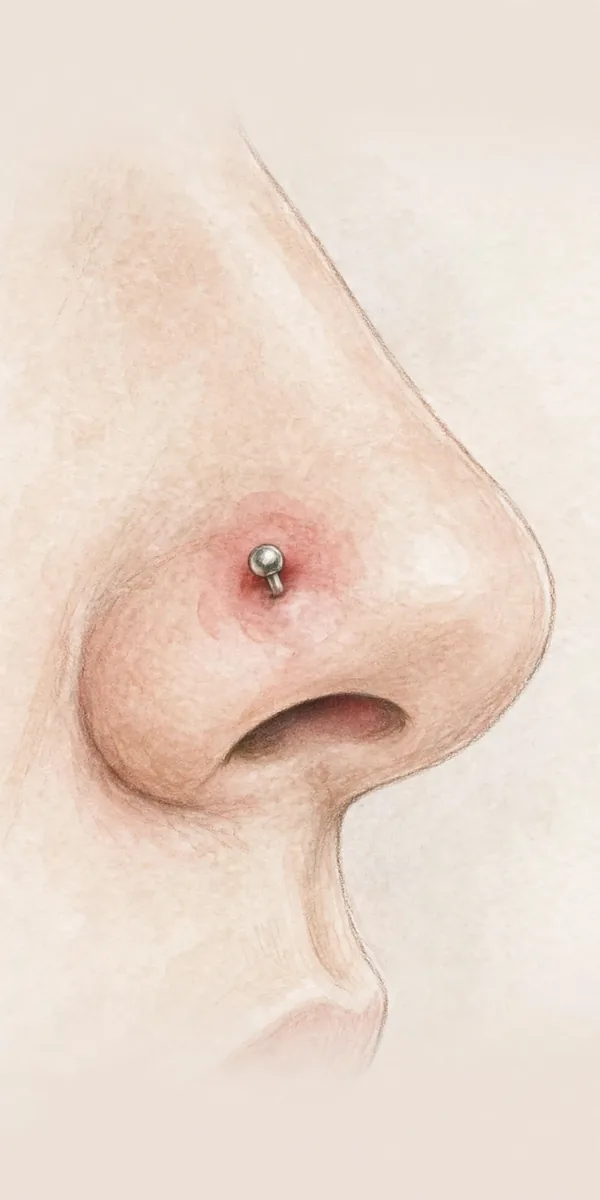
Infected vs Normal Healing: How to Tell the Difference
Every new piercing looks a little angry at first, which is why infections get missed. Here is the key distinction: normal healing improves day by day; infection gets worse day by day.
Normal healing in the first week means mild tenderness, slight redness right around the hole, and clear or whitish fluid that forms a crust. These all fade steadily.
Infection means the opposite trajectory — more pain on day five than day two, redness spreading wider, discharge turning thick and colored. An irritation bump, meanwhile, is a small flesh-colored lump from snagging or pressure — annoying but not infected. Our nose piercing guide explains how to tell bumps, keloids, and infections apart.
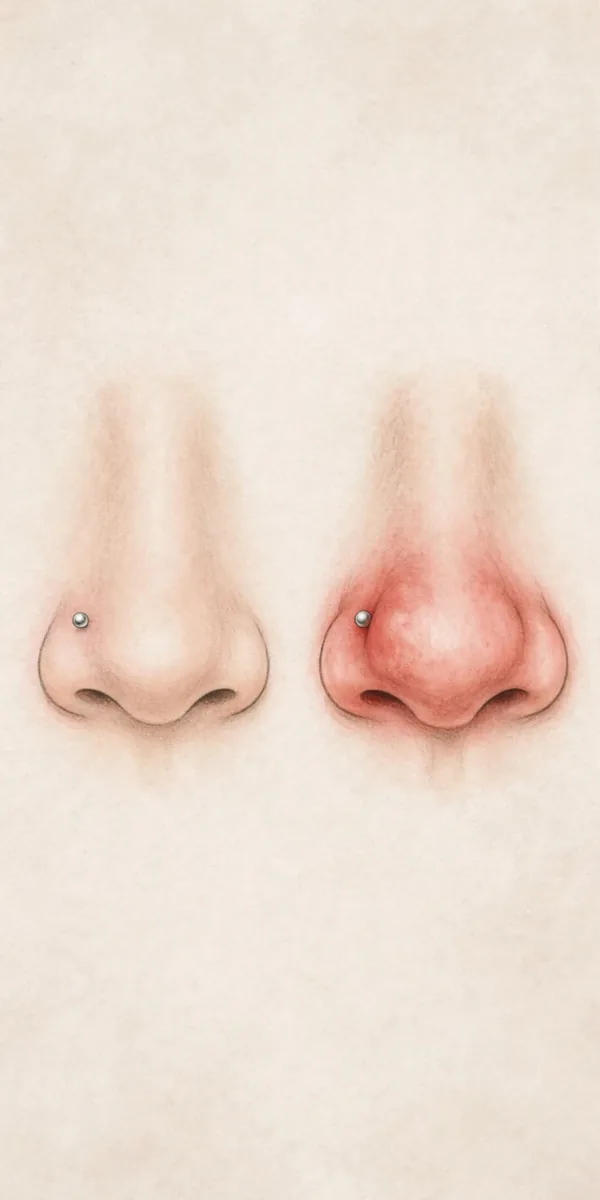
What Causes a Nose Piercing Infection?
Infections happen when bacteria enter the fresh piercing channel. The most common causes:
- Touching the piercing with unwashed hands.
- Swimming pools, hot tubs, lakes, or the sea before the piercing heals.
- Using a piercing gun instead of a sterile needle.
- Low-quality jewelry, especially nickel-heavy metals.
- Overcleaning or harsh cleaners (alcohol, hydrogen peroxide) that damage healing skin.
- Snagging the jewelry on masks, glasses, towels, or clothing.
How to Treat an Infected Nose Piercing
These are safe first steps while you arrange medical care — not a substitute for it:
- Leave the jewelry in. Removing it can let the hole close over trapped bacteria and turn a minor infection into an abscess.
- Clean gently with sterile saline twice a day. Do not pick at crusts — soften them with a warm saline compress first.
- Do not apply alcohol, peroxide, or antibiotic ointments unless a doctor tells you to; they irritate the tissue.
- Keep the area dry and untouched between cleanings. Change your pillowcase.
- See a doctor promptly — infections sometimes need prescription treatment, and only a professional can tell infection apart from an allergic reaction or irritation.
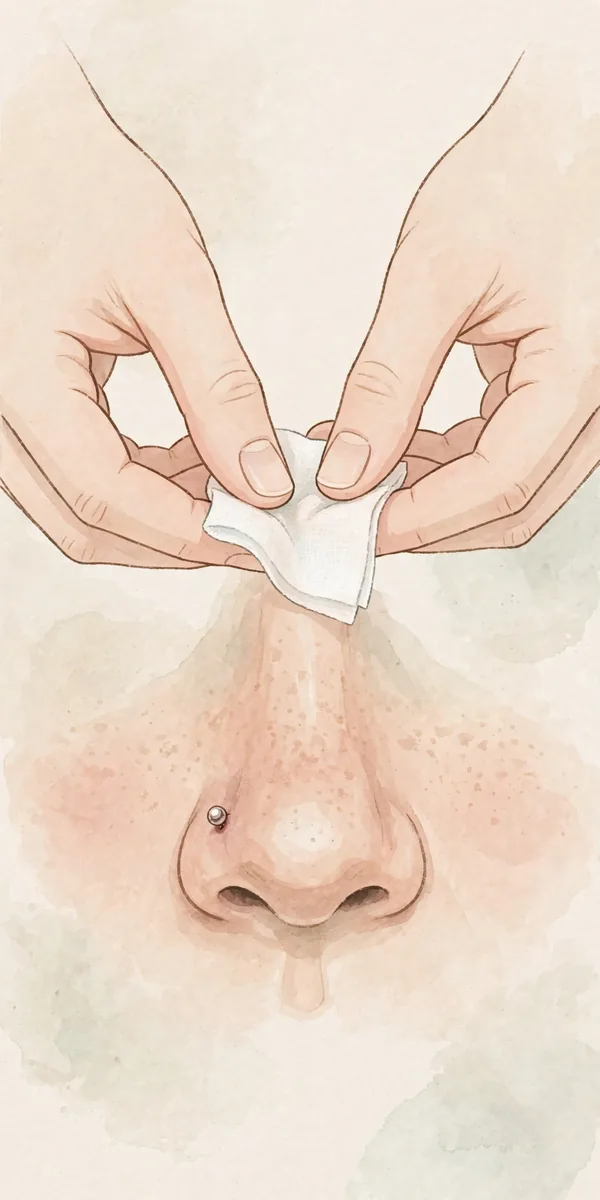
When to See a Doctor Immediately
Get medical care right away if you notice fever, red streaks spreading from the piercing, rapidly increasing swelling, or severe pain. These can signal a spreading infection that needs urgent treatment. When in doubt, go — an early visit is always safer than waiting.
How to Prevent a Nose Piercing Infection
- Choose a reputable piercer who uses single-use sterile needles — never a piercing gun.
- Start with implant-grade titanium jewelry.
- Follow a proper aftercare routine: saline twice daily, hands off otherwise.
- Stay out of pools, hot tubs, and open water until fully healed.
- Do not change or remove jewelry early — wait the full healing period.
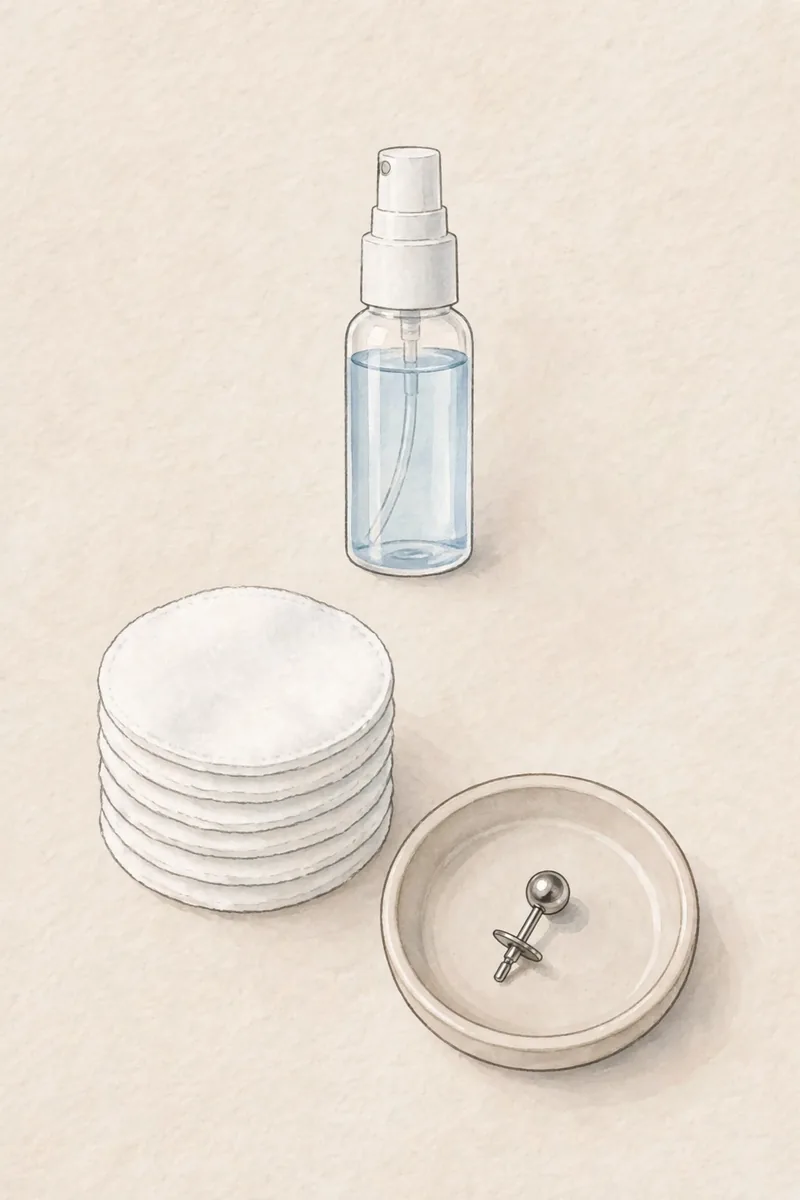
Infected Nose Piercing FAQs
What does an infected nose piercing look like?
Spreading redness, noticeable swelling, and thick yellow or green discharge around the jewelry — with symptoms that worsen over days rather than improving.
Should I take my nose ring out if it’s infected?
No — not on your own. Removing jewelry from an infected piercing can trap bacteria inside as the hole closes. See a doctor first.
How long does a nose piercing infection last?
With proper medical treatment, minor infections often improve within days. Without treatment they can worsen, so do not wait to see a doctor.
Can an infected nose piercing heal on its own?
Mild irritation sometimes settles with careful saline cleaning, but true infection needs medical attention. If symptoms are getting worse, see a doctor rather than hoping it passes.
Keep exploring: our nose piercing guide hub links every article in this cluster.