Quick Summary
A button nose and a flat nose share some surface-level similarities but differ in key structural ways. A button nose appears compact with a rounded tip and a gentle upward rotation. A flat nose shows a lower nasal bridge and sits closer to the facial plane with minimal forward projection. Both shapes are natural anatomical variations that develop through genetics and biological growth. The clearest difference between them appears in bridge height and how much the nose projects from the face. This breakdown is one of several structural comparisons collected in the button nose vs other nose shapes guide.
What Is a Button Nose
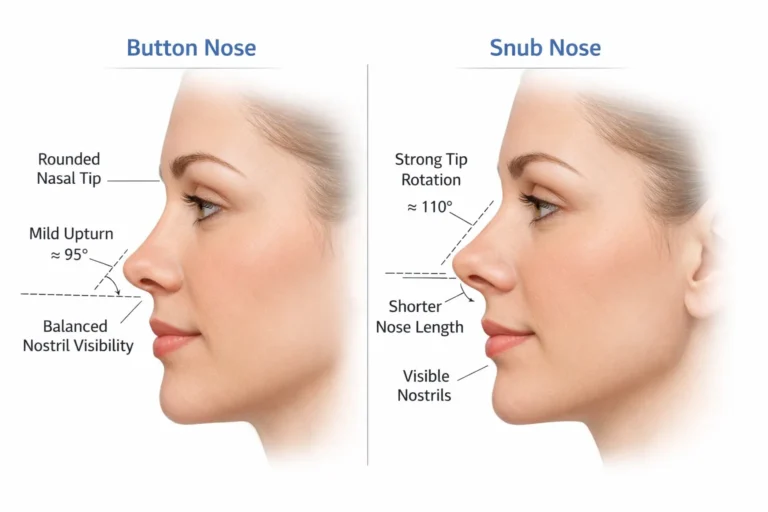
A button nose is defined by a rounded nasal tip, a compact overall length, and a gentle upward rotation at the tip. The nasal bridge sits low to moderate and follows a smooth, even line from the nasal root to the tip. The bridge transitions naturally into the rounded tip without any abrupt change in direction or structure.
The defining combination is the small rounded tip paired with a short, compact profile. The nose does not project dramatically from the face but maintains a defined and proportionate presence. Every feature stays balanced relative to the others. Tip width, bridge height, and nostril size all read as even when viewed together. This shape appears across many individuals and backgrounds and represents one of the more widely recognized compact nose types.
What Is a Flat Nose
A flat nose is defined primarily by a low nasal bridge and minimal projection from the face. The nose sits closer to the facial plane than most other nose shapes. The dorsal line, running from between the eyebrows down to the tip, stays very close to the face surface with little visible elevation.
The bridge on a flat nose is the defining structural feature. It does not rise significantly from the surrounding facial surface. The transition between the forehead, nasal bridge, and cheek area appears smooth and continuous rather than defined by a projecting ridge. Some flat noses also carry a broader nostril base, which adds to the wider, flatter frontal appearance. Others have a moderate nostril width paired with a very low bridge.
The flat nose shape appears commonly across East Asian, Southeast Asian, and sub-Saharan African populations. It reflects a natural variation in nasal bone height rather than any structural irregularity. The shape is found across a wide range of individuals and facial types globally.
Key Structural Differences
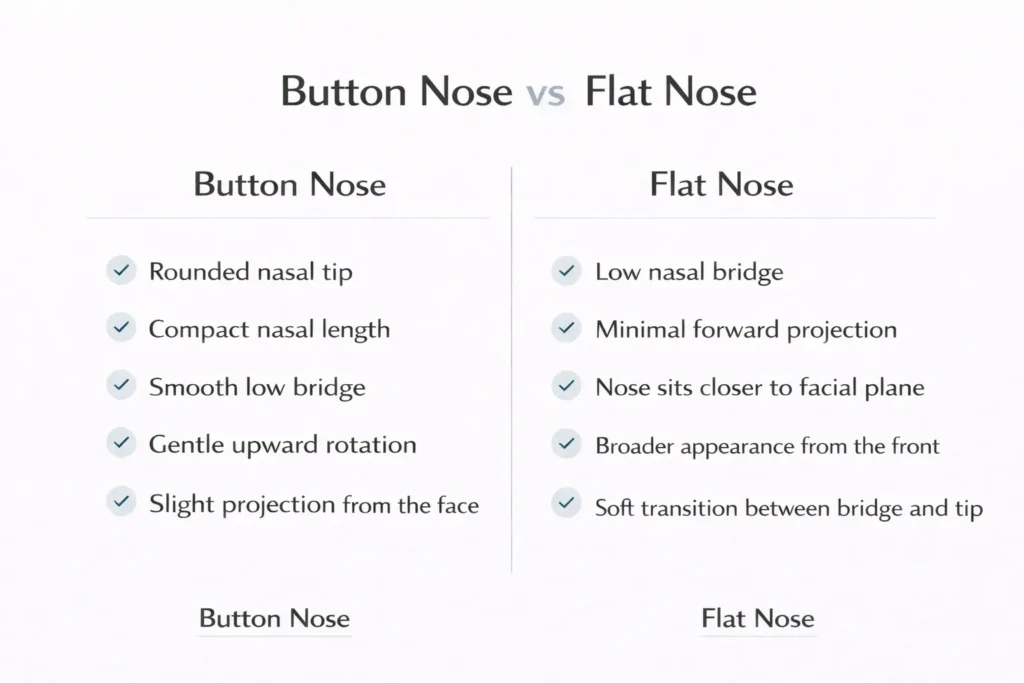
Bridge height is the most immediate structural difference between these two shapes. A button nose carries a low to moderate bridge that still creates a visible ridge from the nasal root to the tip. A flat nose carries a bridge that sits so close to the face that it creates minimal visible elevation along the dorsal line.
Tip shape also differs between the two. A button nose has a rounded, defined tip that rotates gently upward. A flat nose may have a rounded or moderately defined tip, but the low bridge changes how the tip reads in relation to the rest of the nose. The tip on a flat nose does not carry the same characteristic upward rotation seen on a button nose.
Projection from the face separates these shapes clearly. A button nose projects moderately from the face while remaining compact. A flat nose projects noticeably less, sitting much closer to the facial plane. This reduced projection is visible from both the front and the side.
Overall nose length varies between individuals with both shapes but tends to be compact on a button nose and variable on a flat nose. Some flat noses are short. Others carry a moderate length but remain flat due to the low bridge height. Length and bridge height are independent traits that can combine in different ways.
Front View Comparison
From the front, a button nose appears compact and centered. The rounded tip dominates the lower nose and reads as symmetrical and proportionate. The bridge creates a visible line that connects the tip to the upper face. Nostril visibility is modest, with a slight upward rotation making the nostrils partially visible at a neutral angle.
A flat nose from the front may appear wider because the low bridge reduces the shadow definition along the upper nose. Without a prominent bridge creating lateral shadow, the nose can read as broader than it actually measures. The tip may still appear rounded and central, but the absence of a raised bridge changes the overall visual impression significantly.
Facial proportions influence how both shapes are perceived from the front. The same nose can appear more or less prominent depending on the surrounding facial structure. A broad face may make a flat nose appear more proportionate. A narrow face may make the same nose read as more prominent.
Side Profile Comparison
The profile view is where the difference between these two shapes becomes most apparent. A button nose in profile appears compact and softly lifted. The bridge follows a low but visible path from the nasal root to the tip. The tip then rotates gently upward, creating the characteristic lifted appearance of the button nose shape.
A flat nose in profile shows very little dorsal elevation. The nose stays close to the face along its full length. There is minimal visible ridge from the nasal root to the tip. The transition from the forehead to the nose and from the nose to the upper lip appears much flatter and more continuous than on a button nose.
The difference is immediately clear when comparing both shapes in a true side-profile photograph taken in natural light. A button nose creates a small but defined silhouette. A flat nose creates very little projection from the face outline.
Why These Nose Shapes Develop
Both shapes develop through inherited biological factors. Genetics determine nasal bone height, cartilage structure, and soft tissue distribution. These features are inherited from both parents and frequently combine in ways that produce a distinct result.
Nasal bone height is the most directly inherited factor separating these two shapes. When nasal bones develop at a lower height, the bridge sits closer to the face and the overall profile appears flatter. A button nose develops from a combination of a shorter nasal bone length and lower lateral cartilages set at an upward angle. A flat nose develops primarily from very low nasal bone height, regardless of tip cartilage angle.
Cartilage structure contributes as well. The upper lateral cartilages support the middle third of the nose. Lower or flatter cartilage positioning in this area reduces the visible bridge height and contributes to the flat appearance. Facial growth patterns during development further shape how all of these features align relative to the surrounding facial skeleton.
Can a Button Nose and Flat Nose Overlap
Some noses show characteristics from both categories. The flat button nose is a recognized variation within the button nose family. It carries the rounded tip and compact length of a button nose while also showing a lower bridge height that moves toward flat nose territory. This variation sits between the two categories and shares traits with both.
A nose may also appear flatter in photographs depending on lighting conditions. Flat frontal lighting reduces shadow definition along the bridge, which can make a button nose appear lower in bridge height than it actually is. A side-profile photograph in natural light gives the most accurate structural reading for both shapes.
Nose shapes exist on a continuous spectrum. Many individuals have noses that blend traits from multiple categories without fitting cleanly into any single one. The types of noses overview provides helpful context for understanding how all shapes relate across this spectrum.
Key Takeaway
A button nose appears compact with a rounded tip and a gentle upward rotation. A flat nose appears lower in bridge height and sits closer to the facial plane with minimal forward projection. Both shapes are normal anatomical variations that develop through genetics and biological growth. For a broader look at how the button nose compares with other shapes, the button nose vs other nose shapes page covers all comparisons in full detail. For a deeper look at button nose variations including the flat button nose, the button nose types guide explains each subtype clearly.