Quick Summary
A button nose and a bulbous nose differ most clearly at the nasal tip. A button nose appears compact and rounded with balanced proportions across all its features. A bulbous nose shows a wider, fuller tip caused by larger lower lateral cartilages or thicker soft tissue around the tip area. Both shapes are natural anatomical variations that develop through genetics and biological growth. The key distinction lies in tip size and how much visual weight the lower nose carries relative to the rest of the face. This comparison sits within a fuller set of nose shape breakdowns explored in the button nose vs other nose shapes guide.
What Is a Button Nose
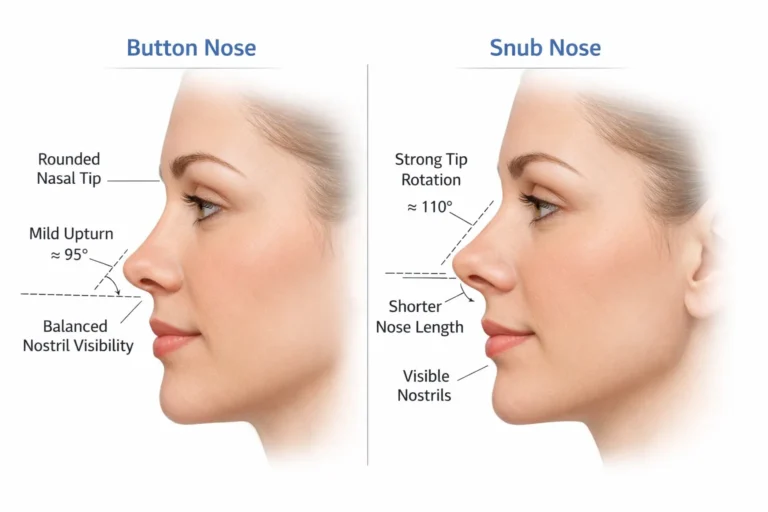
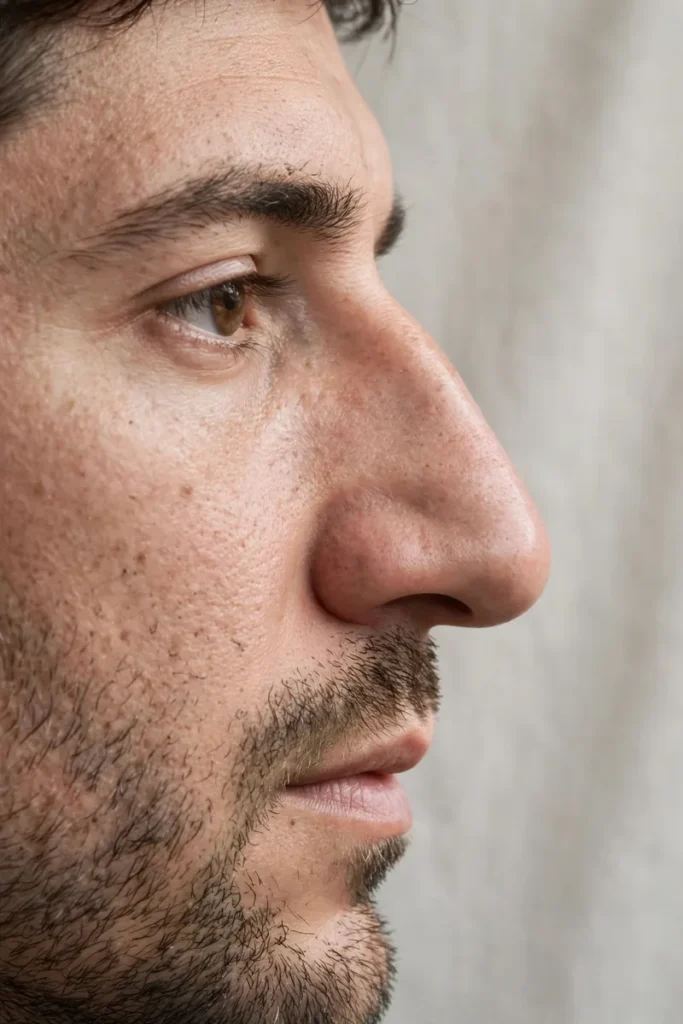
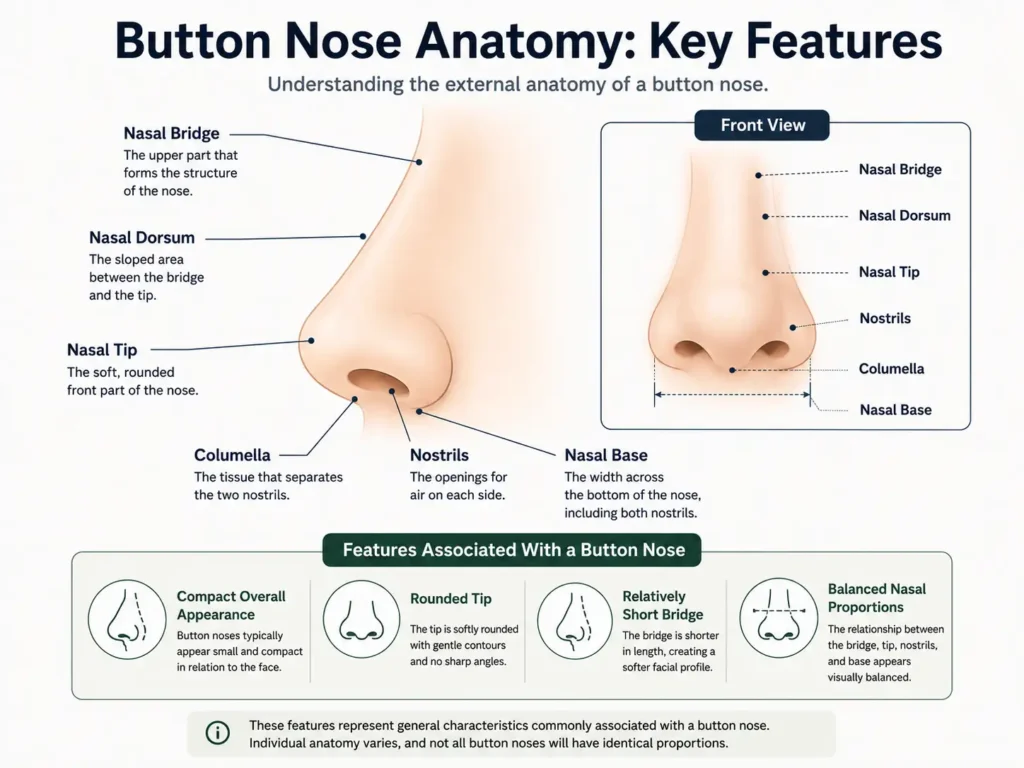
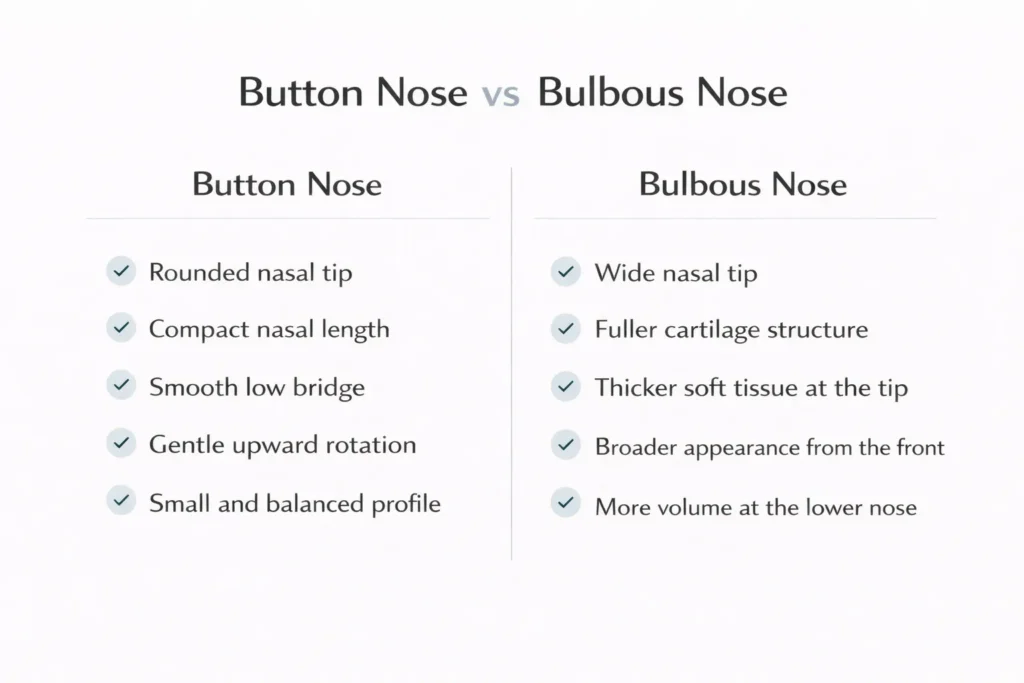
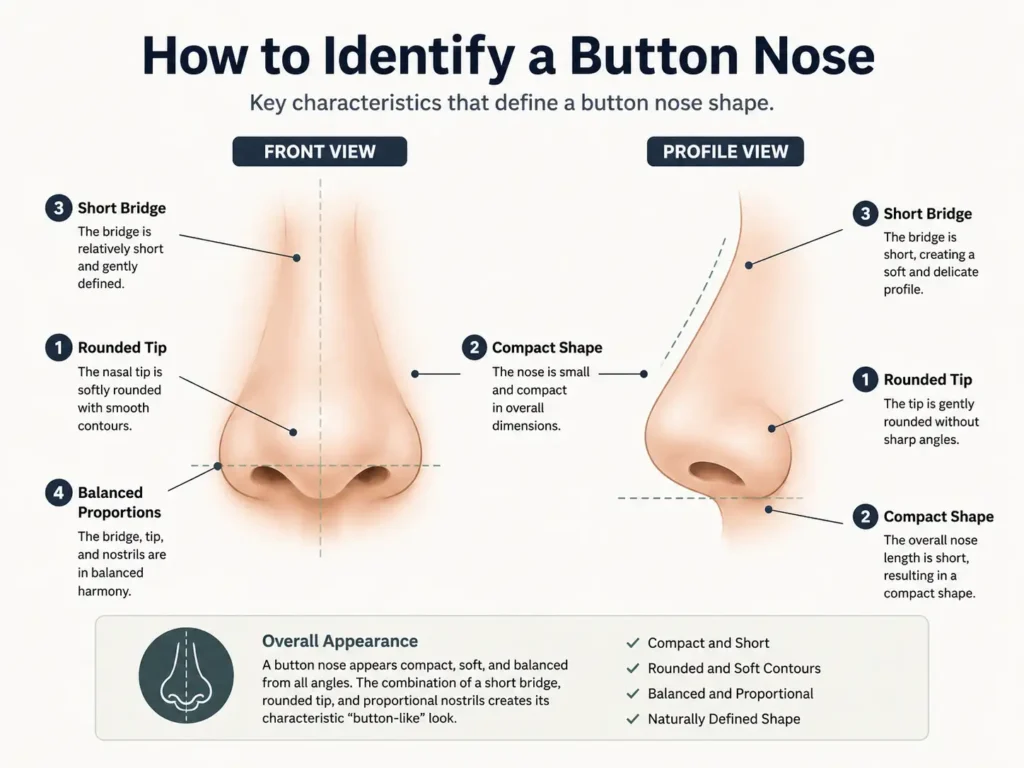
A button nose has a rounded nasal tip, a compact overall length, and a gentle upward rotation. The nasal bridge sits low to moderate and follows a smooth, even line from the nasal root to the tip. The bridge transitions naturally into the rounded tip without any abrupt change in direction or width.
The defining combination is a small rounded tip paired with a short, compact profile. The nose does not project dramatically from the face. Every feature stays proportionate relative to the others. Tip width, bridge height, and nostril size all read as balanced when viewed together. Button noses appear across many individuals and backgrounds and represent one of the more commonly recognized compact nose shapes.
What Is a Bulbous Nose
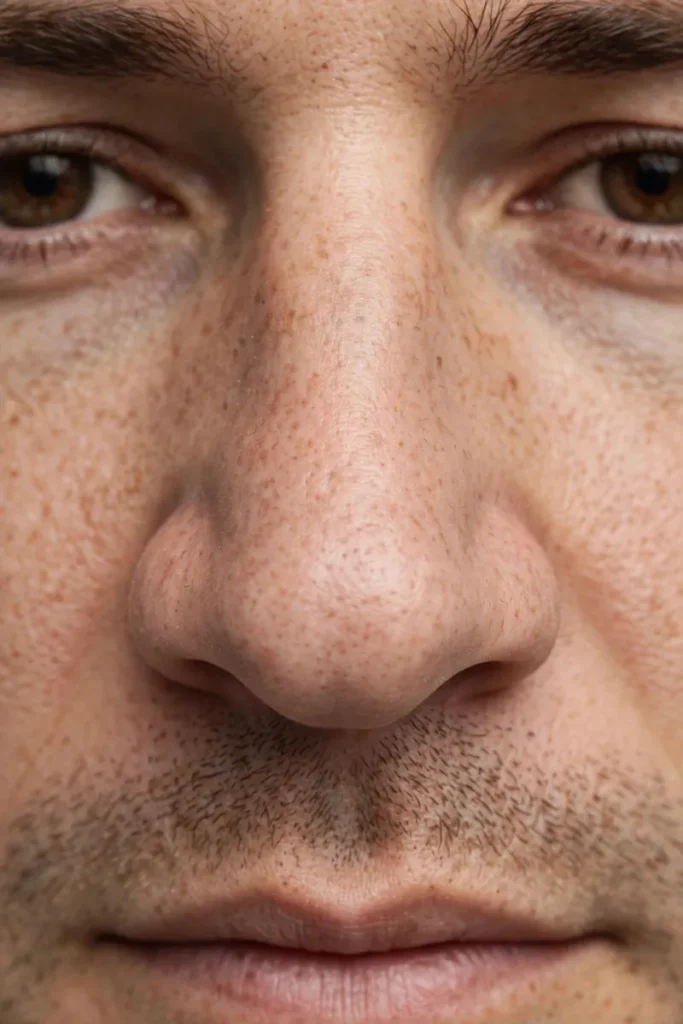
A bulbous nose has a wider, fuller nasal tip that appears more prominent than the bridge and mid-nose. The tip looks enlarged or rounded in a way that draws visual attention to the lower nose. The fuller appearance comes primarily from larger lower lateral cartilages, which are the cartilage structures that shape the nasal tip. Thicker soft tissue and skin around the tip area can contribute to this appearance as well.
The bridge on a bulbous nose varies between individuals. Some people with a bulbous nose have a moderate or even narrow bridge, which makes the wider tip appear more pronounced by contrast. Others show fullness distributed more evenly across the lower two-thirds of the nose. The key identifying feature is always the tip. It appears disproportionately wider or fuller compared to the upper nose structure.
The bulbous nose shape appears across all ethnic backgrounds and age groups. Skin thickness affects how pronounced the bulbous appearance reads. Thicker skin over the tip cartilage adds volume and softens definition, which can increase the rounded, fuller look associated with this shape.
Key Structural Differences
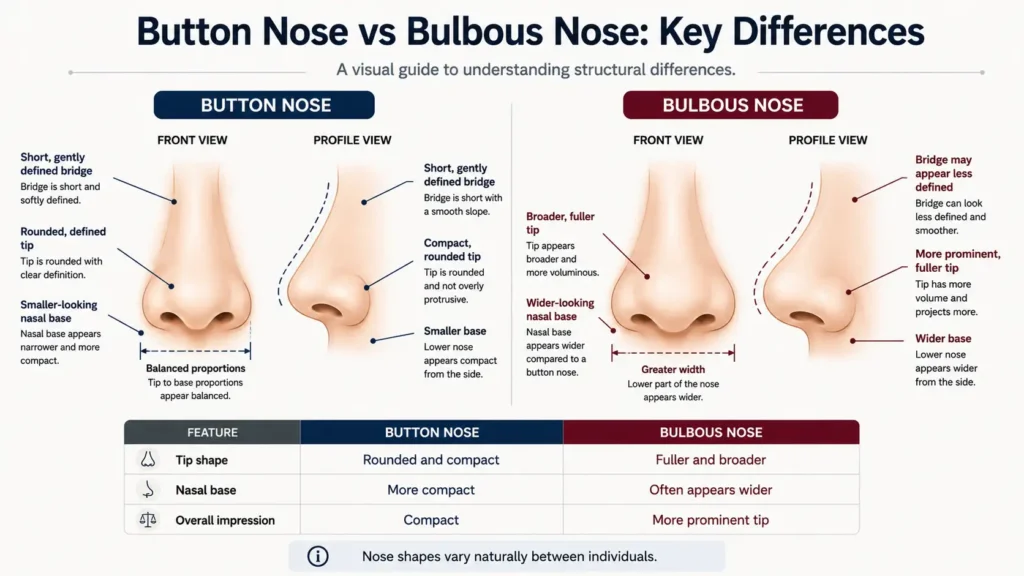
Tip size is the clearest structural difference between these two nose shapes. A button nose has a small, rounded tip that stays proportionate with the rest of the nasal structure. A bulbous nose has a wider, fuller tip that appears larger relative to the bridge and mid-nose. This size difference is visible from both the front and the side.
Bridge appearance differs in how it relates to the tip rather than in its absolute height. On a button nose, the bridge and tip read as a continuous, balanced structure. On a bulbous nose, the bridge often appears narrower by comparison because the tip is so much wider. This contrast creates a visual break between the upper and lower nose.
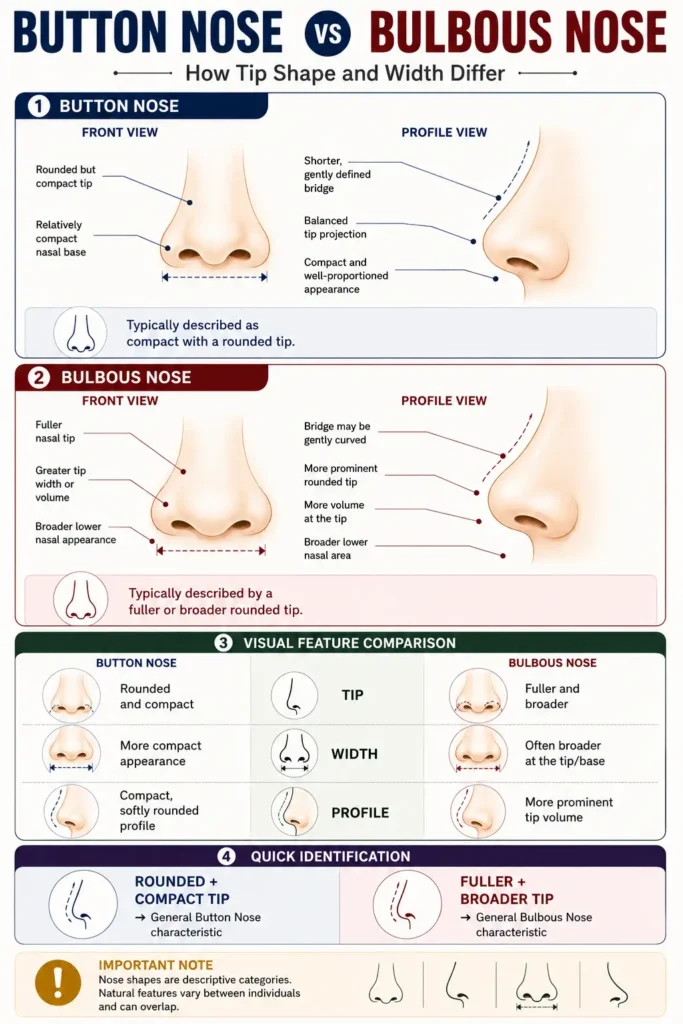
Projection from the face varies between individuals with both shapes, but the quality of that projection differs. A button nose projects moderately and evenly. A bulbous nose may project a similar distance from the face but carries more volume at the tip, making the projection feel heavier or more prominent.
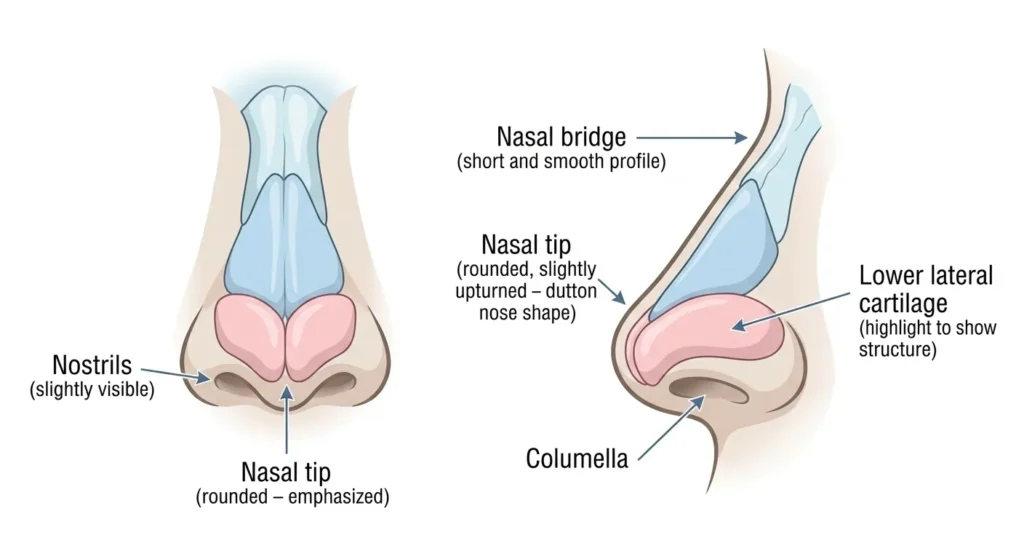
Cartilage structure is the underlying anatomical factor that separates these shapes. The lower lateral cartilages on a button nose are set at an upward angle and shaped with a compact, rounded contour. On a bulbous nose, these same cartilages are larger, wider, or more convex, which pushes more tissue outward at the tip and creates the broader appearance.
Front View Comparison
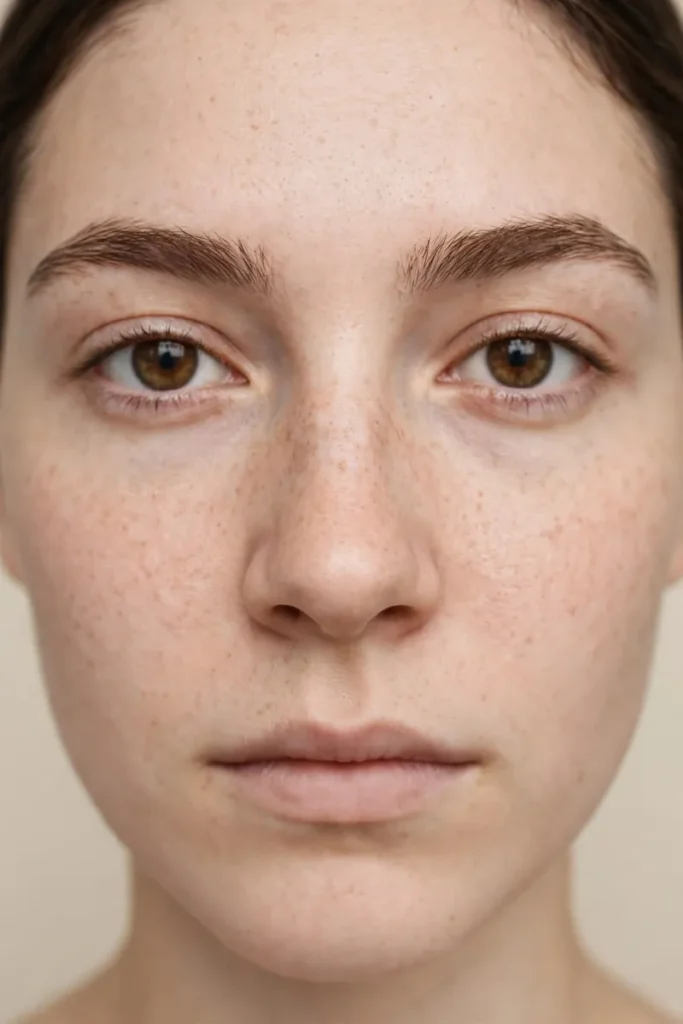
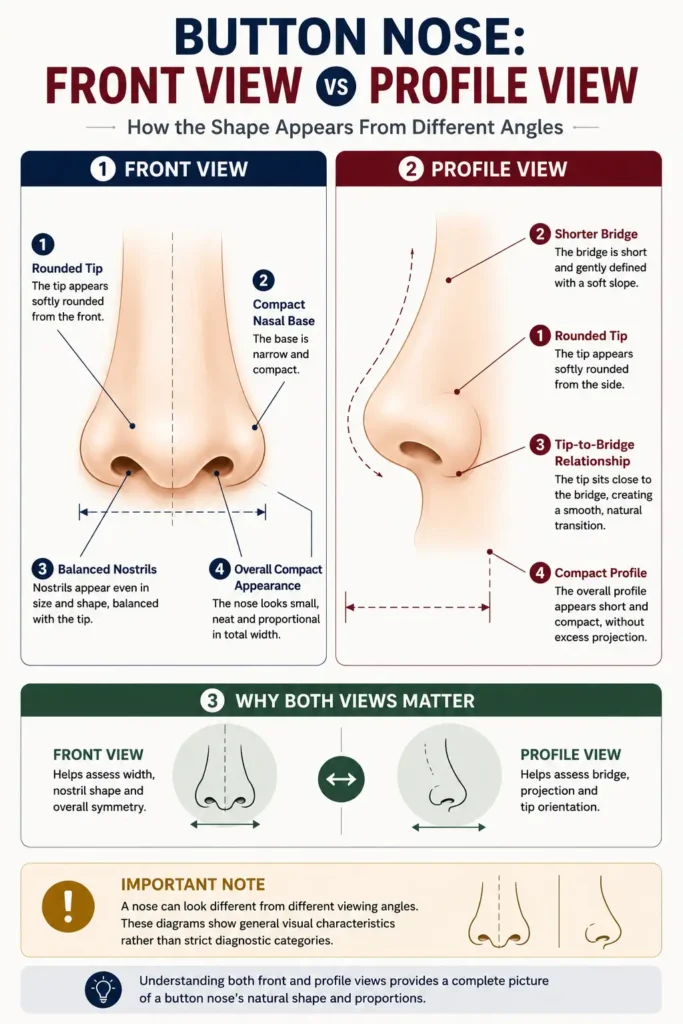
From the front, a button nose appears compact and symmetrical. The tip sits centrally and reads as rounded without appearing wide or heavy. The overall nose occupies a proportionate amount of facial space. Nostril width stays moderate, and no single feature pulls the eye more than the others.
A bulbous nose from the front shows a fuller lower nose where the tip dominates the view. The tip appears wider than the bridge. The lower nose takes up more visual space than on a compact shape like a button nose. The nostrils may appear fuller as well, depending on how the cartilage and soft tissue distribute across the lower nose.
Lighting and camera angle affect both shapes in the front view. Bright frontal lighting can flatten the appearance of a bulbous tip. Soft side lighting can make a button nose appear slightly wider. A consistent, natural light source from a neutral angle gives the most accurate reading of both shapes.
Side Profile Comparison
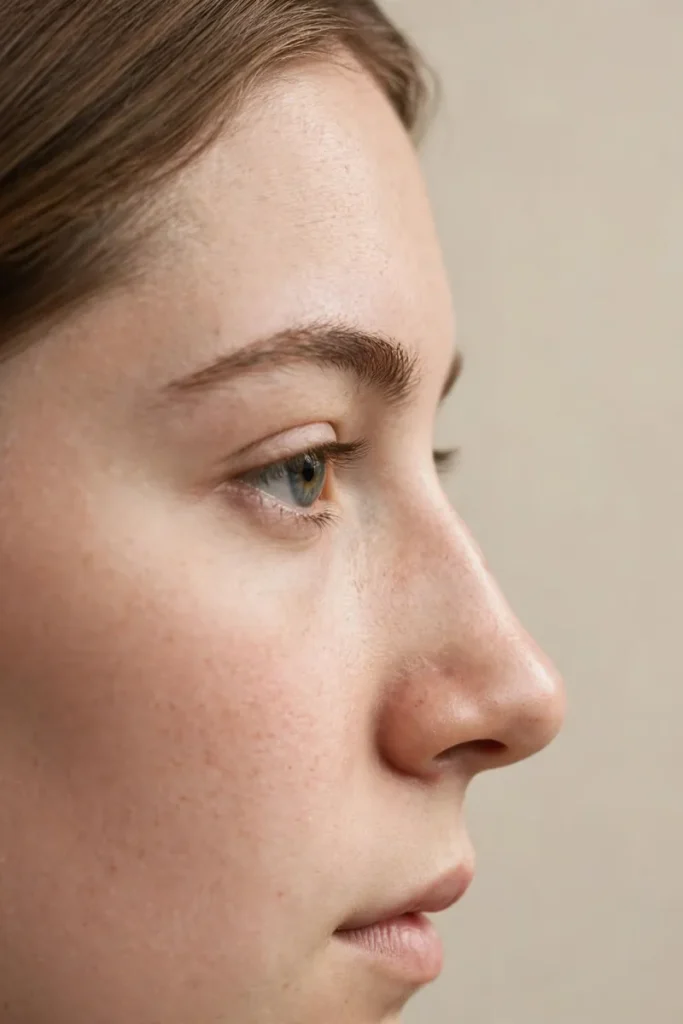
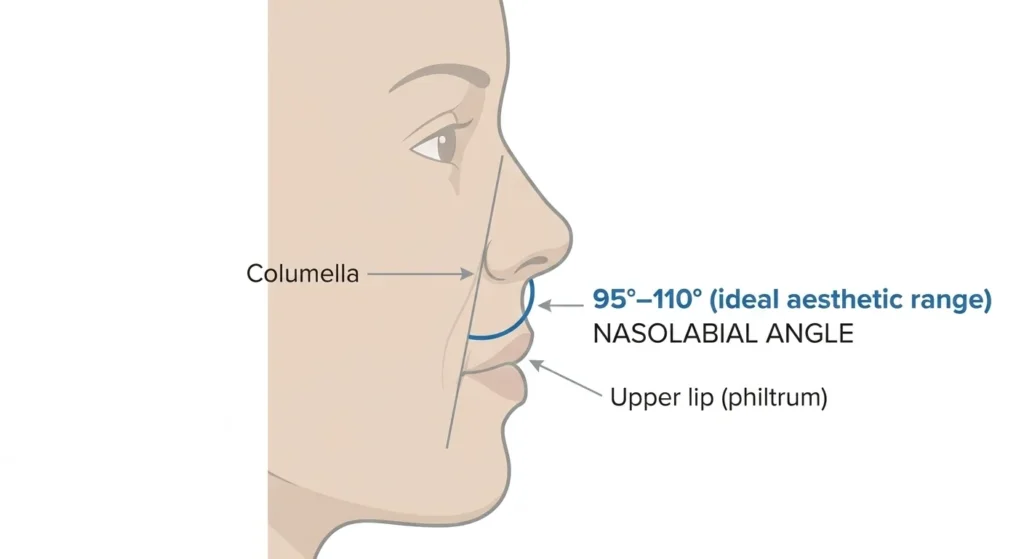
A button nose in profile appears short and compact. The bridge follows a low, smooth path and leads naturally into the rounded upturned tip. The overall silhouette is soft and close to the face. The tip does not project dramatically, and the upward rotation gives the nose a lifted appearance without looking extreme.
A bulbous nose in profile may show a similar bridge height but carries noticeably more volume at the tip. The tip appears fuller and rounder when viewed from the side. Depending on the individual, this volume can make the tip look like it drops slightly or projects more than a compact nose would. The bridge-to-tip transition often shows a widening as the eye moves from the mid-nose down to the tip area.
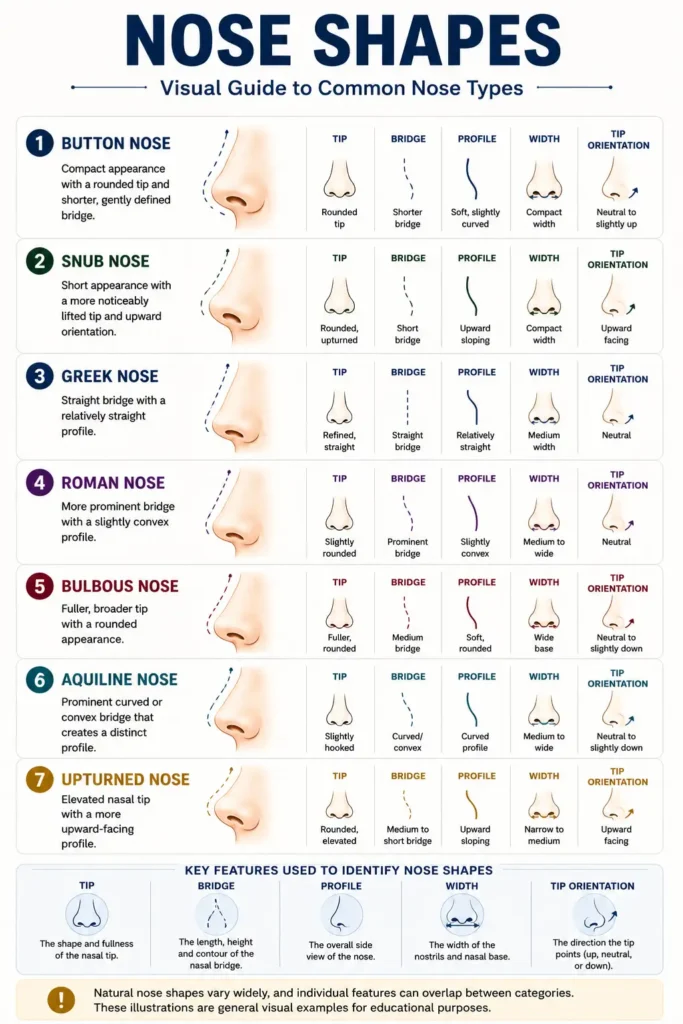
Why These Nose Shapes Develop
Both shapes develop through inherited biological factors. Genetics determine nasal bone length, cartilage size and shape, and soft tissue distribution. These features are passed down from both parents and combine in ways that produce a nose distinct from either parent in many cases.
The lower lateral cartilages are the most important inherited factor for distinguishing these two shapes. On a button nose, these cartilages are compact and angled upward. On a bulbous nose, they are larger and wider. This difference in cartilage size is primarily genetic and develops during facial growth before birth and through early development.
Skin thickness is another inherited trait that contributes to the bulbous appearance. Thicker sebaceous skin over the nasal tip adds volume and reduces definition. This is particularly relevant in populations with naturally thicker nasal skin, where cartilage size and skin thickness combine to produce a fuller tip appearance.
Can a Button Nose and Bulbous Nose Overlap
Some noses show characteristics from both categories. A nose may have the compact length and upward rotation of a button nose while also carrying a slightly fuller tip than a classic button nose would show. In this case, the nose sits between the two categories without fitting cleanly into either one.
Individual variation creates a wide range of intermediate forms. A rounded tip can appear at different sizes. A wider tip does not always signal a fully bulbous shape. Many people have noses that lean toward one category while retaining traits from another. Nose shape classification works best as a reference framework rather than a rigid system of fixed types. The types of noses overview provides useful context for understanding how all shapes relate across this spectrum.
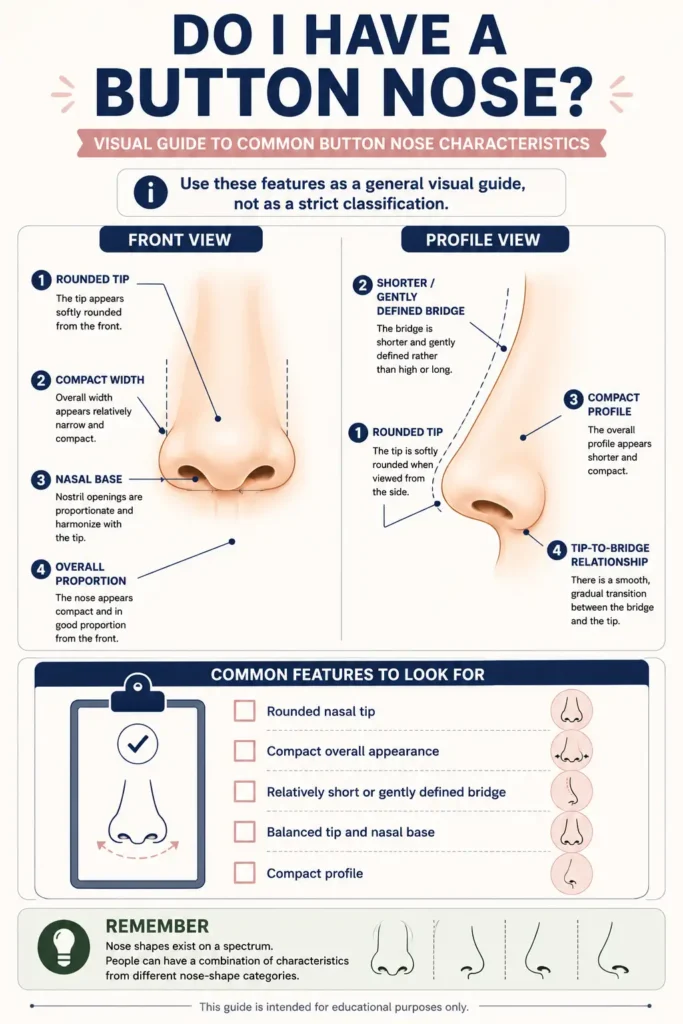
Key Takeaway
A button nose appears small, rounded, and compact with balanced proportions across all features. A bulbous nose appears fuller due to a wider nasal tip driven by larger lower lateral cartilages or thicker soft tissue. Both shapes are normal anatomical variations that develop through genetics and biological growth. For a broader look at how the button nose compares with other shapes, the button nose vs other nose shapes page covers all comparisons in detail. For a deeper understanding of button nose variations, the button nose types guide breaks down each natural subtype clearly.
Frequently Asked Questions
Is a button nose the same as a bulbous nose?
No. A button nose has a small, proportionate tip. A bulbous nose has a wider, fuller tip caused by larger lower lateral cartilages or thicker tip skin.
What causes a bulbous nose shape?
Genetics sets the size and width of the lower lateral cartilages, and skin thickness over the tip adds to the fuller appearance. Both traits are inherited.
Can a nose be both button and bulbous?
Yes. Some noses carry the compact length and upward tilt of a button nose with a slightly fuller tip than a classic button nose shows, sitting between the two categories.
How do I tell a button nose from a bulbous nose in photos?
Check the tip width relative to the bridge. A button nose tip stays proportionate to the rest of the nose; a bulbous tip looks wider or heavier than the bridge and mid-nose.
Does skin type affect whether a nose looks bulbous?
Yes. Thicker skin over the nasal tip adds volume and softens definition, which can make a nose read as more bulbous regardless of the underlying cartilage size.