
You can safely change your nose piercing after four to six months, once it is fully healed. Changing it earlier is the single most common cause of irritation bumps, infections, and torn tissue — the channel looks fine on the outside long before it is strong underneath.
The rule is simple: healed first, new jewelry second. When in doubt, let your piercer confirm healing before the first swap.
For the full picture, start with our complete nose piercing guide.
The Safe Timeline for the First Jewelry Change
- Nostril piercing: wait 4–6 months.
- Septum piercing: wait 3–4 months.
- Bridge piercing: wait 4–6 months.
- Double nose piercing: each piercing on its own timeline — do not change both early just because one feels ready.
Do not change jewelry while you have an active bump, redness, discharge, or tenderness. Those are signs the piercing is not healed yet — see our healing time guide for the full stages.
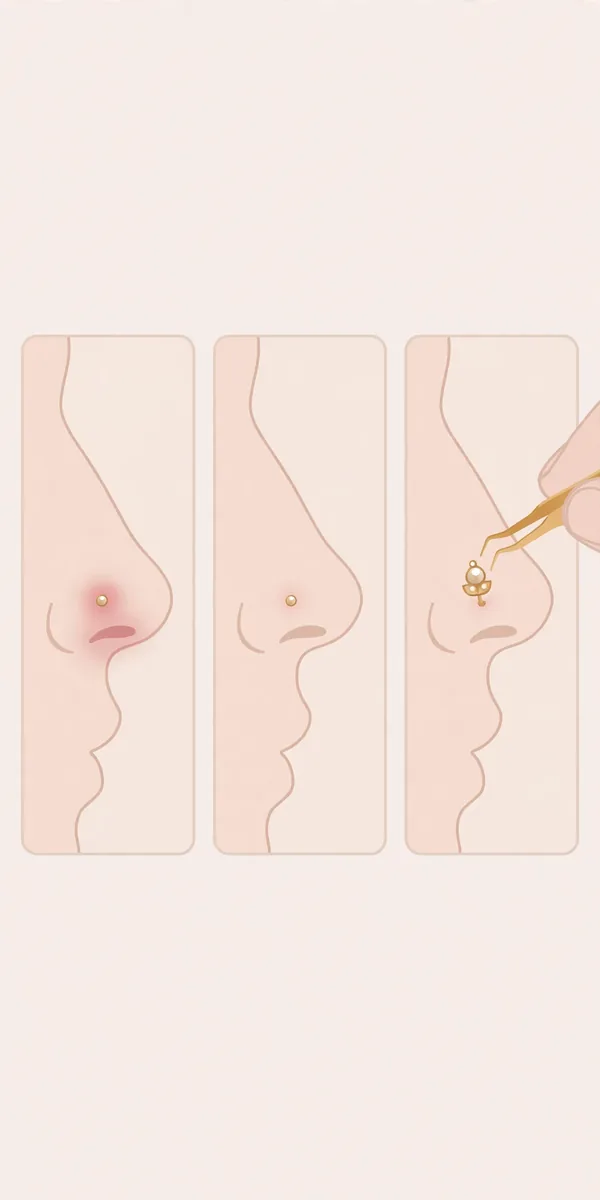
How to Change a Nose Stud (Step by Step)
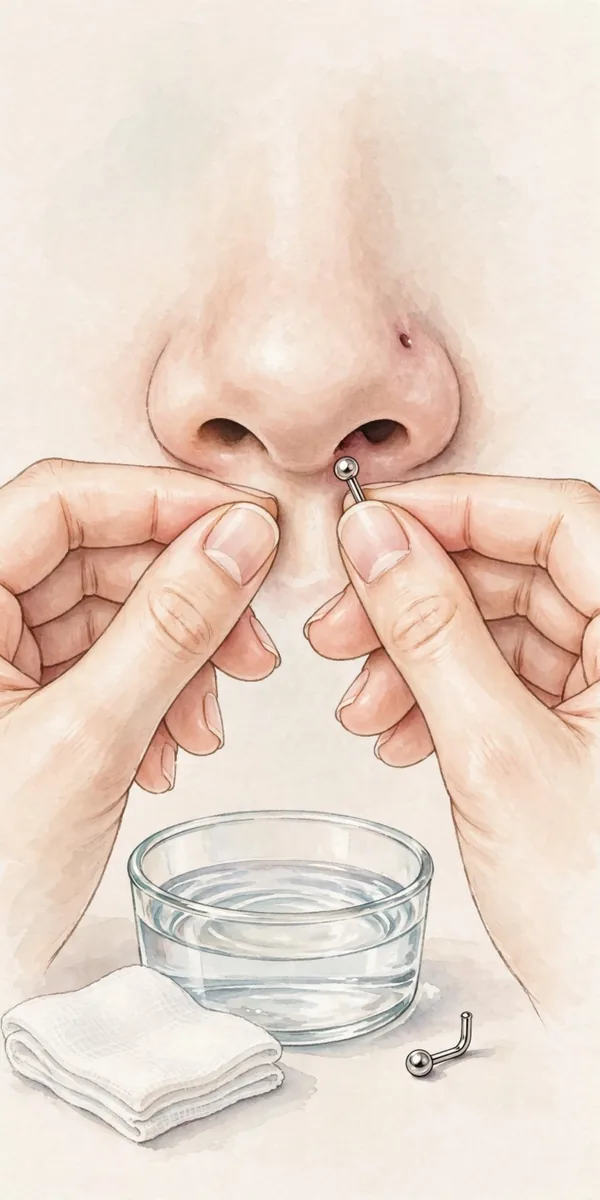
- Wash your hands thoroughly and clean the new jewelry.
- Clean around the piercing with sterile saline and let it dry.
- Remove the old stud — for a threadless (push-pin) stud, hold the flat back and pull the decorative end straight out; for a threaded stud, unscrew counterclockwise.
- Guide the new stud in from the outside, slowly and straight. Never force it — if it resists, stop.
- Secure the back and check it sits comfortably without pinching.
If the hole feels tight or the jewelry will not slide in smoothly, stop and visit your piercer. Forcing jewelry through a not-quite-healed channel tears tissue.
How to Change a Nose Hoop
Hoops are trickier than studs: open a hinged segment hoop at the hinge, or have your piercer open a seamless ring with ring pliers. Do not twist a seamless ring open with your fingers — you will warp it. And wait until healing is complete: hoops move more than studs and irritate unhealed channels.
What Jewelry to Choose for the First Change
- Stick with implant-grade titanium or 14k gold — the same safe materials as your starter jewelry.
- Match the gauge and length of your current jewelry. A thinner post in a healed channel is fine later, but keep the first change like-for-like.
- Avoid heavy or dangling pieces until the piercing has been stable for several more months.
Our nose piercing jewelry guide covers materials, gauges, and styles in detail.
Mistakes to Avoid
- Changing jewelry because you are bored at week six — the classic bump-maker.
- Switching to a hoop too early — wait for full healing.
- Using cheap mystery-metal jewelry for the first change.
- Forcing jewelry that does not slide in easily.
- Letting a friend do it with unwashed hands.
When to Let Your Piercer Do It
Have your piercer handle the first change if the piercing is under six months old, if there is any bump or tenderness, if you are switching jewelry types (stud to hoop), or if you simply feel nervous. Most studios do it for free or a small fee — cheaper than fixing a torn piercing.
Changing Nose Piercing FAQs
Can I change my nose piercing after 2 months?
No — two months is not healed. The surface may look calm, but the channel is still fragile. Wait for the full four to six months.
What happens if I change my nose piercing too early?
The most likely outcomes are an irritation bump, bleeding, or the hole shrinking around the new jewelry. In the worst case the channel tears and healing restarts from zero.
Can I change my nose stud to a hoop?
Yes, once fully healed — typically six months for a nostril. Have your piercer fit the first hoop; the diameter and gauge need to match your anatomy.
How often can I change nose jewelry once healed?
As often as you like, as long as each change is done with clean hands and quality jewelry. Even healed piercings dislike rough handling.
Keep exploring: our nose piercing guide hub links every article in this cluster.