
Button Nose Types: Classic, Wide, Narrow, Flat & Upturned
Button noses share features, but not identical shapes.
Quick Summary
A button nose is defined by a rounded nasal tip, a compact overall size, and a gentle upward rotation. The bridge tends to sit low to moderate. The nostrils are proportionate and moderately visible from the front. These core traits stay consistent across all button nose types.
Variations appear because of differences in facial structure, cartilage shape, genetics, and skin thickness. No single button nose looks identical to another. The types described here represent general patterns, not strict categories.
Button noses share a recognizable set of core features. They are compact, rounded, and proportionate on most face shapes. Within that shared identity, though, individual variation is wide. Differences in width, tip rotation, bridge height, and projection create distinct appearances. Understanding those variations helps people recognize the specific type of button nose they have or are looking at.
This article covers the most common button nose variations. Each type is described from a structural and visual perspective, without ranking or comparing them by attractiveness.
Common Types of Button Noses
Button nose variations do not follow rigid boundaries. A nose may show traits from more than one type. The descriptions below capture the most recognizable structural patterns. They are meant as reference points, not fixed classifications.
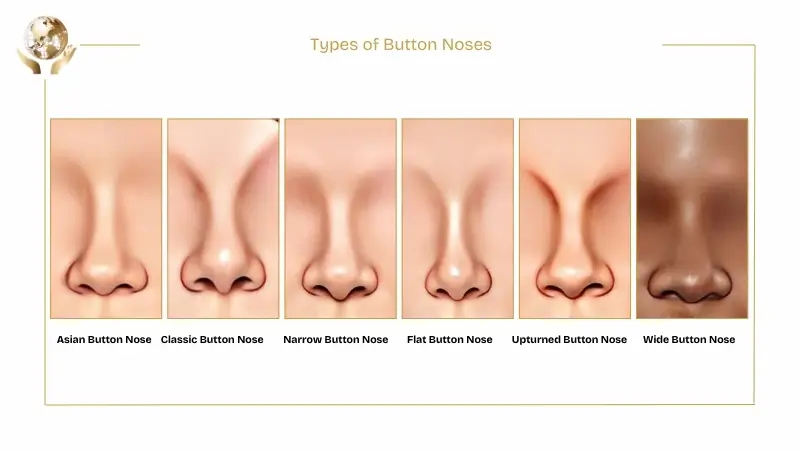
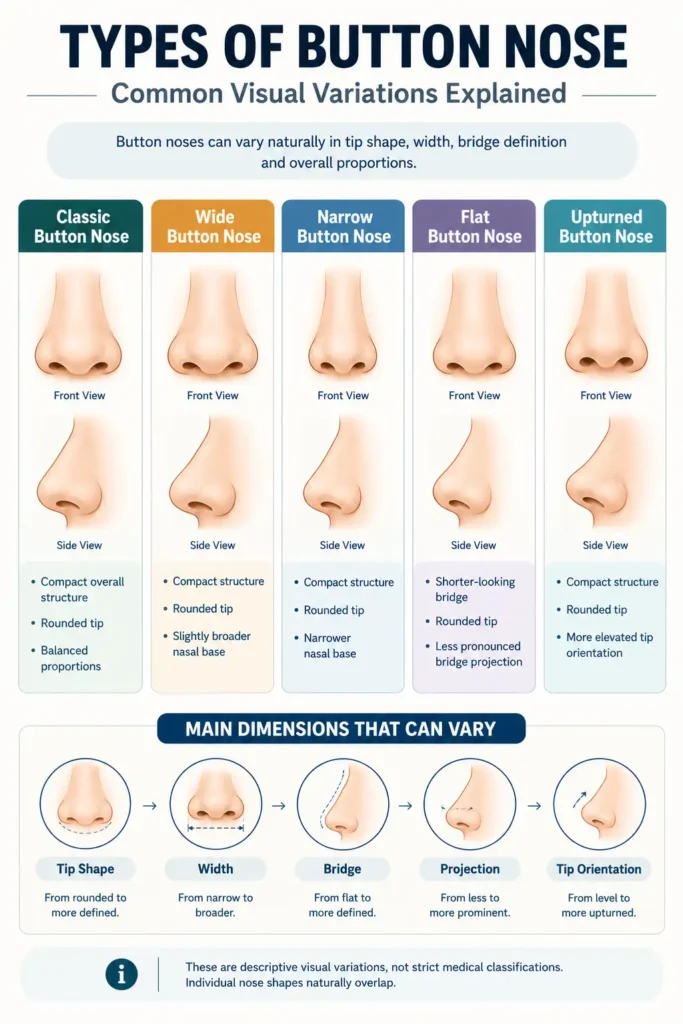
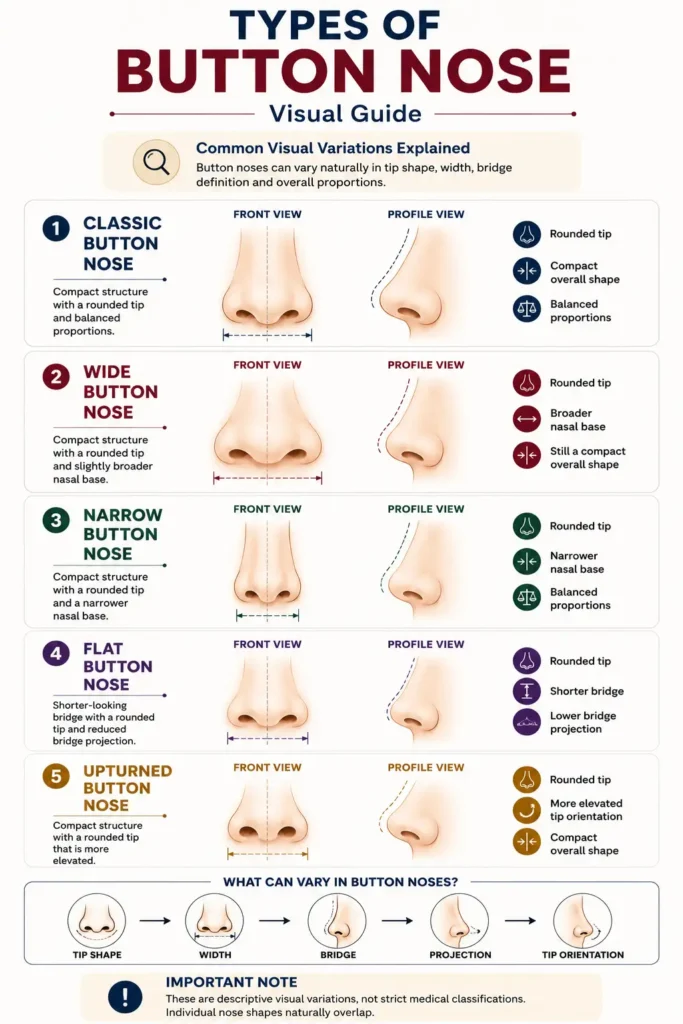
Classic Button Nose
The classic button nose is the shape most people picture when they hear the term. It shows balanced proportions across all its features. Width is moderate, neither especially wide nor especially narrow. The tip is softly rounded and sits centrally on the face.
Tip rotation is gentle and upward without appearing extreme. The nasolabial angle typically falls between 100 and 115 degrees. The bridge is low to moderate and follows a smooth, even line from the nasal root to the tip. Nostril visibility from the front is modest and proportionate.
From the side, the classic button nose shows a smooth, soft curve. The tip extends to a moderate degree from the face. The overall profile looks balanced and compact.
Wide Button Nose
A wide button nose shares all the core button nose traits but carries a broader nostril base. The front view appears fuller. The nostrils spread further apart than on a classic button nose, which increases the perceived width of the lower nose.
Tip rotation stays similar to the classic type. The tip remains rounded and upward-pointing. The wider base does not change the fundamental button nose classification. It simply reflects a broader cartilage and nostril structure.
From the front, a wide button nose can appear more prominent than a narrow version. From the side, the difference in width is less visible. The profile retains the same compact, upturned shape.
Narrow Button Nose
A narrow button nose shows the same rounded tip and upward rotation but on a slimmer base. The nostril width is reduced. The overall nose appears more delicate from the front.
The bridge on a narrow button nose is typically fine and low. The tip remains defined and rounded. The overall nose reads as compact and refined in scale. Width does not determine whether a nose belongs to the button nose category. A narrow version simply expresses the same structure on a smaller lateral scale.
From the side, a narrow button nose looks very similar to the classic type. The key visual difference appears in the front view, where the reduced nostril width creates a lighter, less wide appearance.
Flat Button Nose
A flat button nose shows minimal bridge height. The nasal dorsum sits very close to the face plane. This gives the nose a flatter appearance in profile. The tip remains rounded and retains the characteristic upward rotation of the button nose category.
From the front, a flat button nose may look wider because the low bridge reduces the shadow definition along the nose. The tip still dominates the lower portion of the nose. Nostril visibility stays consistent with other button nose types.
The flat button nose is common across a range of ethnic backgrounds. Lower bridge height is a genetic trait that frequently coexists with the rounded, compact tip structure of the button nose.
From the side, the profile shows very little bridge height. The nose appears closer to the face. The tip rotation is still visible but may look less pronounced due to the overall flat angle.
Upturned Button Nose
An upturned button nose shows a stronger rotation angle than the classic type. The nasolabial angle may reach 115 to 125 degrees. The tip points more noticeably upward. Nostril visibility from the front increases as the rotation angle rises.
The bridge on this type tends to be low and may carry a mild concave curve. The tip appears lifted even from a straight-on view. The overall nose still reads as compact and rounded, consistent with the button nose category.
At the more extreme end of this variation, the nose may begin to resemble a snub nose. The snub nose is a separate nose shape, not a subtype of the button nose. If the upward rotation becomes very pronounced and the bridge shows a sharper concave curve, the nose may move into snub nose territory structurally. The boundary between a strongly upturned button nose and a mild snub nose can be subtle.
Size Variations
Button noses can appear smaller or larger while retaining the same structural features. A smaller button nose sits more discreetly on the face. A larger button nose occupies more facial space but still reads as compact relative to its proportions.
Size is determined by the overall nasal scale, including tip width, bridge length, and nostril size. Scale does not change the shape category. A large nose with a rounded tip, low bridge, and gentle upward rotation still qualifies as a button nose.
Facial proportions affect how size is perceived. The same nose can read as small on a larger face and proportionate on a smaller face. Size perception is always relative.
Side Profile Differences
Profile appearance varies more than most people expect across button nose types. Projection, meaning how far the tip extends from the face, differs between types. A flat button nose projects less. A classic or narrow button nose projects moderately. An upturned button nose may project less due to the rotated tip angle.
Curvature of the dorsal line also varies. A classic button nose shows a smooth, even curve. A flat button nose shows very little curve. An upturned button nose may show a mild concave dip before the tip rises.
Camera angles and lighting significantly affect how these differences appear in photographs. Overhead lighting tends to exaggerate upward rotation. Straight-on lighting tends to flatten the profile. A true side-view photograph in natural light gives the most accurate structural reading.
Button Nose in Men vs Women
Button noses appear across all genders. General patterns exist in how the shape presents on different facial structures, but variation is wide and individual differences are significant.
On faces with finer or smaller overall features, a button nose tends to read as more prominent and defined. On faces with broader or stronger bone structure, the same nose shape may appear more subtle. Overall facial width influences how nostril width is perceived. A wider jaw can make a moderately wide button nose appear narrower by comparison.
Tip definition also varies. Some button noses show a very soft, rounded tip with minimal definition. Others show a more distinct tip with clearer shape. This difference appears across all individuals regardless of gender and relates primarily to cartilage structure and skin thickness.
Related Nose Shapes
Some button noses share visual traits with neighboring shape categories. Understanding these relationships helps with accurate identification.
The snub nose is the shape most commonly confused with the button nose. Both are compact and upturned. The snub nose carries a stronger upward rotation, a more abrupt bridge-to-tip transition, and a higher nasolabial angle. It is a distinct nose shape, not a variation of the button nose. A nose that shows very strong upward tilt with a concave bridge likely falls into the snub nose category rather than the button nose category.
Flat noses share the low bridge characteristic seen in the flat button nose variation. The difference lies in tip shape and rotation. A flat nose may not carry the rounded, upward-pointing tip that defines the button nose. Shape classification depends on the full combination of features, not any single trait.
For a broader look at how the button nose compares with other shapes, the button nose vs other nose shapes page covers those comparisons in detail.