

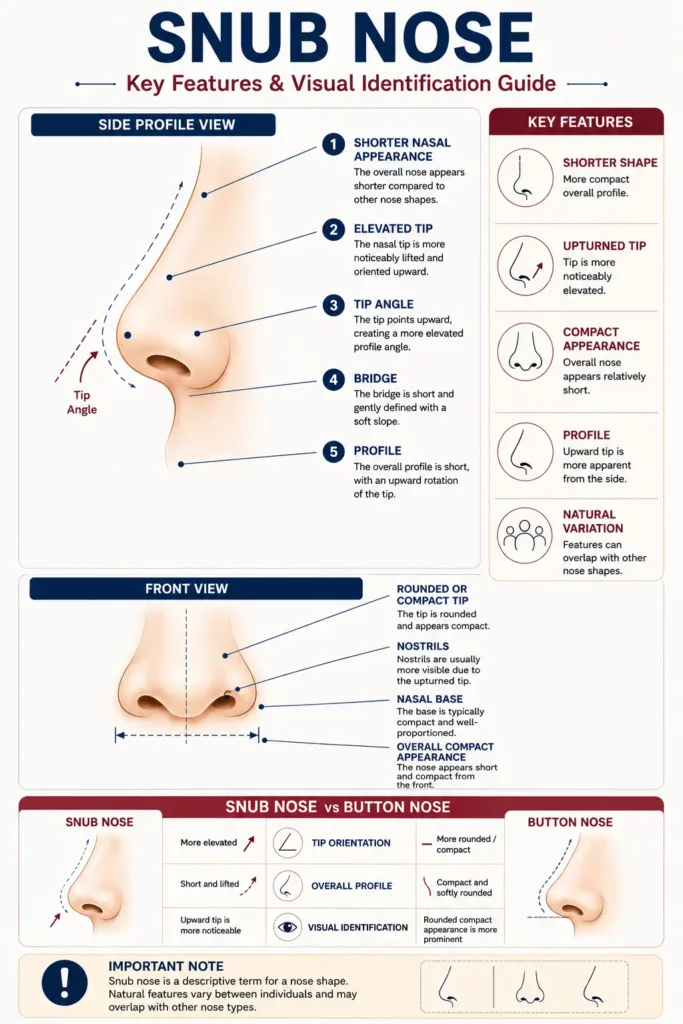
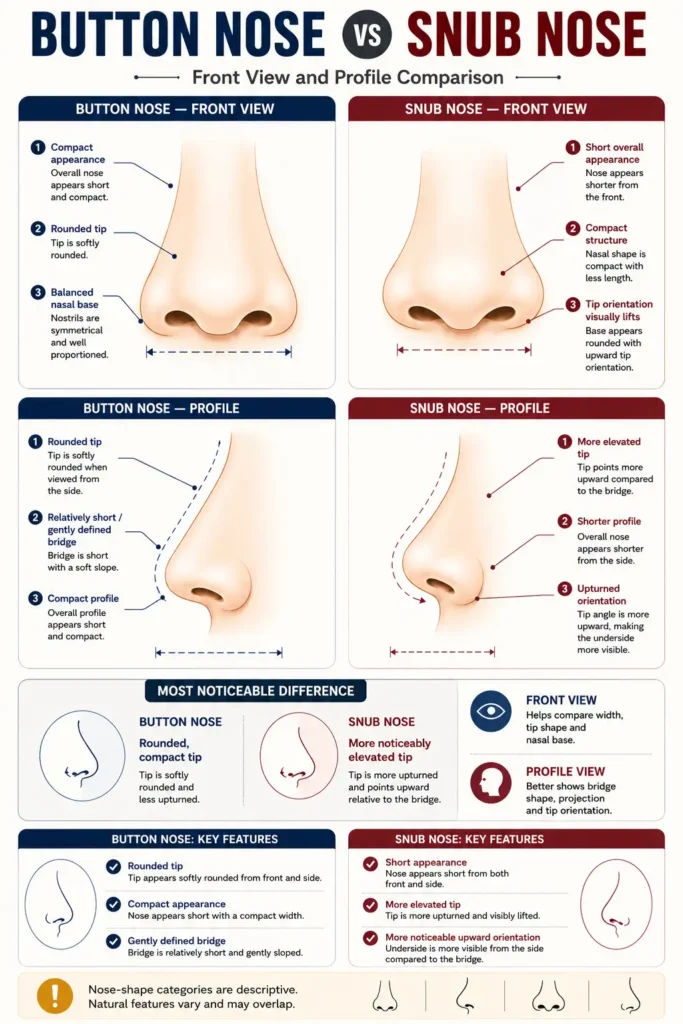
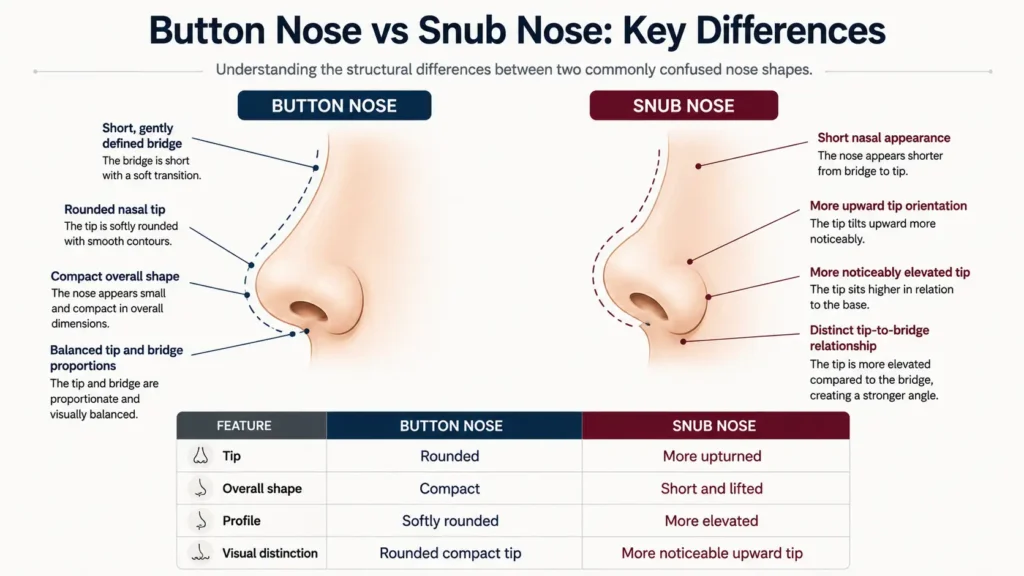
A button nose and a snub nose are both small, upturned shapes, but they differ in tip rotation, bridge curvature, and how sharply the tip lifts in profile. A button nose curves upward gently, with a nasolabial angle typically between 100 and 115 degrees. A snub nose tilts more sharply, often past 115 degrees, which is why the two get confused from the front but look distinct from the side.
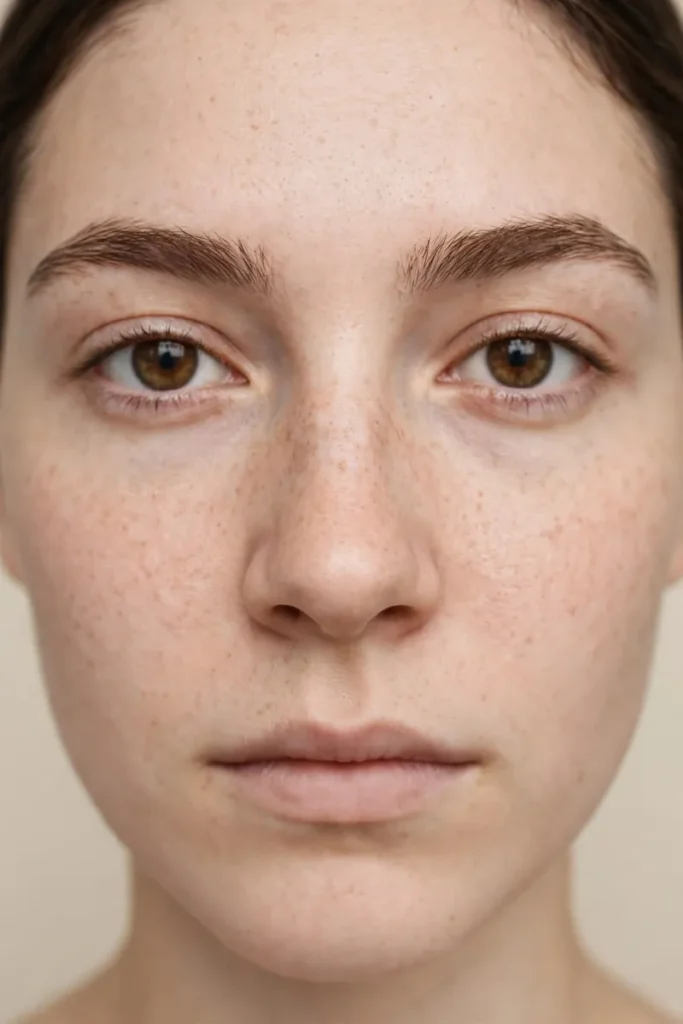
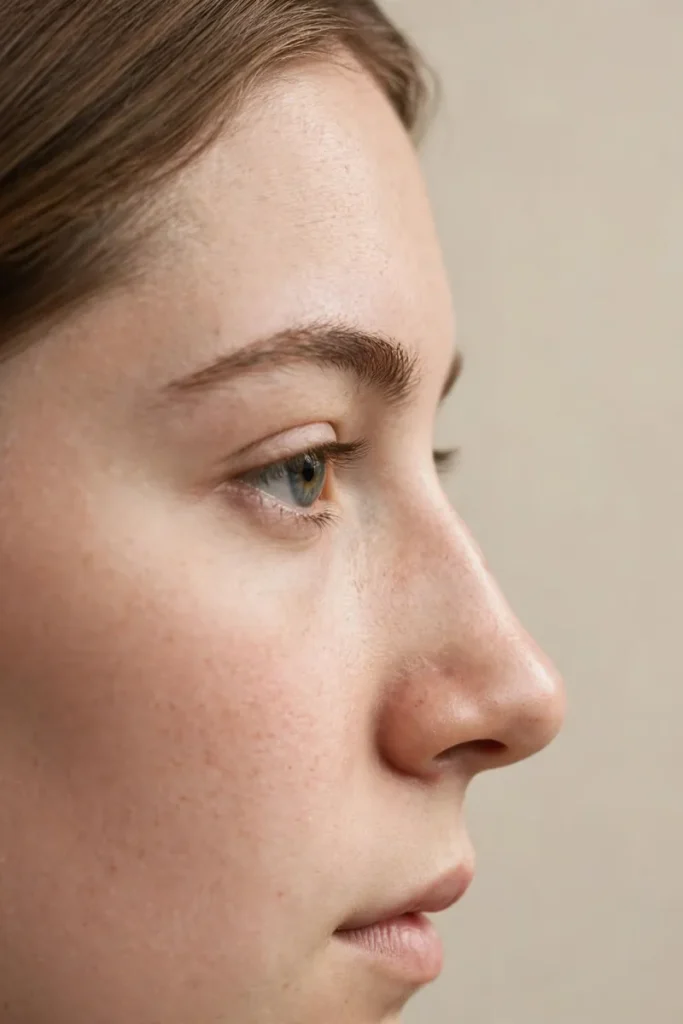
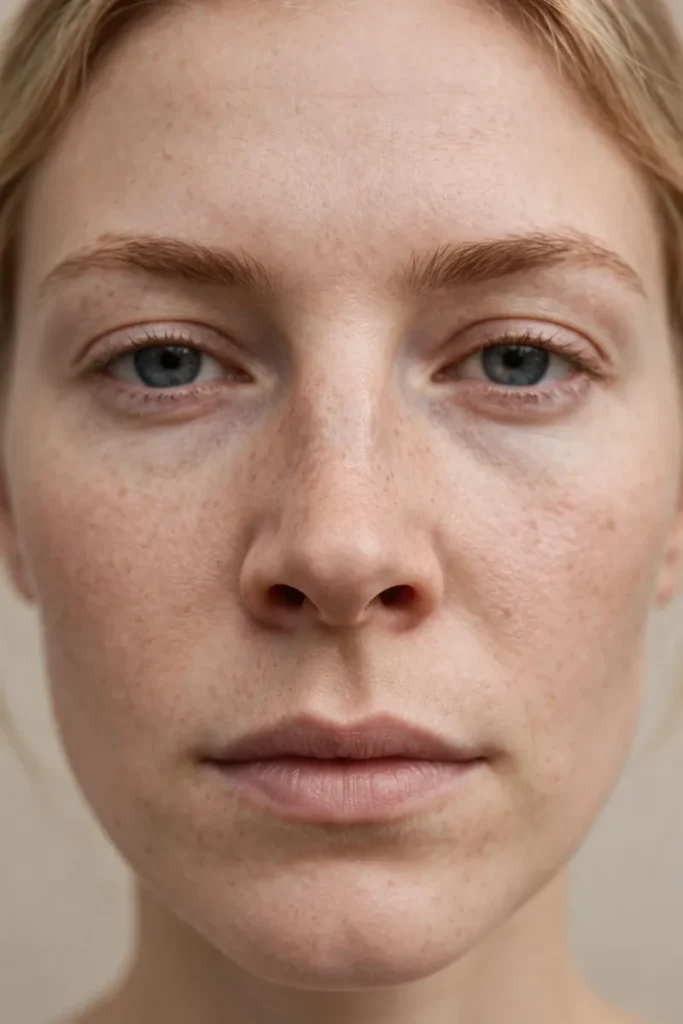
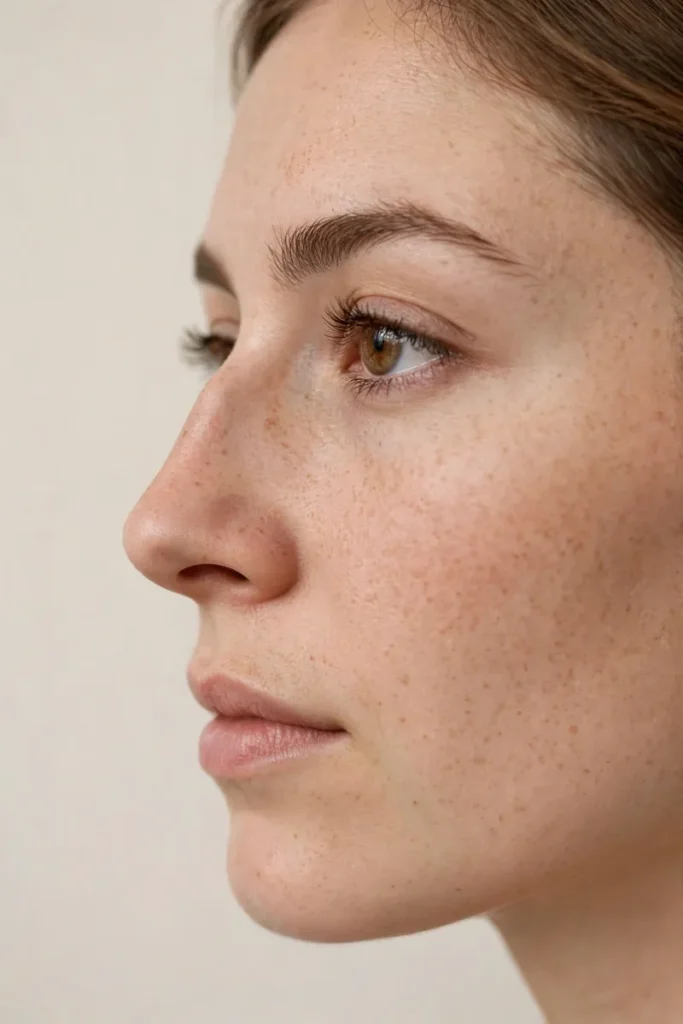
Why These Two Shapes Look So Similar
Both shapes are short, compact, and rounded. Both sit above the baseline of the columella, and both read as proportionate on smaller to medium facial structures. From a straight-on photo, the overlap is real — rounded tip, modest width, upward lift. That resemblance is exactly why “button nose vs snub nose” is one of the most searched nose-shape comparisons.
The difference isn’t a different shape category. It’s a difference in degree. A snub nose pushes the same core traits further: more rotation, a sharper bridge transition, slightly more nostril show. A button nose stays closer to the midpoint of that same range.
Tip Rotation: The Core Difference
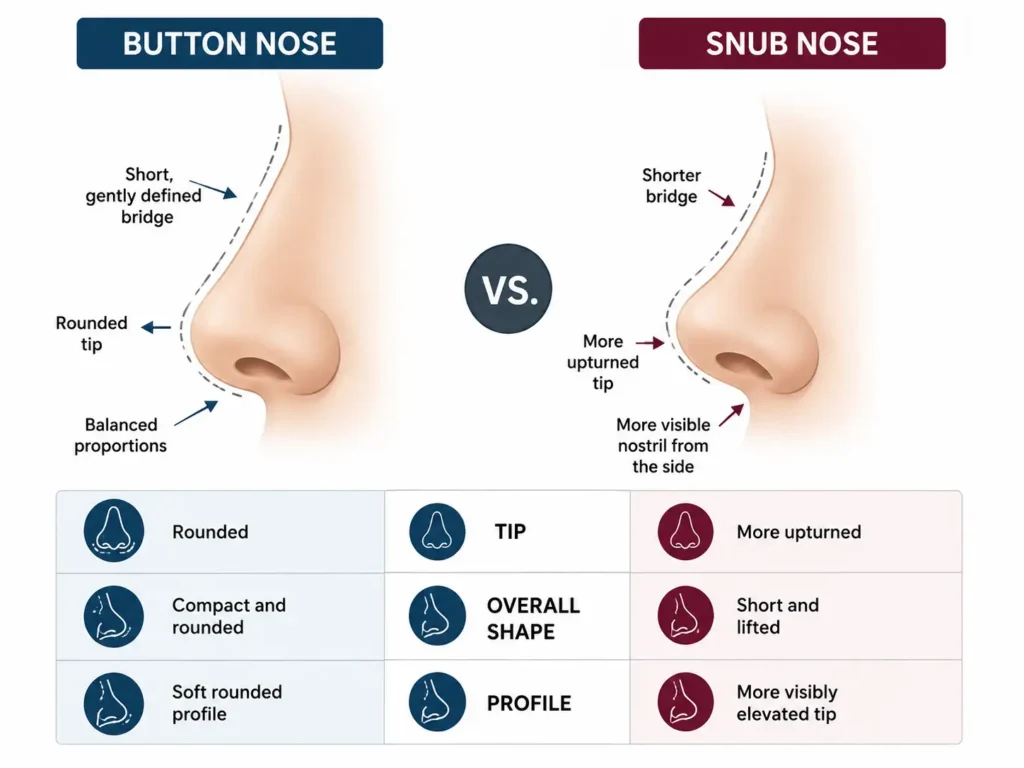
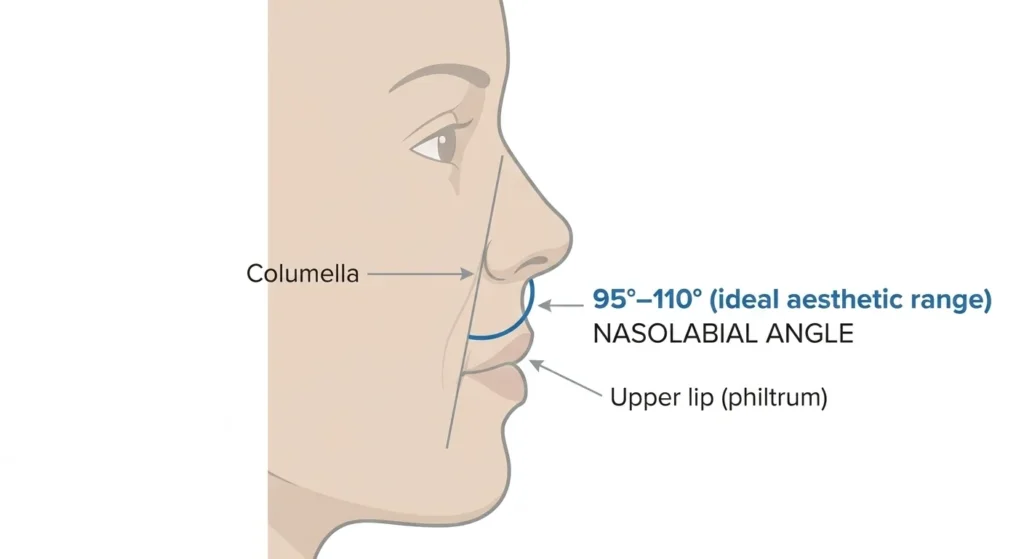
The nasolabial angle is the angle between the upper lip and the base of the nose, measured in profile. On a button nose, this angle typically falls between 100 and 115 degrees, producing a lift that reads as gentle rather than dramatic. The tip rises without pointing sharply skyward.
A snub nose usually carries a higher angle, often exceeding 115 degrees. The tip rotates more visibly upward, and that added rotation is the single biggest reason the two shapes get told apart in a side profile. Front-on, the difference softens. In profile, it’s immediate.
Nostril visibility follows the same logic. Higher rotation angle means more nostril shows from a neutral frontal view. A snub nose typically shows slightly more nostril at rest. A button nose shows less — present, but not the dominant feature of the face.
Bridge Structure
Bridge shape is the second major differentiator. A button nose usually has a low, smooth bridge that transitions gently into the tip, with a dorsal line that stays straight or only slightly curved. A snub nose more often shows a noticeable curve along that same dorsal line, sometimes mildly concave, with a sharper break where the bridge meets the upturned tip.
Bridge height reinforces the pattern. Button noses tend to sit low along the nasal dorsum from brow to tip. Snub noses show more variation — some have a higher upper bridge that drops quickly before the tip lifts, which sharpens the visual break between bridge and tip.
Front View vs. Profile View
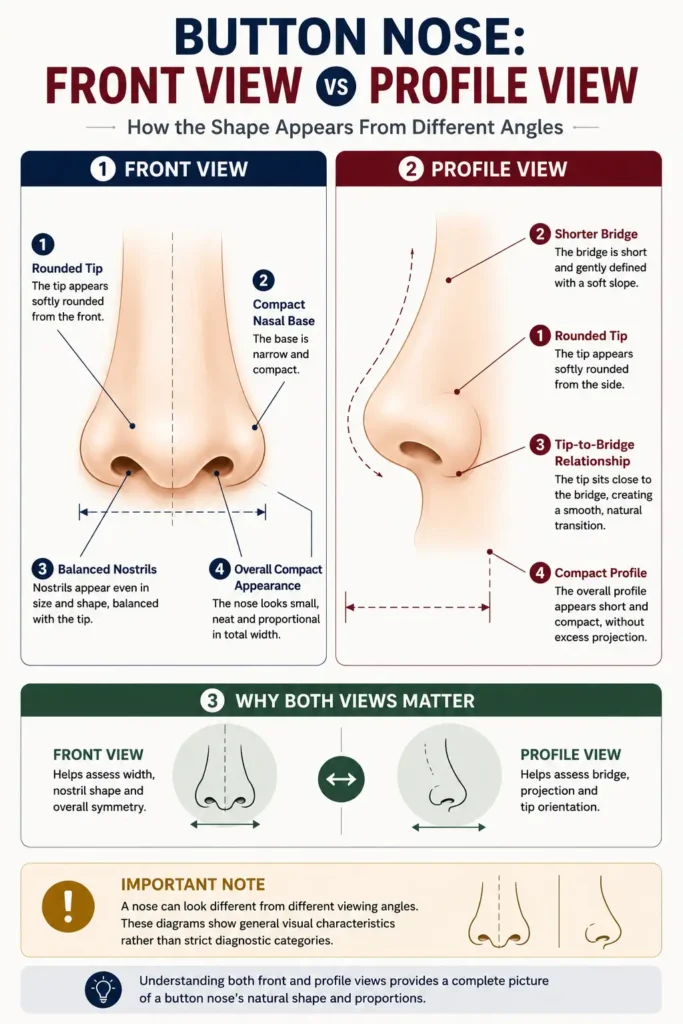
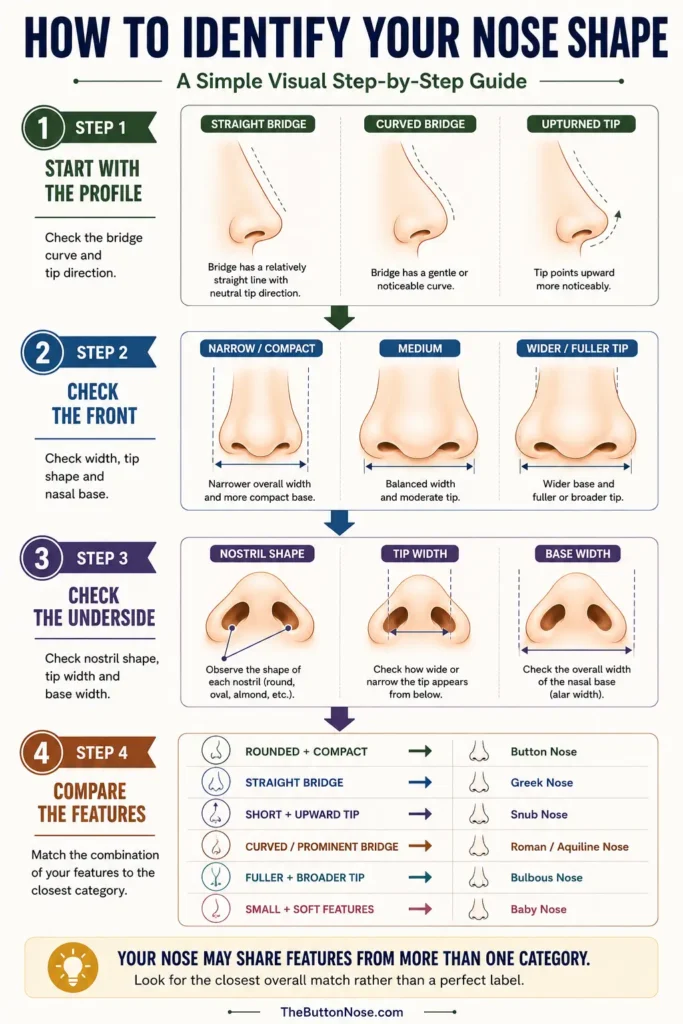
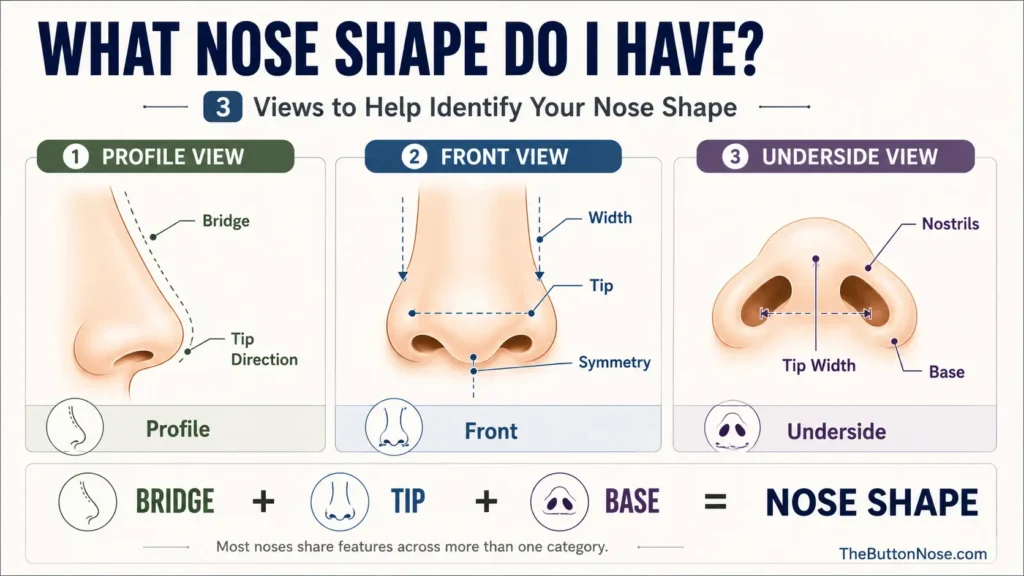
From the front, both shapes look rounded, centered, and compact, which is exactly why they’re so often mistaken for each other in casual photos. A button nose from this angle looks soft and symmetrical, with modest nostril visibility and a tip that doesn’t dominate the face. A snub nose from the front tends to show a bit more nostril and a slightly more open base, though the width itself can look similar between the two.
Profile view removes the ambiguity. A button nose curves upward smoothly, with moderate tip projection and no abrupt transition points. A snub nose tilts rather than curves — the bridge often drops before lifting sharply, and tip projection tends to read as slightly reduced. Curve versus tilt is the simplest way to hold the distinction in mind.
Is a Snub Nose the Same as a Button Nose?
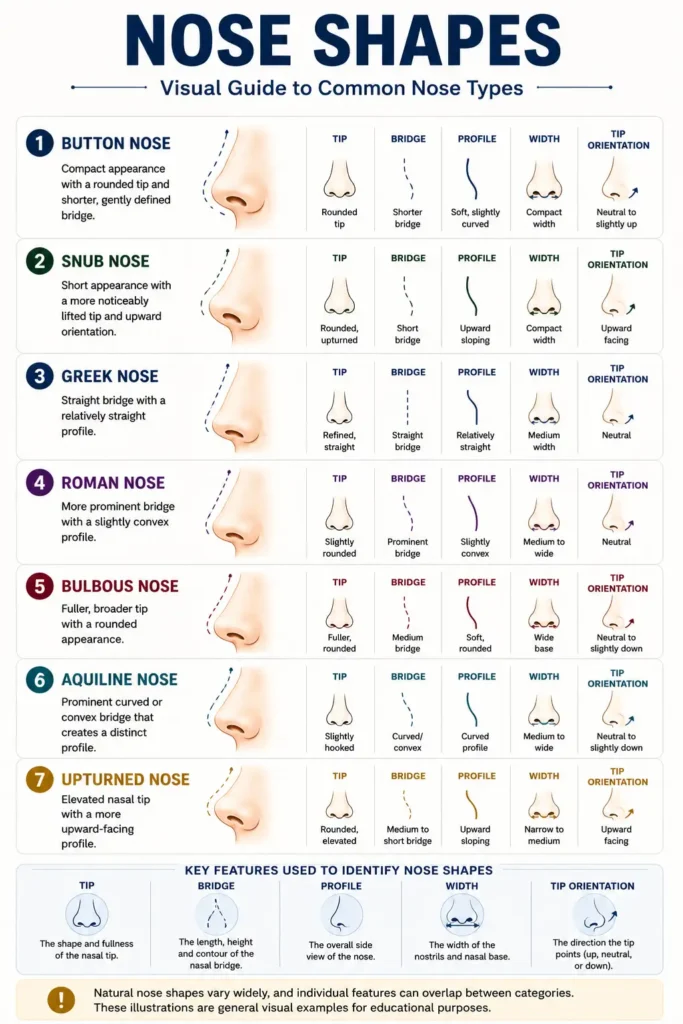
No. They’re related shapes that share several traits — small size, upward rotation, compact proportions — but they’re structurally distinct categories, not variations of one shape. A snub nose sits at the higher end of the rotation spectrum; a button nose sits closer to the middle.
Can a Nose Fall Between Both Categories?
Yes, and this is common rather than unusual. Nose shape exists on a spectrum shaped by cartilage structure, skin thickness, and bone proportions, so noses near the boundary between button and snub don’t always classify cleanly. These labels describe general tendencies, not fixed medical categories.
What This Means If You’re Comparing Your Own Nose
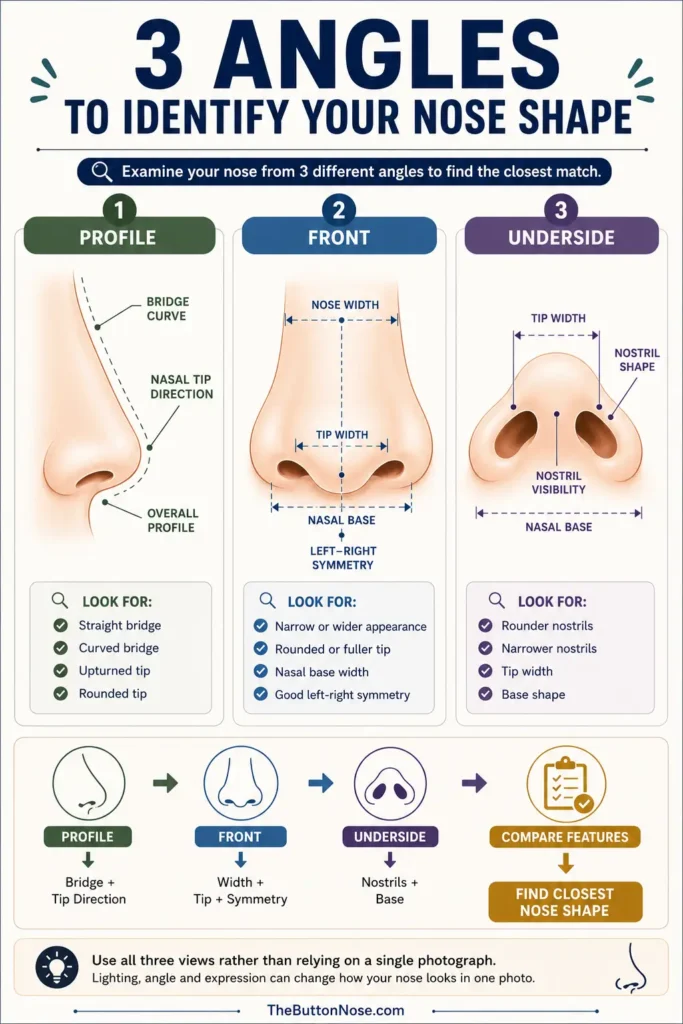
A clear side-profile photo in natural light is the most reliable way to place your nose in either category. Look at how sharply the tip lifts, whether the bridge stays smooth or shows a break near the tip, and how much nostril shows from straight ahead. If the lift is gentle and the bridge stays smooth, that leans button. If the tilt is pronounced and the bridge shows a sharper transition, that leans snub.
Thinking about achieving this look through rhinoplasty? Our button nose rhinoplasty guide covers how surgeons approach tip rotation and bridge refinement for this specific shape, along with realistic cost ranges.


