
What Is a Button Nose? Shape, Features & Identification Guide
A button nose is a small, rounded nose with a soft tip, a low bridge, and a slight upward tilt. Five structural traits define this shape: a domed nasal tip, a short nasal length, a low-to-moderate dorsum, a nasolabial angle between 95 and 110 degrees, and oval nostrils. Size alone doesn’t create a button nose — the tip shape and upward angle matter just as much as scale.
This guide breaks down each characteristic, shows what the shape looks like from every angle, and gives you a three-step method to check your own nose.
Quick Summary
A button nose is defined by five structural characteristics: a soft domed apex, a low-to-moderate dorsum, limited forward projection, a nasolabial angle between 95 and 110 degrees, and oval or softly curved nostrils. These button nose characteristics work together to create the compact, gently upturned appearance this shape is known for. Size alone does not define it — a small nose without the rounded tip and upward tilt does not qualify. This page covers each characteristic in detail, explains what the shape looks like from the front and side, and provides a step-by-step method for identifying this shape on your own face.
What Is a Button Nose, Structurally?
A button nose combines three core traits: a soft, domed apex, a low dorsum, and an upward tilt in profile. These three traits separate it from other compact nose shapes that share one or two features but not all three.
The nose sits close to the face rather than projecting outward. The apex stays soft and rounded instead of pointed. The bridge stays smooth, without a ridge or bump. Together, these traits create the contained, gently upturned look people associate with a button nose.
The name comes from a visual comparison. The small, domed tip resembles a button on a shirt — compact, centered, and curved. Genetics and cartilage structure produce the shape, not attractiveness or trend.
The 5 Key Button Nose Characteristics
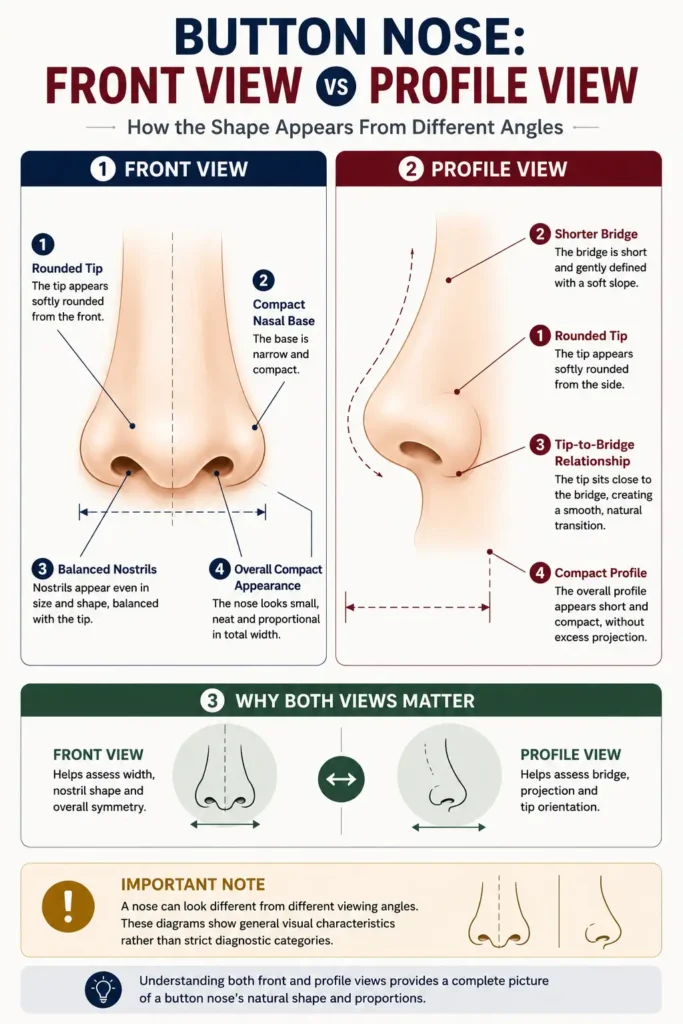
Each trait below stands on its own. You don’t need a measuring tool to spot most of them, though the angle range helps you draw a clear line between this shape and similar ones.
1. Soft, Domed Nasal Tip
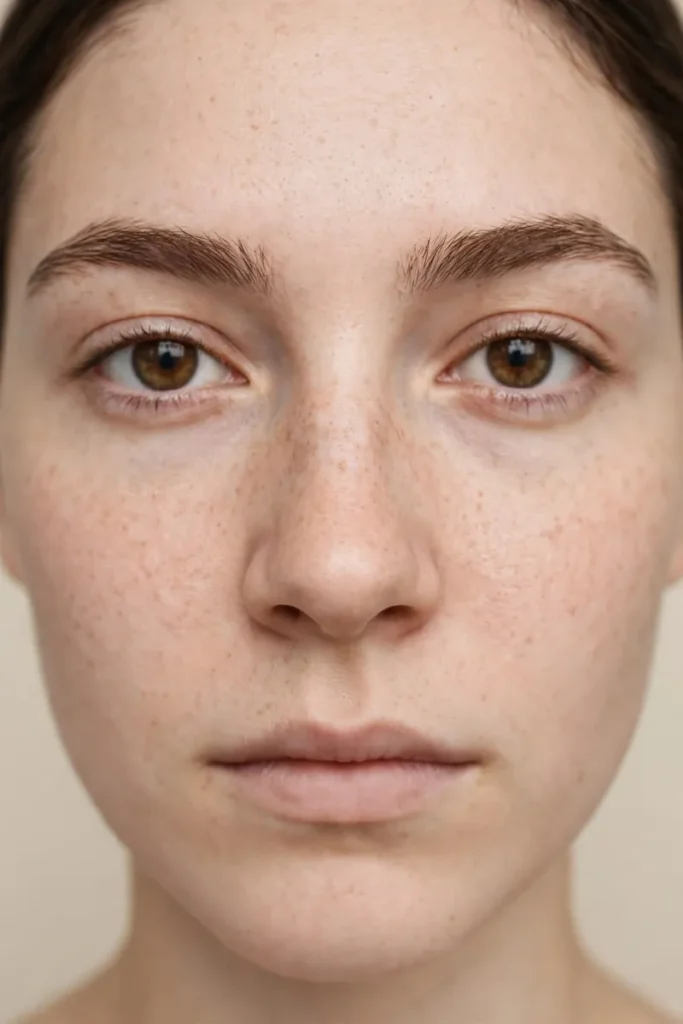
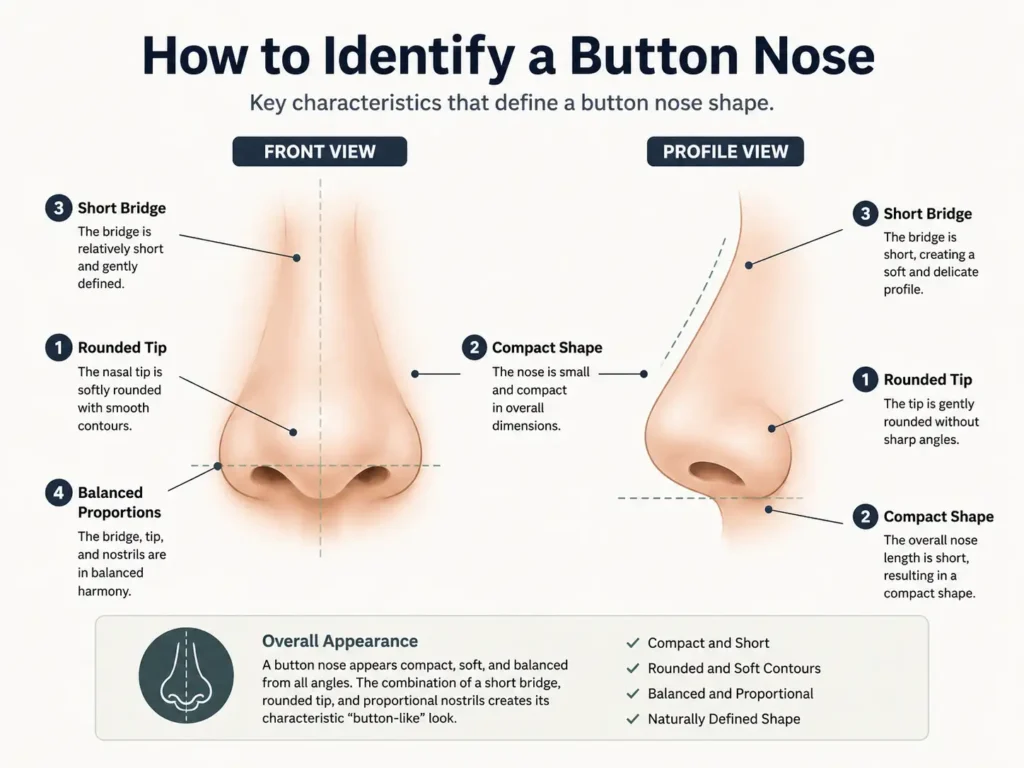
The tip curves smoothly instead of tapering to a point or spreading wide. This curve holds up from the front, the side, and a three-quarter angle. The tip doesn’t droop, hook downward, or narrow sharply. From straight on, the apex looks almost circular. This soft tip is the clearest single identifier of a button nose.
2. Short Nasal Length
The distance from the top of the bridge to the tip stays brief. In profile, the nose extends only slightly past the face. A longer nose — even with a rounded tip — doesn’t count as a button nose. Short length plus a domed tip together create the compact look people associate with this shape.
3. Low-to-Moderate Dorsum
The bridge doesn’t rise sharply between the eyes. It flows evenly from the forehead down to the tip, without a ridge or bump. This low dorsum separates a button nose from Roman or aquiline shapes, which pair a rounded tip with a raised bridge. A smooth bridge line holds across ethnic variations of this shape.
4. Nasolabial Angle Between 95 and 110 Degrees
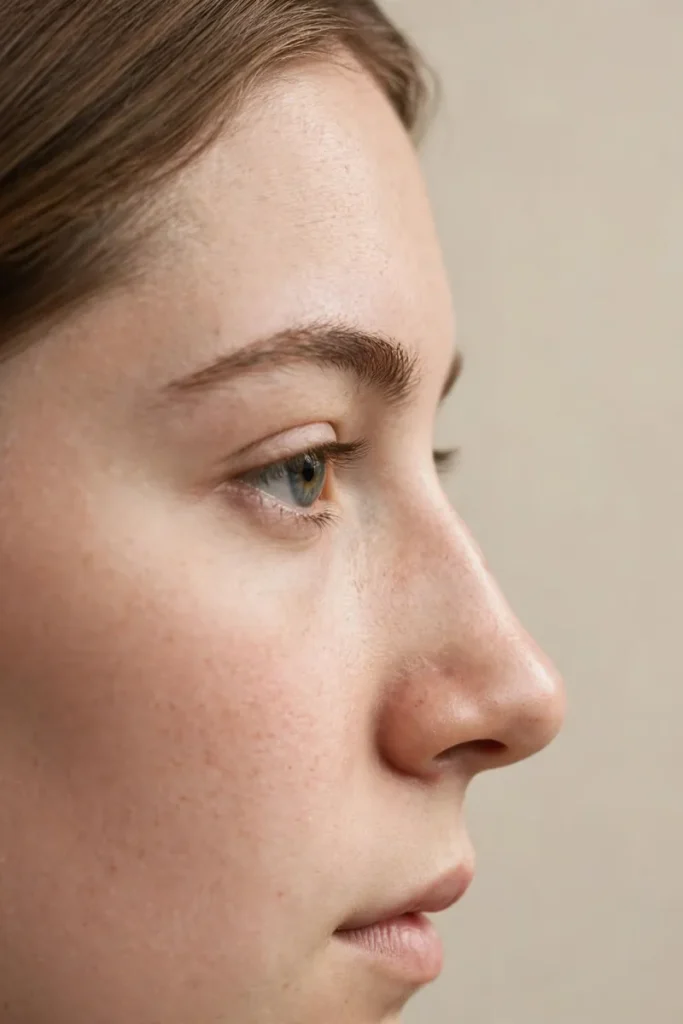
You measure this angle from the side, between the base of the nose and the upper lip. A range of 95 to 110 degrees produces the gentle upward tilt this shape shows in profile. Angles below 95 degrees create a level or downturned tip. Angles above 110 degrees push into snub-nose territory.
5. Oval or Softly Curved Nostrils
From the front, the nostrils look oval or gently curved, not flared. The upward tilt of the tip makes the nostrils slightly more visible from straight on — a result of tip angle, not nostril size. The overall frontal outline reads as curved rather than angular.

Is a Button Nose Just a Small Nose?
No. Size and shape work as separate factors here. A small nose can lack the domed tip and upward angle that define a button nose. Some small noses look narrow or angular instead of soft and rounded. Two people can share the same nasal length and still have different shapes if one has a pointed tip and the other has a domed, upturned one.
What Does a Button Nose Look Like?
From a Three-Quarter Angle
This angle shows the bridge and the tip shape at the same time. You can see the smooth dorsum, the domed apex, and the upward tilt together, with no sharp contour changes.soft, or delicate.

From the Side
The side profile gives the clearest read on this shape. The bridge rises gradually, without a steep slope. The line from the upper nose to the tip stays smooth. The upward tilt shows most clearly here, and the nose looks short overall.

From the Front
The nose looks centered and balanced, with moderate width. The nostrils stay narrow and don’t flare. The outline curves rather than angles. The domed tip stands out as the most visible feature from this view.

How to Know If You Have a Button Nose
Check your nose using three steps. Use a mirror and a side-profile photo for the clearest read, and keep your expression neutral with even lighting.
For a complete identification guide, see what nose shape do I have.
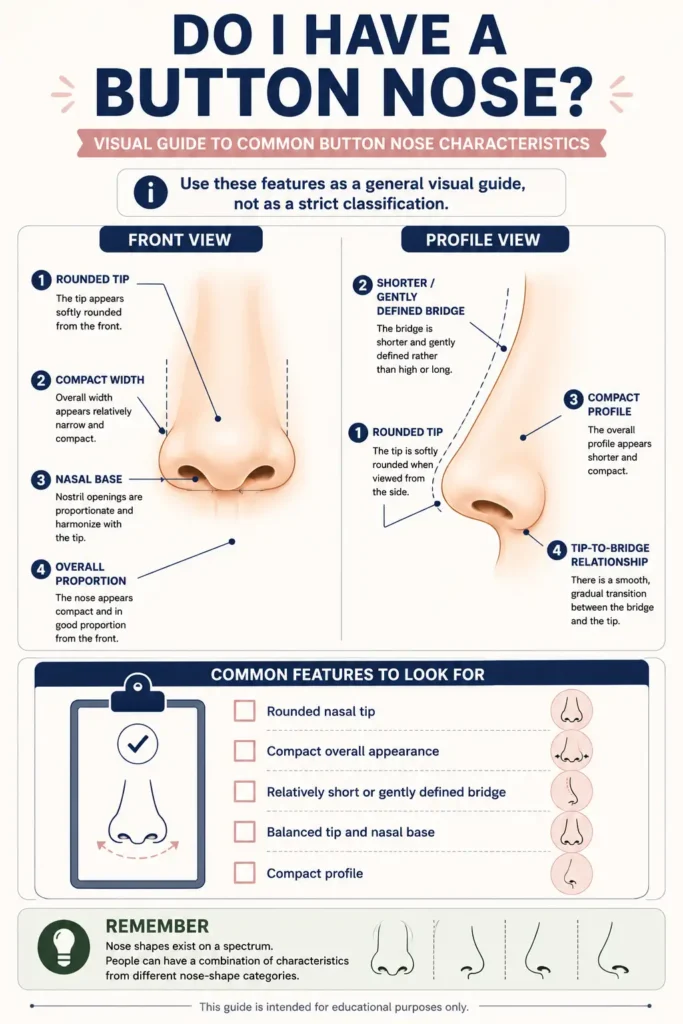
Step 1 — Check the tip. Look at your nasal tip with a neutral expression. Does it curve smoothly, without tapering to a point or spreading wide? A soft, blunt tip that reads almost circular from the front points to a button nose. An angular, sharply pointed, or hooked tip rules it out.
Step 2 — Check the bridge. Look at your bridge from the front, then check a side-profile photo. Does it sit low and flow smoothly from your forehead to your tip, without a bump? A bump in the upper bridge points toward a Roman or aquiline shape instead.
Step 3 — Check the tip direction. In your side-profile photo, does your tip point slightly upward, with a gentle lift rather than a sharp turn? A sharp upturn with nostrils clearly visible from the front points to a snub nose instead.
Quick result:
- Rounded tip + low bridge + gentle upward tilt → Button nose
- Rounded tip + sharp upward tilt + very visible nostrils → Snub nose
- Soft tip + low bridge + minimal projection + wide nostrils → Flat nose
- Rounded tip + visible bridge bump → Roman or aquiline nose
- Wide, heavy tip + low bridge → Bulbous nose
What Is a Button-Leaning Straight Nose?
This variation sits between a button nose and a straight nose. The dorsum stays mostly straight, and the tip carries only a slight upward tilt — less than a full button nose, but more than a straight profile. From the side, the bridge stays flat and doesn’t point down or forward. From the front, the tip looks slightly blunted rather than fully domed. This variation keeps the compact size and low bridge of a button nose, just expressed more subtly.
Button Nose vs Similar Shapes
Button Nose vs Snub Nose
Both shapes stay compact and upturned, which causes most of the confusion between them. The nasolabial angle marks the real difference. A snub nose sits above 110 degrees, which exposes more nostril from the front. A button nose stays in the 95-to-110-degree range, with a gentler upward curve. See the button nose vs snub nose comparison for the full breakdown.
Button Nose vs Flat Nose
Both sit close to the face with a low bridge. Tip direction sets them apart. A flat nose keeps a level or downward tip, with nostrils that spread wider. A button nose pairs its low bridge with a rounded, upturned apex — the clearest visual difference between the two.
Button Nose vs Bulbous Nose
Tip weight separates these shapes. A button nose keeps a small, proportionate apex. A bulbous nose carries a wider, heavier tip with more soft tissue over the cartilage. See the button nose vs bulbous nose comparison for a full side-by-side.
Button Nose vs Greek Nose
A Greek nose runs straight from the forehead to the tip, without a curve or bump. It usually shows more length and less upward tilt than a button nose. Check the button nose vs Greek nose page for the full comparison.
For a side-by-side against every common shape — Roman, hawk, aquiline, nubian, straight, and more — see the button nose types guide.
For detailed head-to-head comparisons, see button nose vs other nose shapes.

What Causes a Button Nose?
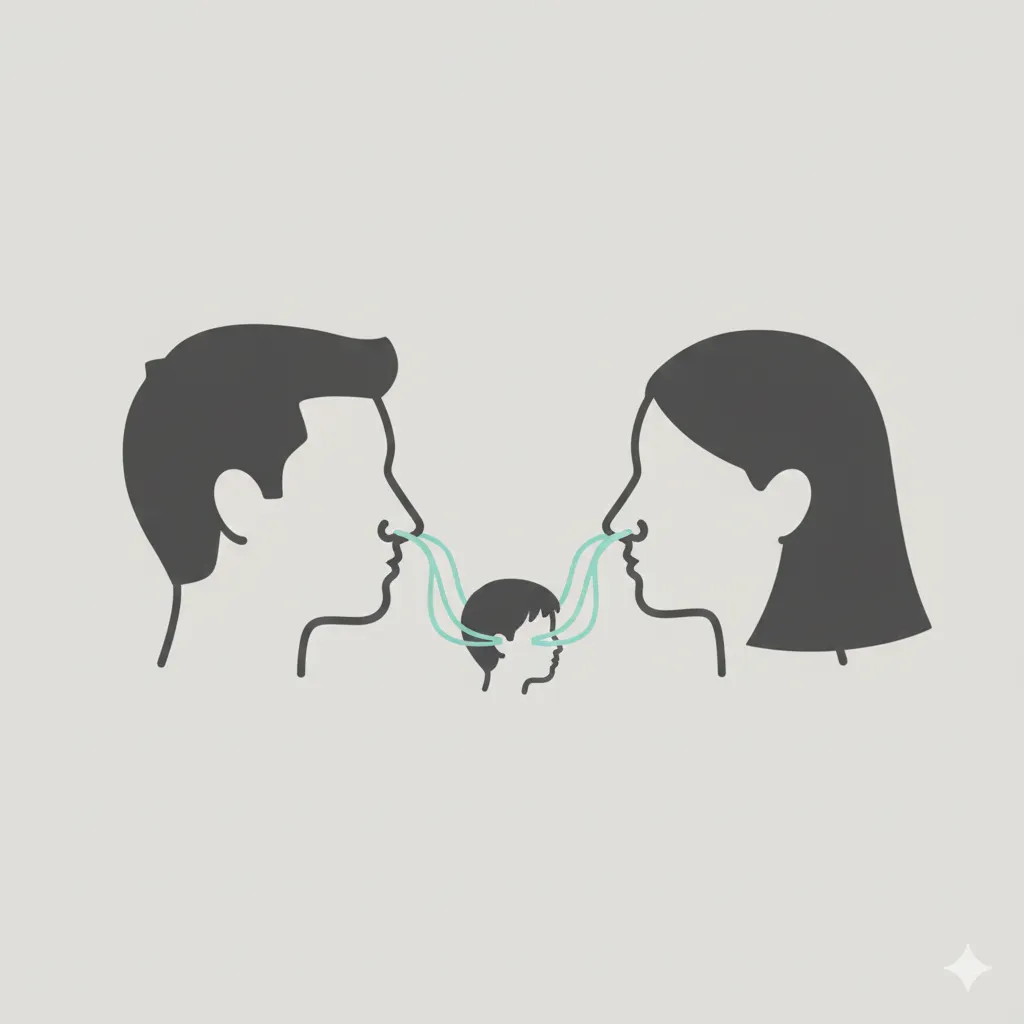
Genetics shapes a button nose. Genetics sets the nasal cartilage position, the nasal bone length, and the tip angle before birth, then continues to shape them as the face grows through childhood.
This shape often runs in families. A parent and child can share the same compact tip, low bridge, and upward tilt without any outside influence. Genetic background also shapes the specific variation — narrower, wider, or more upturned. No external method changes the bone or cartilage structure that genetics sets.
Does This Shape Appear Across Ethnicities?
Yes. A button nose shows up across many ethnic backgrounds, and no single population holds this shape exclusively. Some East Asian facial structures carry this shape with a flatter bridge and a softer apex. Some South Asian faces pair it with slightly wider nostrils, while keeping the compact length. Some Western European faces carry a slightly higher bridge, with the upward tilt and rounded tip still intact. The rounded tip and compact size stay recognizable across all of these variations.
Does a Button Nose Change With Age?
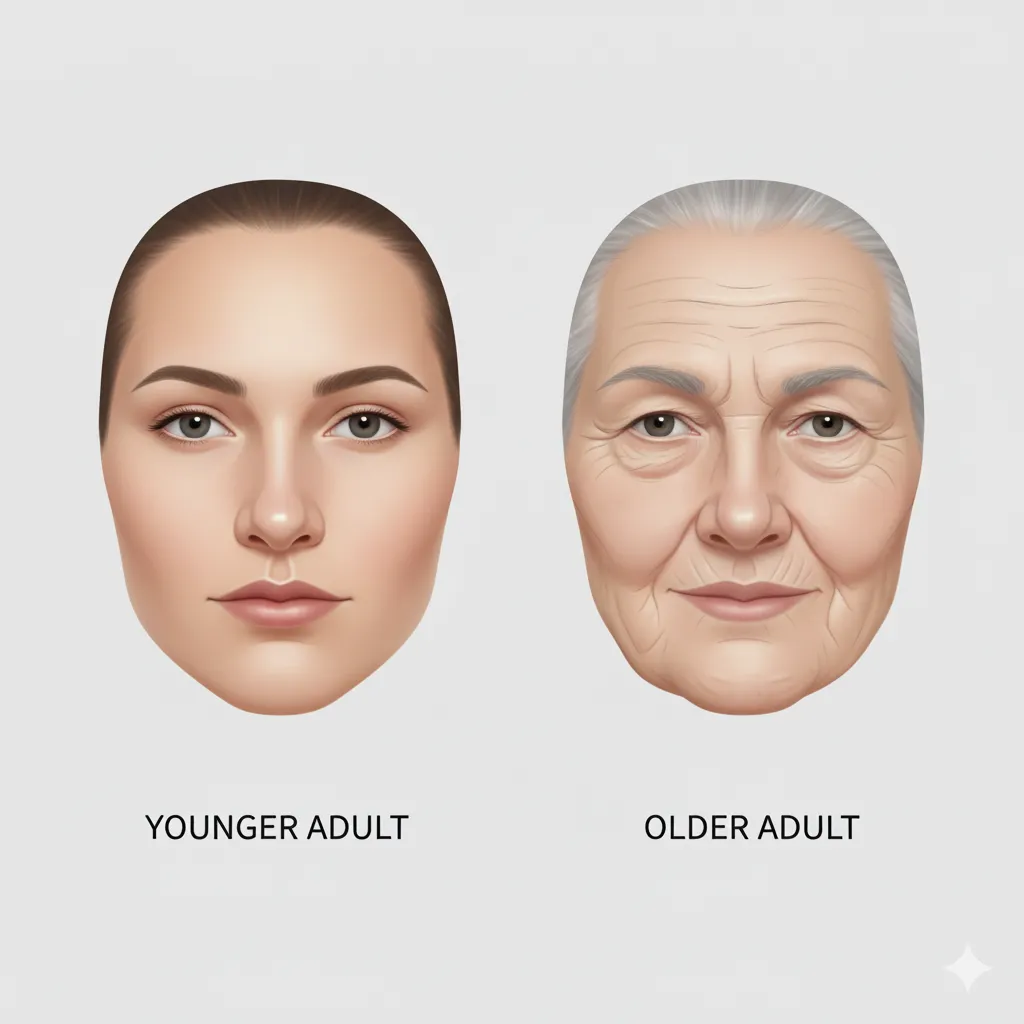
This shape shows its clearest form during childhood, when the apex looks soft, the dorsum stays low, and the compact scale stands out against a developing face. As the face grows through adolescence, the nose can look slightly longer relative to other features.
In adulthood, the nose usually looks marginally longer than in childhood, though the soft, curved qualities tend to stay. The upward curve, the low bridge, and the limited projection often carry into full adulthood. Cartilage can soften slightly with age, which may shift tip projection later in life, though the core traits generally hold steady.