
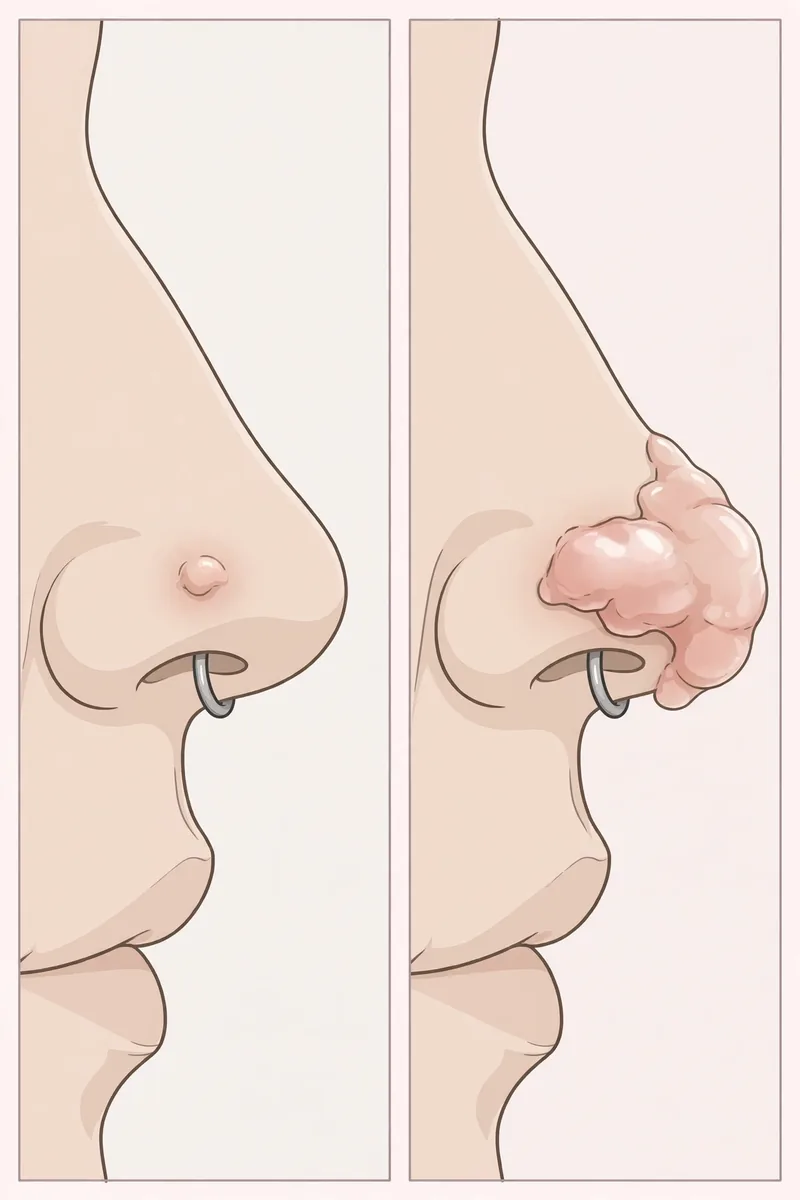
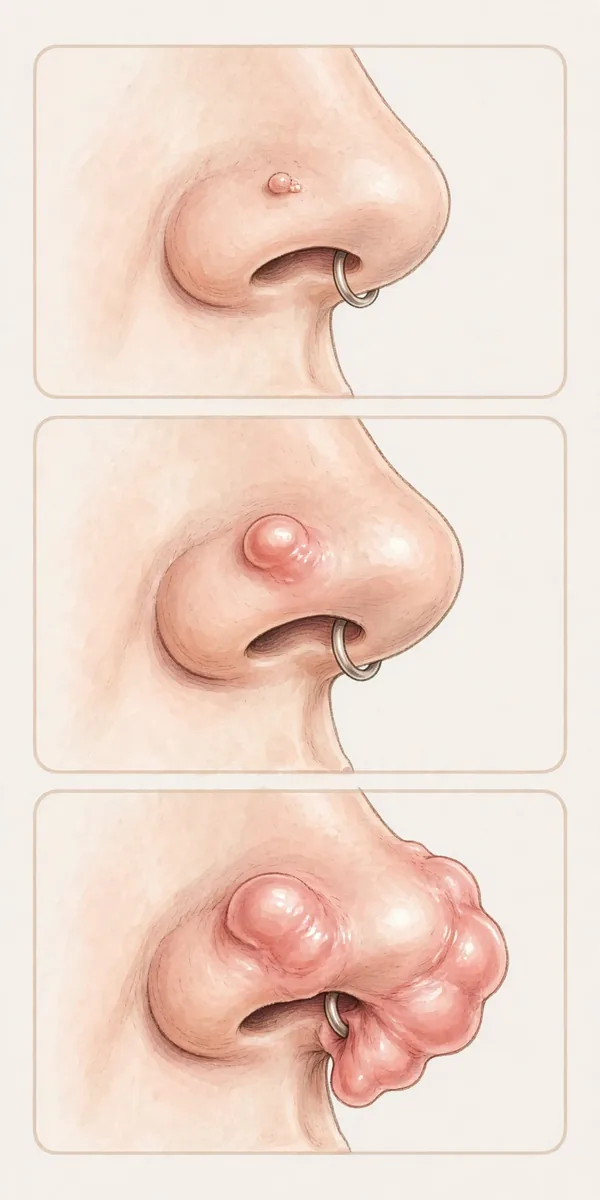
A keloid on a nose piercing is a firm, shiny overgrowth of scar tissue that grows slowly beyond the piercing site and keeps growing over months. Unlike a common irritation bump — which is small, flesh-colored, and shrinks once the irritation stops — a keloid does not go away on its own and needs a dermatologist’s treatment.
If your lump is hard, smooth, and expanding past the jewelry hole, treat it as a possible keloid: do not try home remedies, and book a dermatologist rather than a piercer.
This guide gives general information and is not medical advice. See a dermatologist for diagnosis and treatment. For the full picture, start with our complete nose piercing guide.
Keloid vs Irritation Bump vs Hypertrophic Scar
Getting the diagnosis right matters because the treatments are completely different:
- Irritation bump — soft, flesh-colored, appears within weeks of an irritation event and shrinks once the cause is removed. See our nose piercing bump guide for treatment.
- Hypertrophic scar — raised and firm but stays within the piercing site. Often improves with pressure and time.
- Keloid — firm, shiny, and grows beyond the original wound boundaries. Keeps growing slowly and does not regress without treatment.
When in doubt, a dermatologist can tell them apart in one visit — do not self-diagnose from photos alone.
Who Gets Keloids From Nose Piercings?
Keloids have a strong genetic component. You are at higher risk if:
- You or close family members have developed keloids before (from any wound, not just piercings).
- You have a personal history of raised scars after cuts or acne.
- Certain backgrounds carry higher keloid prevalence — ask your dermatologist about your personal risk.
If keloids run in your family, discuss it with both your piercer and a dermatologist before getting pierced.
Can You Prevent a Keloid on a Nose Piercing?
- Know your risk first — family history is the biggest predictor.
- Choose an experienced piercer and implant-grade titanium jewelry to minimize trauma.
- Follow gentle aftercare: saline twice daily, no picking or twisting.
- Do not get pierced with a gun — the extra tissue trauma raises risk.
- At the first sign of abnormal raised scarring, see a dermatologist early. Early keloids respond better to treatment.
How Are Keloids Treated?
Keloid treatment is medical, not cosmetic DIY. Dermatologists typically use:
- Corticosteroid injections — the first-line treatment; flattens and softens keloid tissue over several sessions.
- Pressure therapy — custom pressure devices worn after other treatments to discourage regrowth.
- Laser therapy — reduces redness and can flatten smaller keloids.
- Surgical removal — reserved for large keloids, usually combined with injections or radiation afterward because surgery alone has a high recurrence rate.
What does not work: tea tree oil, aspirin paste, popping, or cutting it yourself — all of these risk making the keloid larger or causing infection. And do not simply remove the jewelry and hope: the keloid is scar tissue, not a piercing problem, and it stays after the jewelry is gone.
Keloid Nose Piercing FAQs
How do I know if my bump is a keloid?
The key test is growth beyond the piercing: irritation bumps stay small and localized, while keloids are firm, shiny, and expand past the original wound over months. A dermatologist confirms it.
Can a keloid go away on its own?
No. Unlike irritation bumps, keloids do not regress without treatment. Early dermatological treatment gives the best results.
Should I remove my nose piercing if I have a keloid?
Ask your dermatologist first. Removing jewelry does not remove a keloid — it is scar tissue — and treatment usually proceeds with or without the jewelry in place.
Can I get my nose re-pierced after a keloid?
Re-piercing the same area carries a high risk of another keloid. Discuss it with your dermatologist before deciding.
Keep exploring: our nose piercing guide hub links every article in this cluster.