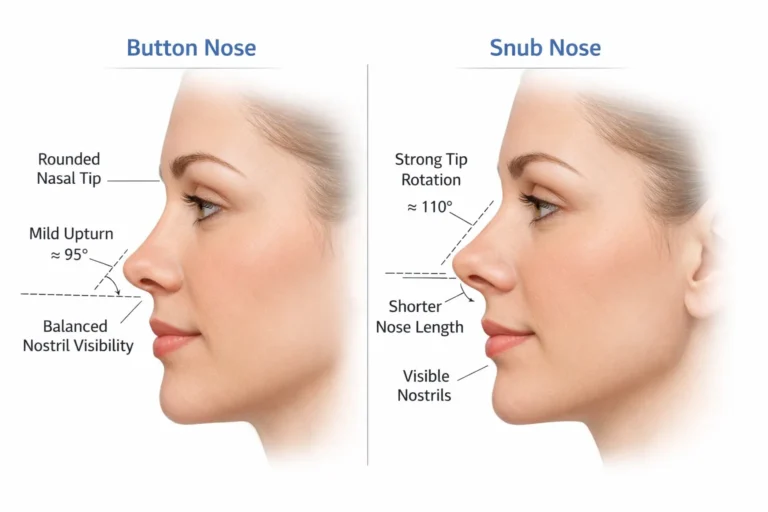
Quick Summary
A button nose and a Greek nose differ in almost every structural dimension. A button nose is compact, carries a rounded tip, and shows a gentle upward rotation. A Greek nose shows a straight nasal bridge that forms a continuous, uninterrupted line running from the forehead down to the nasal tip. The Greek nose is longer and more linear. The button nose is shorter and more rounded. Both shapes are natural anatomical variations that develop through genetics and biological growth. This page is part of a broader comparison series found in the button nose vs other nose shapes guide.


What Is a Button Nose
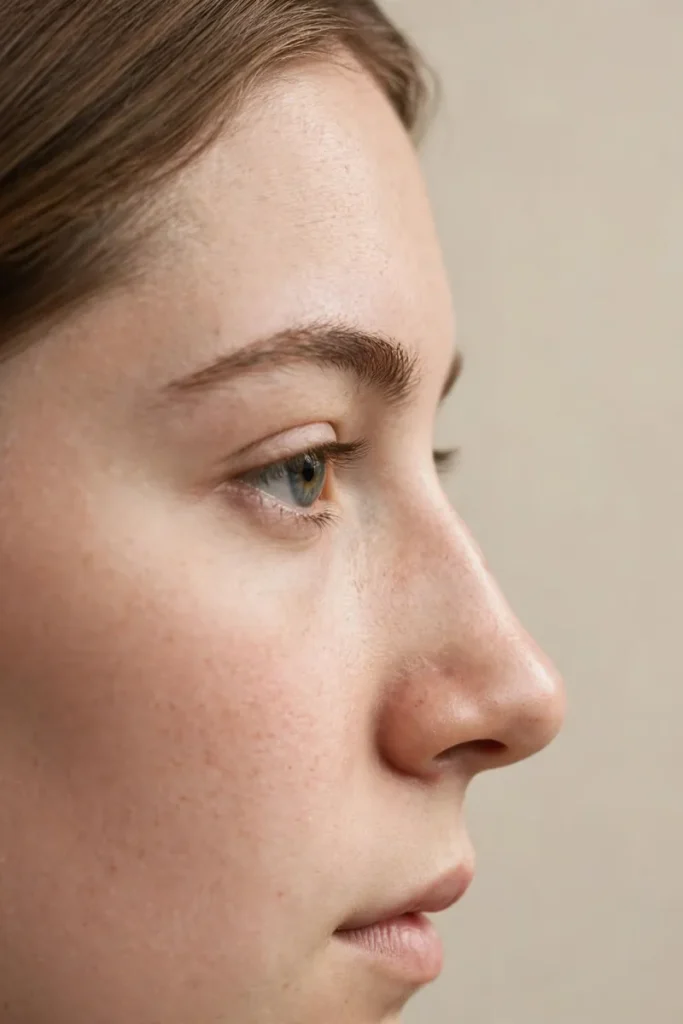
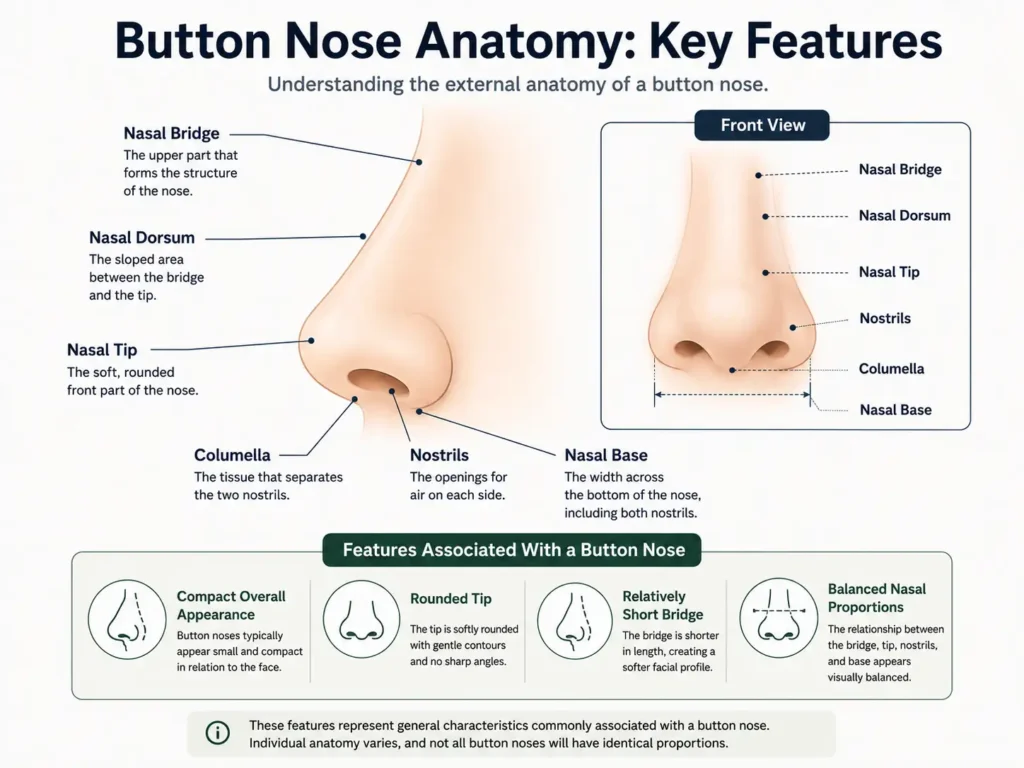
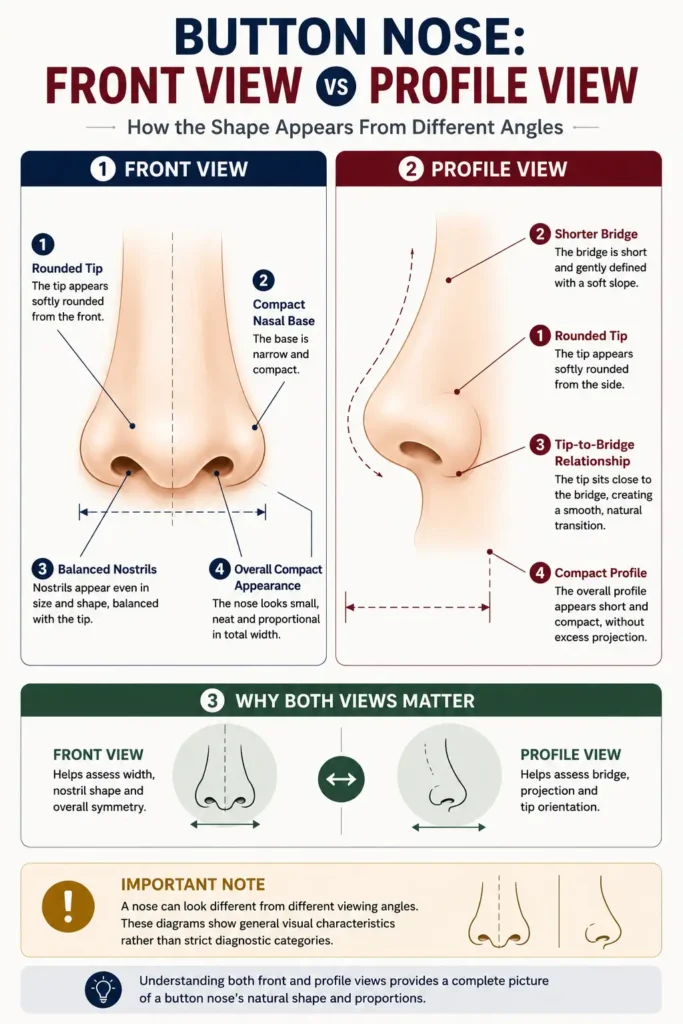
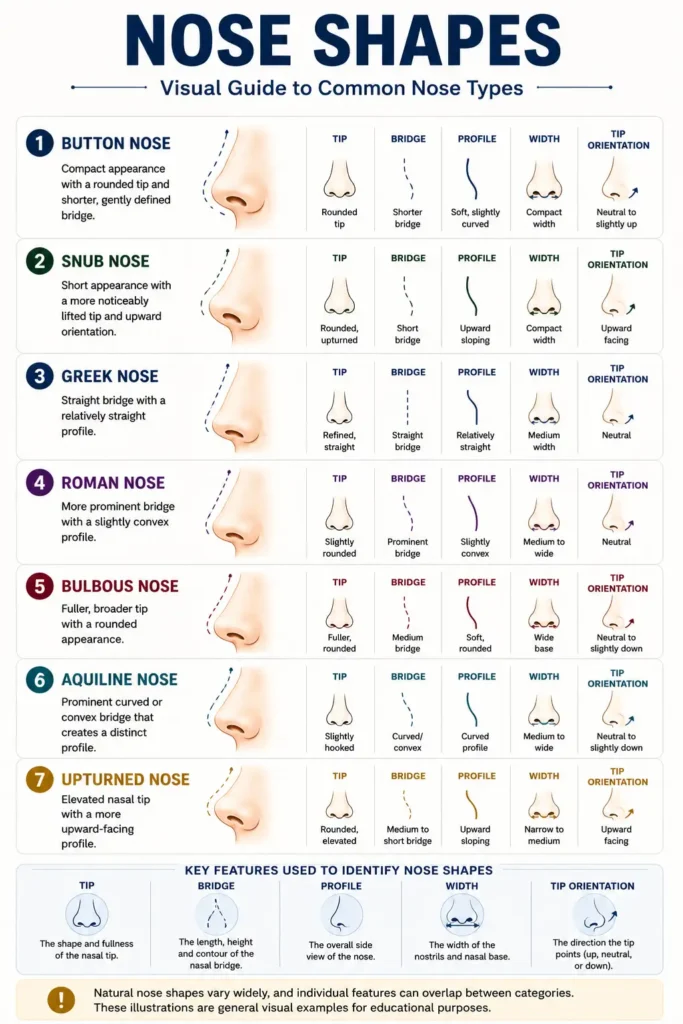
A button nose is defined by a rounded nasal tip, a compact overall length, and a gentle upward rotation at the tip. The nasal bridge sits low to moderate and follows a smooth, even line. There are no significant humps, arches, or dramatic curves along the dorsal line. The bridge leads naturally into the rounded tip without any abrupt directional change.
The defining combination of traits is the rounded tip paired with a short, compact profile. The nose does not project dramatically from the face. It sits proportionately close to the face plane while maintaining a defined and symmetrical shape. Nostril visibility from the front is modest, with a slight upward rotation making the nostrils partially visible at a neutral angle.
Button noses appear across many individuals regardless of age or background. The shape is one of the most widely recognized compact nose types and represents one natural point on the broad spectrum of human nasal variation.
What Is a Greek Nose
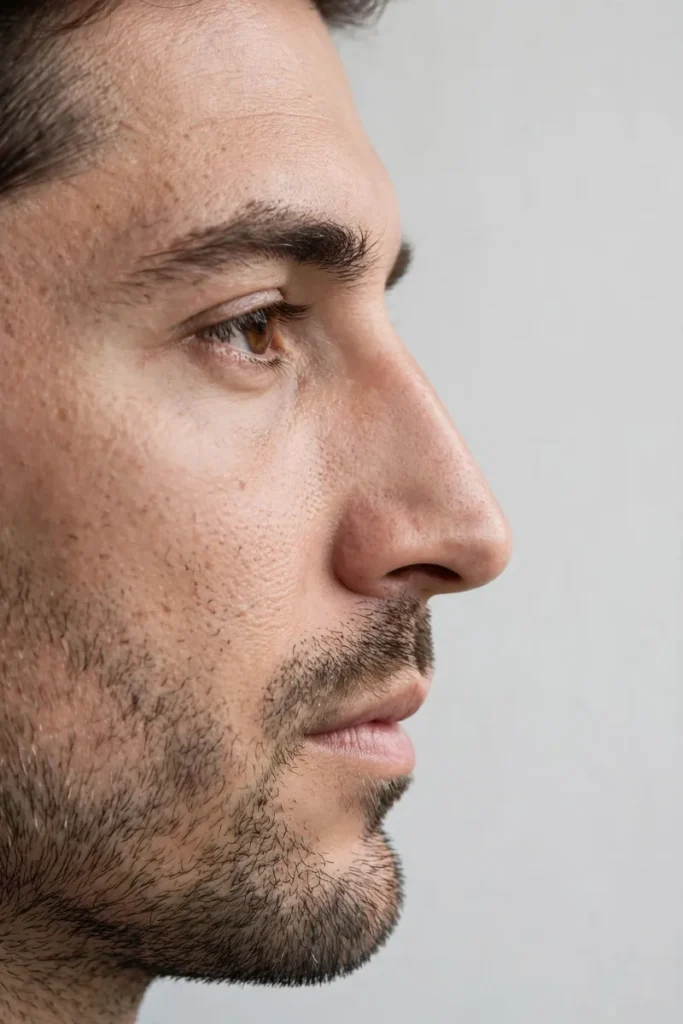
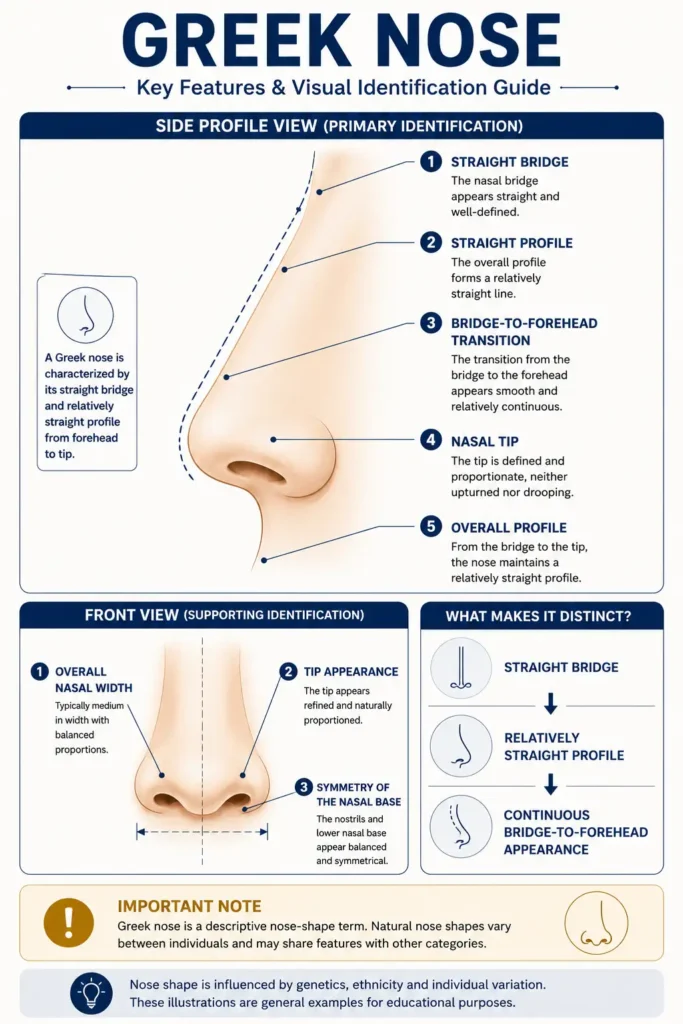
A Greek nose is defined by a straight nasal bridge that runs in an almost perfectly linear path from the nasal root down to the tip. The dorsal line shows no significant curve, arch, or deviation. It continues the line of the forehead smoothly, creating a clean and uninterrupted profile from brow to tip.
The nasal structure on a Greek nose tends to be longer than on a button nose. The profile is narrow and well-defined. The tip is typically refined and proportionate, sitting at the end of the straight dorsal line without pointing significantly upward or downward. Nostril width is moderate to narrow, consistent with the overall slim structure.
The Greek nose often appears very linear when viewed from the side. The straight bridge is the most immediately recognizable feature. It creates a profile silhouette that reads as clean, vertical, and even. This linearity is what separates the Greek nose most clearly from rounded or arched nose shapes.
Key Structural Differences
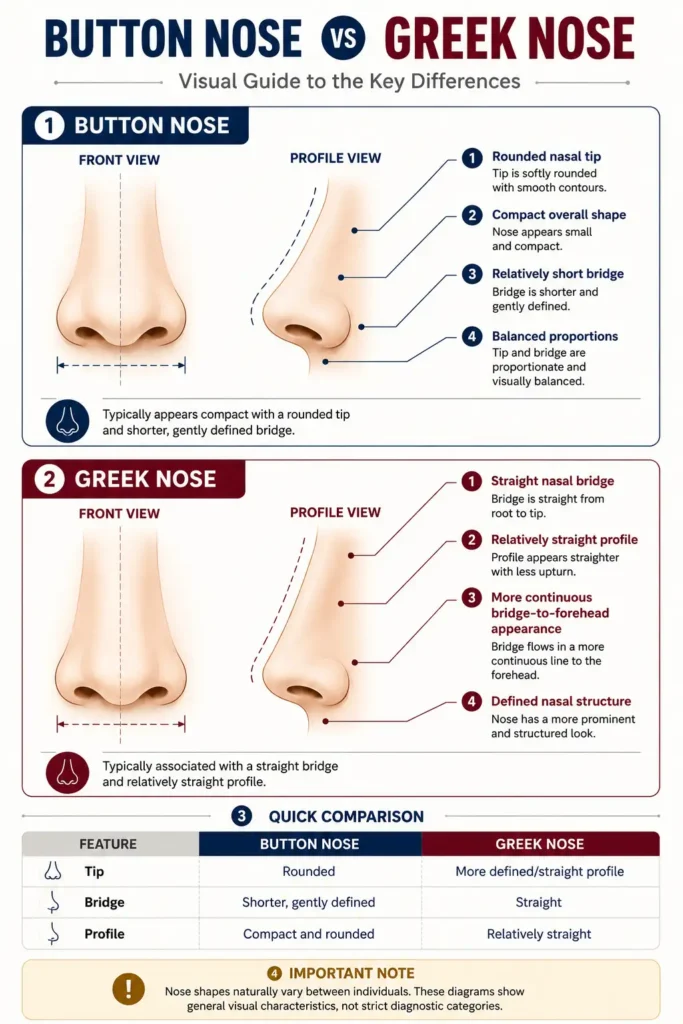
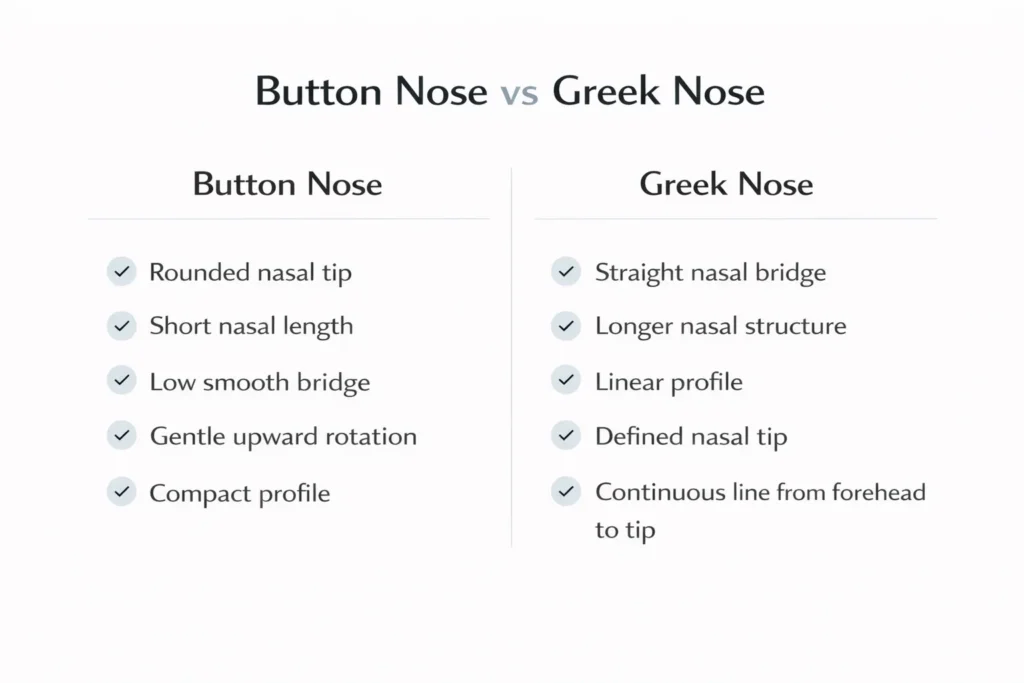
Bridge shape is the most immediate point of contrast between these two nose shapes. A button nose carries a smooth, low bridge that curves gently toward a rounded tip. A Greek nose carries a straight bridge that maintains a consistent line from the nasal root to the tip without curving in either direction.
Tip shape differs significantly between the two. A button nose has a rounded, soft tip that rotates gently upward. A Greek nose has a more refined, defined tip that sits at the end of the straight dorsal line. The tip on a Greek nose does not carry upward rotation. It tends to point straight ahead or remain neutral.
Overall nasal length separates these shapes clearly. A button nose is compact and short. A Greek nose is longer, with a greater vertical distance between the nasal root and the tip. This length contributes to the more prominent profile presence of the Greek nose.
Projection from the face also differs. A button nose sits close to the face with moderate projection. A Greek nose typically projects more due to its longer structure. The additional length and straighter dorsal line give the Greek nose a more prominent side profile than a button nose carries.
Profile silhouette is perhaps the clearest structural difference of all. A button nose creates a soft, rounded outline in profile. A Greek nose creates a straight, continuous line. These two silhouettes look entirely different when viewed from the side, even if the two noses appear somewhat similar from the front.
Side Profile Comparison
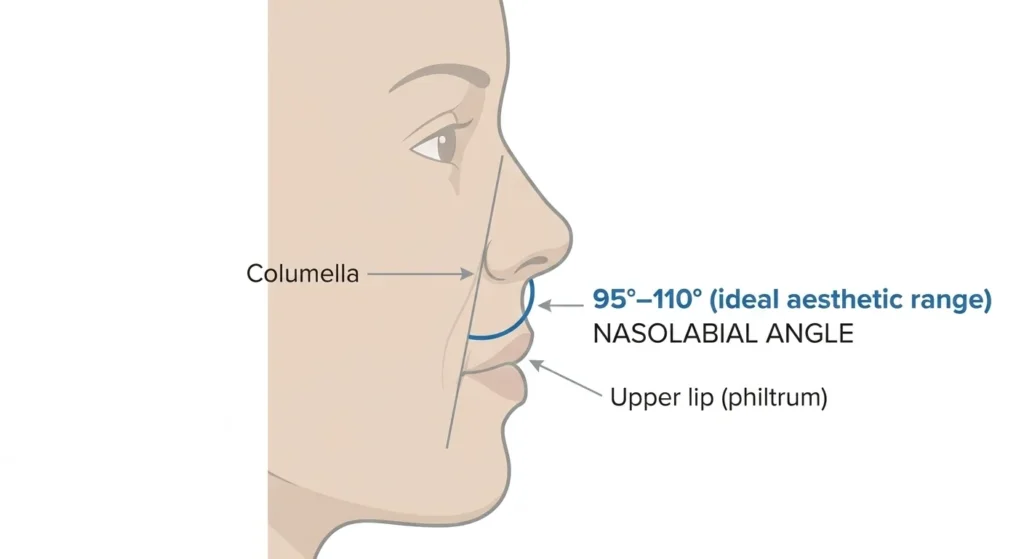
The profile view reveals the structural differences between these two shapes most clearly. A button nose in profile appears short and compact. The bridge follows a low, smooth path. The tip curves gently upward at the end, giving the nose a soft, lifted appearance. The overall silhouette is rounded and close to the face.
A Greek nose in profile looks entirely different. The bridge runs straight from the nasal root toward the tip without curving or arching. The nose appears longer and more vertical. The tip sits at the end of this straight line without rotating significantly upward or downward. The overall silhouette is clean, linear, and more prominent.
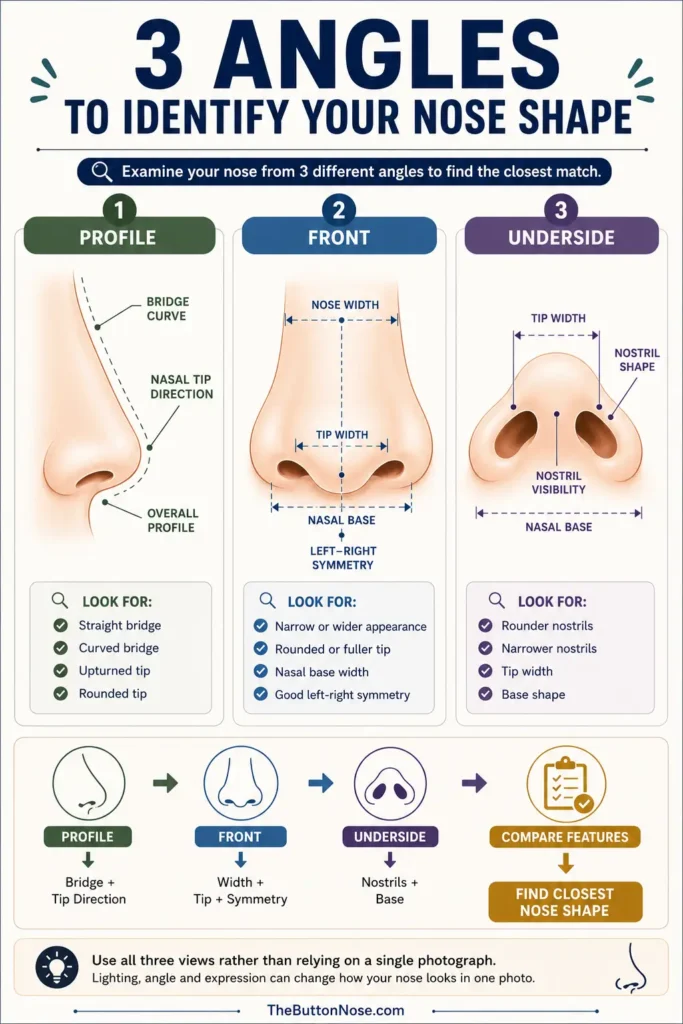
These differences become most noticeable in a true side-profile photograph taken in natural light. Camera angle and lighting can soften or exaggerate features in other views. The profile is the most reliable angle for distinguishing these two shapes from each other. A rounded, upturned profile confirms a button nose. A straight, uninterrupted dorsal line confirms a Greek nose.
Why These Nose Shapes Develop
Both nose shapes develop through inherited biological factors. Genetics determine the nasal bone length, cartilage structure, and soft tissue distribution that give each nose its shape. These features are passed down from both parents and frequently combine in ways that produce a shape distinct from either parent.
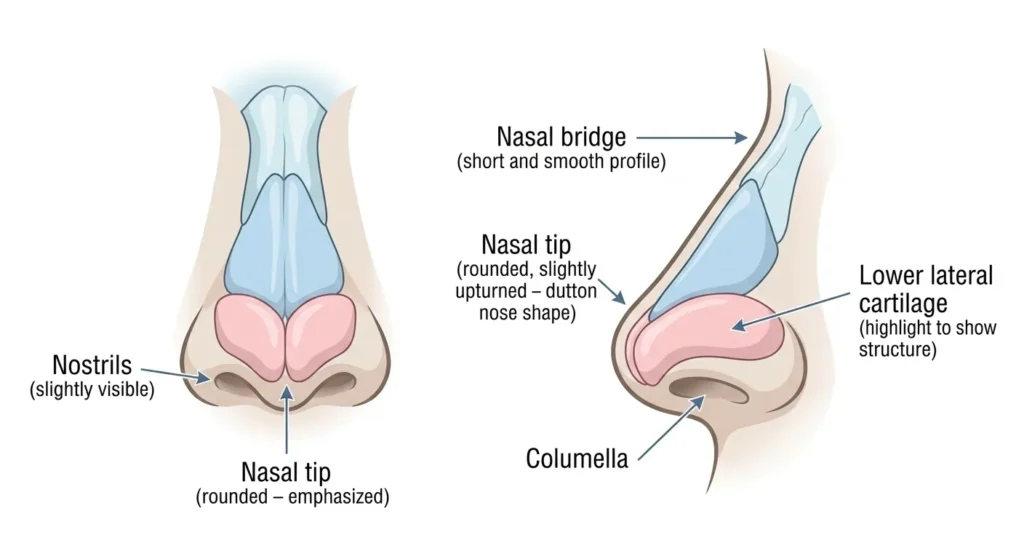
A shorter nasal bone contributes to the compact length of a button nose. The lower lateral cartilages on a button nose are set at an upward angle, producing the characteristic rounded, upturned tip. On a Greek nose, the nasal bones develop at a length and angle that creates the straight dorsal line. The cartilage structure supports this linear path from root to tip without introducing significant curvature.
Facial growth patterns during development further shape how these features align with the surrounding facial skeleton. The relationship between nasal bone development, cartilage positioning, and soft tissue growth determines the final shape that appears on a fully developed face. These processes are governed by biology and vary naturally across individuals and populations.
Can a Button Nose and Greek Nose Look Similar
Some noses show characteristics that fall between these two shape categories. A nose may carry a relatively straight bridge while still maintaining a slightly rounded tip. In this case, the nose shares partial traits with both the button nose and the Greek nose without fitting cleanly into either category.
Lighting and camera angle also affect perception. A button nose photographed from a straight-on angle may appear to have a straighter bridge than it does in profile. A Greek nose photographed at a slight downward angle may appear more compact than its true length suggests. These perceptual effects do not change the underlying structure but can complicate identification from photographs alone.
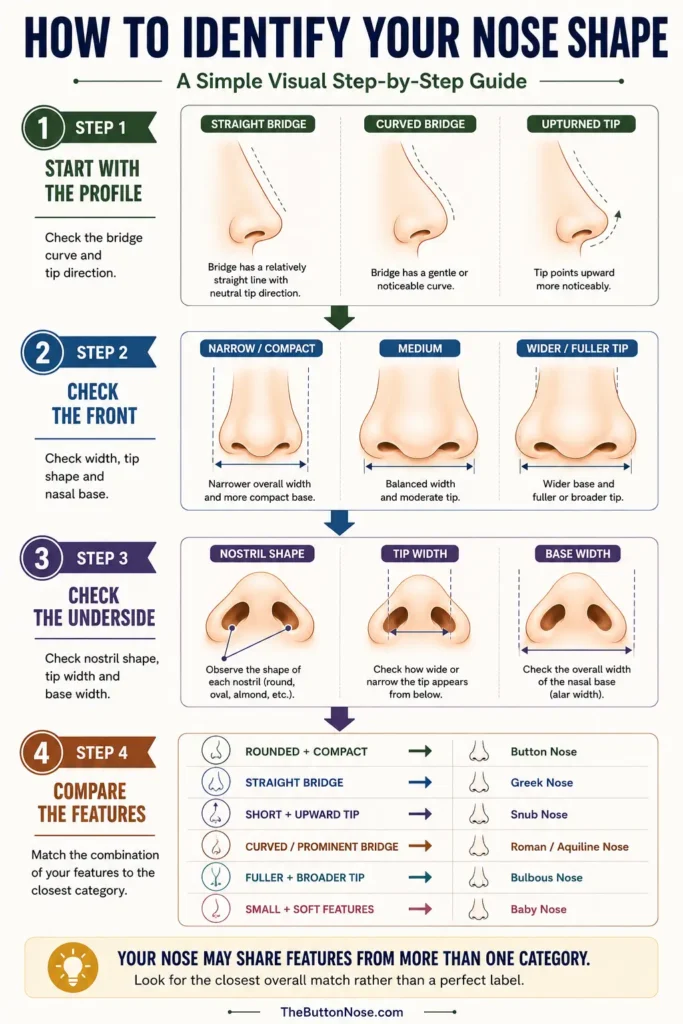
Nose shapes exist on a continuous spectrum of variation. Many individuals have noses that blend traits from multiple categories. Shape classification works best as a general reference framework rather than a rigid system. The types of noses overview provides helpful context for understanding how all nose shapes relate and overlap across this spectrum.
Key Takeaway
A button nose and a Greek nose are structurally distinct shapes that differ in bridge shape, tip direction, nasal length, and profile silhouette. A button nose is compact with a rounded tip and a gentle upward rotation. A Greek nose is longer with a straight bridge and a clean, linear profile. Both shapes are normal anatomical variations that develop through genetics and biological growth.
For a broader comparison of how the button nose differs from other nose shapes, the button nose vs other nose shapes page covers those comparisons in full detail. For a deeper look at all natural button nose variations, the button nose types guide breaks down each subtype clearly.