Quick Summary
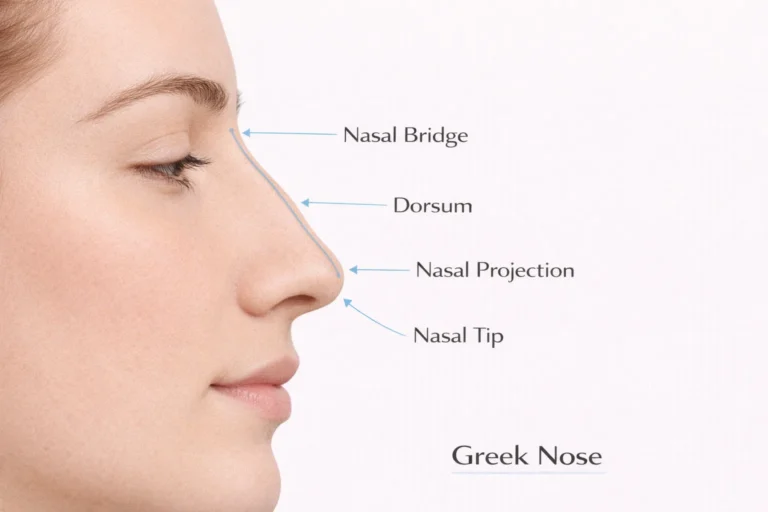
A Roman nose is one of the more immediately recognizable nose shapes. It features a prominent nasal bridge that curves outward along the dorsal line, creating a distinct convex arch in profile. This arch gives the nose a bold, defined silhouette when viewed from the side. The shape develops naturally through genetics and varies considerably between individuals. Some Roman noses show a subtle curve. Others show a more pronounced arch that is visible even from a slight angle. For a broader look at how all nose shapes compare and differ, the types of noses overview covers every major shape category in one place.
What Is a Roman Nose
A Roman nose is defined by a prominent nasal bridge that follows a convex path from the nasal root toward the tip. The bridge rises from the face and then curves outward before descending to the tip. This outward curve is the central structural feature that separates the Roman nose from straighter or flatter bridge shapes.
The nasal profile on a Roman nose tends to be longer than average. The nose projects noticeably from the face, creating a strong presence in the side view. The tip may point straight ahead or angle slightly downward. It does not carry the upward rotation seen on compact shapes like the button nose. The overall structure reads as bold and defined rather than soft or rounded.
Bridge prominence varies between individuals. Some Roman noses show a moderate convex curve that is most visible in profile. Others carry a more pronounced arch that is apparent even from a frontal angle. The degree of curvature does not change the core shape classification. Both mild and strong versions share the same defining structural pattern.
Roman Nose Side Profile Characteristics
The side profile is where the Roman nose is most clearly identifiable. The bridge rises from the nasal root and curves outward along the dorsal line. This creates a visible convex ridge that stands out from the facial plane. The nose then continues downward from the peak of this curve toward the tip.
The forward projection on a Roman nose tends to be significant. The nose extends further from the face than compact or flat nose shapes. This projection, combined with the outward bridge curve, creates a strong and defined profile silhouette. The overall side view reads as angular and structured rather than soft or compact.
The tip position in profile varies. On some Roman noses the tip points straight ahead at the end of the curved bridge. On others the tip angles slightly downward, which adds to the overall downward flow of the profile. The bridge curve is always the dominant feature in the side view regardless of where the tip points.
Front View Appearance
From the front, the Roman nose looks different from how it appears in profile. The convex bridge curve is less visible from a straight-on angle. The nose appears defined and structured, with a clear bridge line running from the nasal root to the tip. The bridge may appear slightly raised at the center, depending on how pronounced the curve is.
Tip shape from the front varies between individuals. Some Roman noses show a more angular or defined tip. Others show a softer, more rounded tip despite carrying a prominent bridge. Nostril width tends to be moderate on most Roman noses, though this varies with the overall facial structure and genetic background of the individual.
The front view can make a Roman nose appear more similar to other nose shapes than the profile view suggests. Two noses that look very different in profile may appear relatively similar from the front. The profile remains the most reliable angle for identifying the Roman nose shape accurately.
Why Roman Nose Shapes Develop
Roman nose shapes develop through inherited biological factors. Genetics determine nasal bone length, cartilage structure, and how the bridge develops during facial growth. These traits are passed down from both parents and combine in ways that produce a range of outcomes across individuals.
The nasal bones are the primary structural factor behind the convex bridge curve. When the nasal bones develop with a convex orientation, the bridge follows that outward curve as the nose grows. A longer nasal bone also contributes to the extended profile length seen on most Roman noses. The underlying bone structure sets the foundation for the shape before cartilage and soft tissue add their final influence.
Cartilage structure plays a supporting role. The upper lateral cartilages follow the path set by the nasal bones. On a Roman nose, these cartilages continue the outward curve of the bridge before the lower nose transitions toward the tip. Facial growth patterns during development further shape how all these features align with the surrounding facial skeleton.
Roman Nose vs Button Nose
A Roman nose and a button nose sit at opposite ends of several structural dimensions. A Roman nose carries a longer bridge with an outward convex curve and significant forward projection. A button nose carries a shorter, smoother bridge with a rounded upturned tip and compact overall length. The profile silhouettes of the two shapes look entirely different from the side.
From the front, both shapes show a defined bridge and a central tip, but the proportions differ clearly. The Roman nose projects more and shows a more angular structure. The button nose reads as softer, rounder, and more compact. For a detailed side-by-side breakdown of how these two shapes differ across all structural points, the button nose vs Roman nose comparison page covers each difference in full.
Both shapes are natural anatomical variations. Neither represents a standard or baseline. They simply reflect different inherited combinations of nasal bone length, cartilage angle, and soft tissue distribution.
Natural Variation in Roman Noses
Roman noses vary considerably between individuals. The degree of bridge curvature is the most variable trait. Some people have a mild convex curve that is subtle in profile and barely noticeable from the front. Others have a more pronounced arch that creates a strong and immediately recognizable profile silhouette.
Tip shape also varies within the Roman nose category. Some Roman noses end with a defined, angular tip. Others show a softer or more rounded tip despite carrying a prominent bridge. The bridge curve remains the defining feature regardless of how the tip presents.
Overall nasal length varies as well. Some Roman noses are moderately long with a clear convex bridge. Others are longer with a more extended profile. Both fall within the same shape category because the defining trait is the bridge curvature rather than absolute length.
These variations all reflect normal individual differences in how the nasal bones and cartilages develop. The Roman nose label describes a structural pattern rather than a single fixed appearance.
Key Takeaway
A Roman nose is characterized by a prominent or slightly curved nasal bridge and a defined profile with noticeable forward projection. The convex bridge curve is the central identifying feature and becomes most visible in the side view. The shape develops through genetics and varies naturally across individuals in terms of bridge curvature, tip shape, and overall length.
For a broader look at how the Roman nose fits within the full range of human nose shapes, the types of noses overview covers all major shape categories in one place. For a direct structural comparison between the Roman nose and the button nose, the button nose vs Roman nose page explains each difference clearly.