
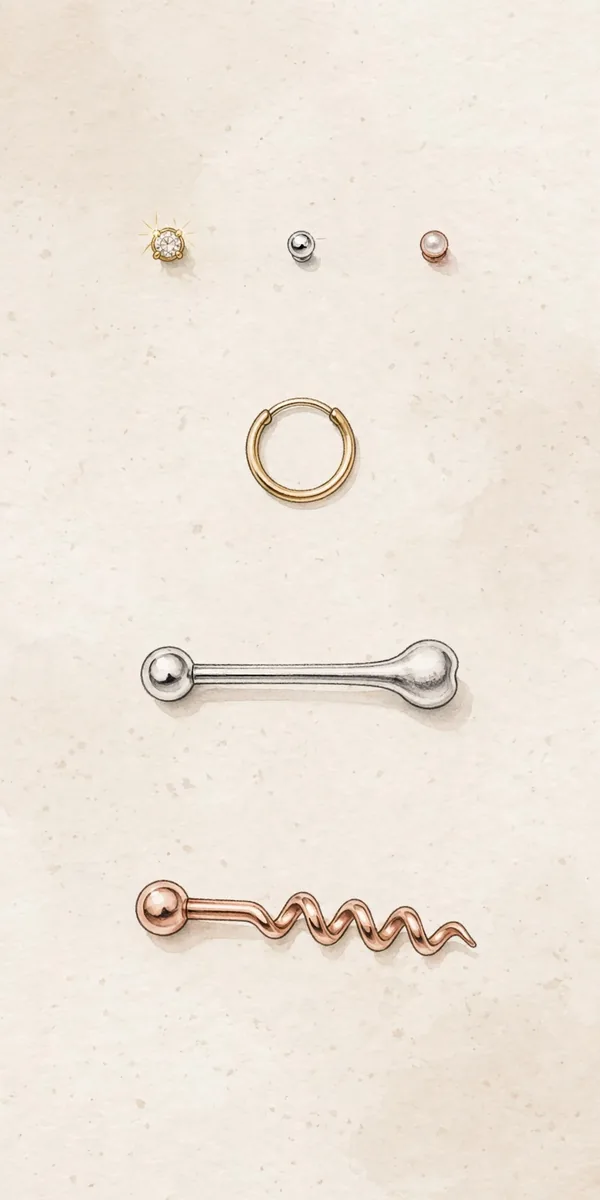
Nose piercing jewelry comes in five main types: studs (including L-shape, screw, bone, and flat-back styles), hoops and rings, nose bones, and corkscrews. For a new piercing, implant-grade titanium flat-back studs are the safest choice; hoops and decorative pieces should wait until healing is complete.
Choosing the right piece comes down to three things: the type that suits your piercing, a safe material your skin tolerates, and the correct size so it neither sinks in nor snags. This guide covers all three.
Just starting out? Our complete nose piercing guide walks through the whole process from appointment to healing.
Types of Nose Piercing Jewelry
Studs
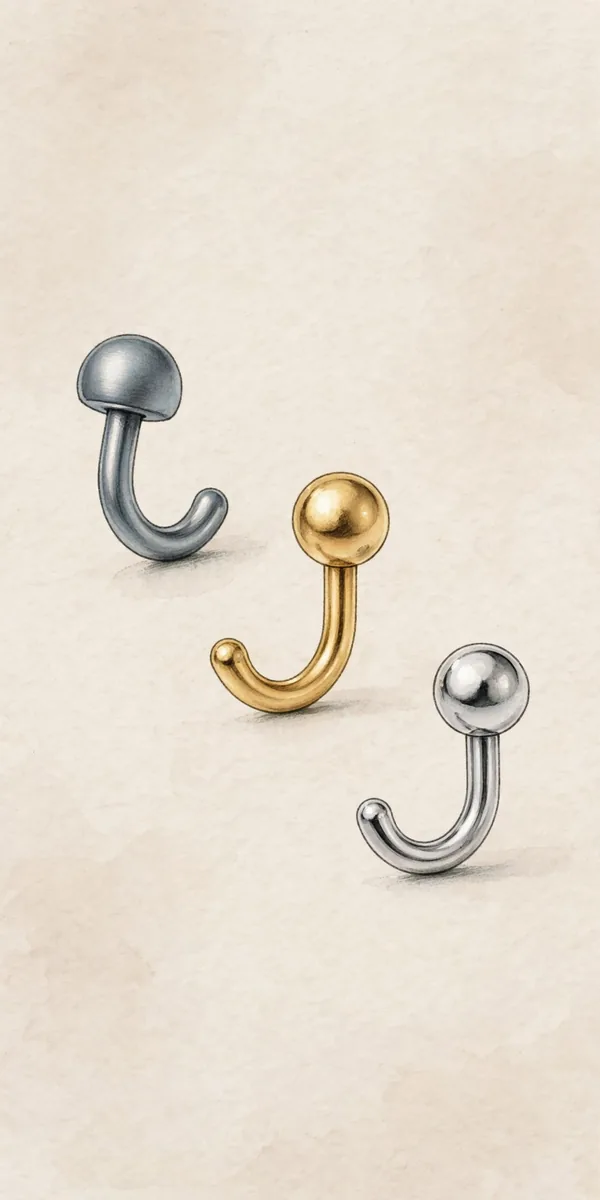
The classic starter jewelry. Nostril screws have a curved tail that holds them in place; L-shape studs bend at a right angle; nose bones have a small bulb on the end; and flat-back labrets sit flush inside the nostril with a removable decorative top. For healing piercings, flat-back labrets cause the least irritation because nothing dangles or rotates.
Hoops and Rings
Seamless rings, segment rings, and captive bead rings give the iconic hoop look. They move more than studs, which is why piercers recommend waiting until the piercing is fully healed before switching. For a deep dive into ring styles, materials, and sizing, see our nose rings guide.
Nose Bones and Corkscrews
Nose bones are straight posts with a tiny bulb — easy to insert, but the bulb can irritate a healing piercing on the way in or out. Corkscrews (nostril screws) curl inside the nostril and stay put well, making them a popular everyday choice once healed.
Best Materials for Nose Piercing Jewelry
Material matters more than style for comfort and safety:
- Implant-grade titanium (ASTM F-136) — the gold standard for new piercings. Lightweight, nickel-free, and biocompatible.
- Niobium — another safe, nickel-free option piercers trust.
- 14k+ nickel-free gold — fine once healed; avoid gold-plated mystery metals in fresh piercings.
- Surgical steel (ASTM F-138) — only specific grades are proven safe; the generic label alone means little.
Avoid cheap nickel-heavy jewelry in healing piercings — metal allergies mimic infection symptoms and cause endless irritation.
How to Choose the Right Size
Two measurements matter: gauge (thickness) and diameter/length (how the piece fits your nostril). Most nostril piercings start at 18 gauge, with the post length matched to your tissue so the top sits flat without sinking. Too short causes embedding; too long causes snagging. Our nose piercing guide covers sizing basics until the dedicated gauge guide publishes.
When to Switch Jewelry Styles
Keep your starter stud in for the full healing period — at least four to six months for a nostril. Switching early is the top cause of irritation bumps. When you do switch, have your piercer handle the first change so the fit and metal are right, and never force a piece that resists.
Clear Retainers for Work and School
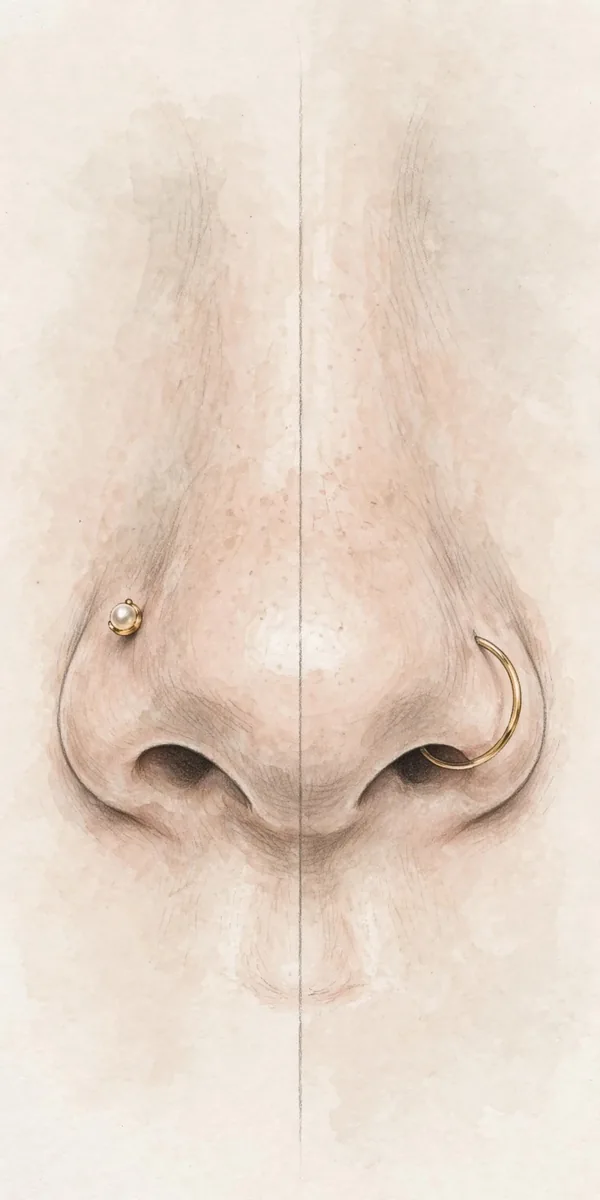
Need to hide a piercing? Clear glass or bioplast retainers keep the hole open while staying nearly invisible. They are for healed piercings or short-term cover — not for fresh ones, where proper jewelry supports healing.
Nose Piercing Jewelry FAQs
What jewelry is best for a new nose piercing?
A flat-back labret stud in implant-grade titanium. It sits flush, snags less, and irritates healing tissue the least.
When can I wear a hoop in my nose piercing?
After the piercing is fully healed — typically six months for a nostril. Hoops move and can drag bacteria into an unhealed channel.
Is gold safe for nose piercings?
Solid 14k or higher nickel-free gold is safe once healed. For fresh piercings, titanium remains the safest choice.
Why does my nose piercing jewelry irritate my skin?
Usually the metal (nickel allergy), the fit (wrong length or gauge), or changing styles too early. Switch to implant-grade titanium in the correct size first.
Keep exploring: our nose piercing guide hub links every article in this cluster.