
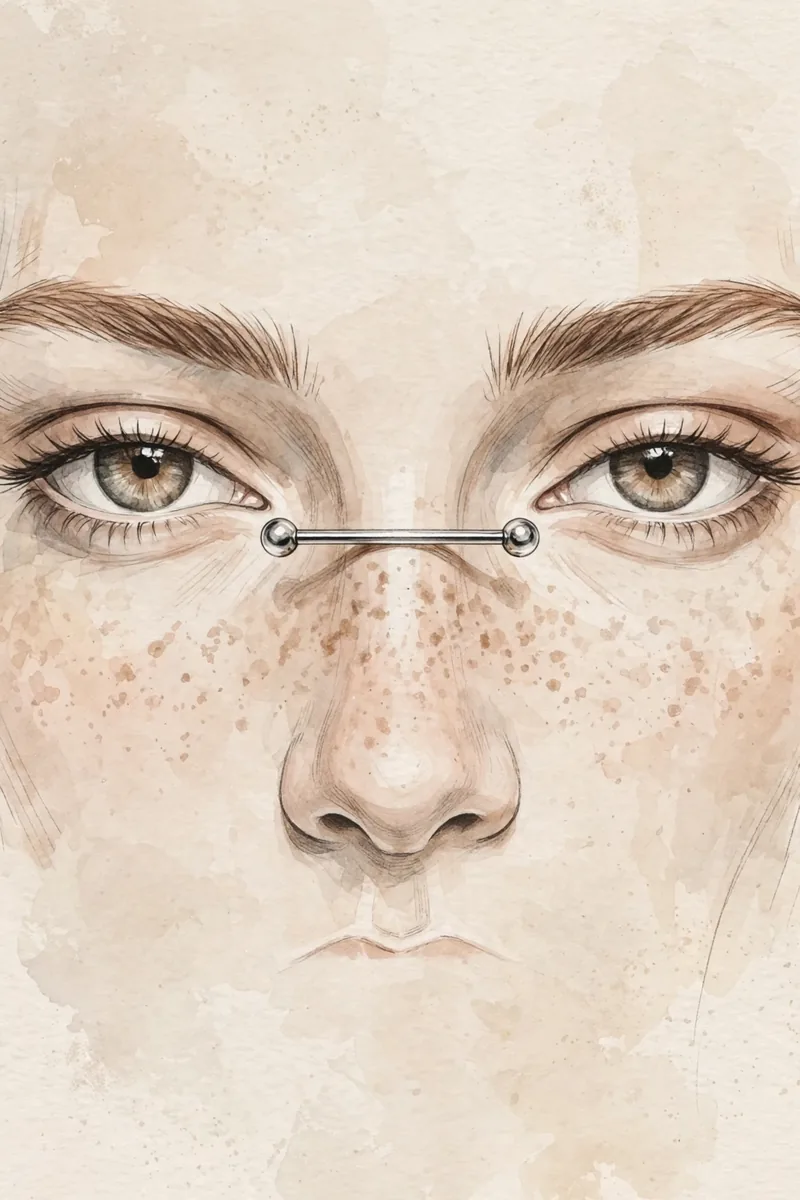
A nose bridge piercing is a horizontal piercing across the bridge of the nose, between the eyes. Unlike a nostril piercing, it does not go through cartilage — it passes through the skin at the top of the nose bridge, which makes it a surface piercing with its own healing rules and risks.
The honest summary: it hurts more than a nostril piercing, heals in about two to three months, and carries a real risk of migration and rejection because surface piercings grow out over time. Done by an experienced piercer with the right jewelry, it can still last for years.
New to piercings? Start with our complete nose piercing guide.
Where Exactly Does a Bridge Piercing Sit?
The piercing runs horizontally through the loose skin between the eyes, just below the brow line. Placement depends on your anatomy — the piercer needs enough pinchable skin to support the barbell. People with a very flat or low bridge may not have enough tissue, and a good piercer will tell you so rather than force it.
Does a Nose Bridge Piercing Hurt?
Yes — more than a standard nostril piercing. The bridge area is sensitive, close to the eyes, and the piercing passes through a wider section of tissue. Most people describe it as a sharp, intense pinch with watering eyes, though the actual piercing takes only seconds. The throbbing afterward usually settles within a day or two.
How Long Does a Bridge Piercing Take to Heal?
Surface healing takes about two to three months, but the piercing remains vulnerable to migration long after that. Because the body often treats surface piercings as splinters and slowly pushes them out, many bridge piercings eventually migrate or reject within a few years — even well-done ones. Choosing an experienced piercer and the right jewelry is what separates the ones that last.
Risks: Migration and Rejection
This is the part to understand before booking:
- Migration — the piercing slowly moves from its original spot as the body pushes the jewelry outward. Early signs: the barbell looks longer, the holes look larger, or redness persists between them.
- Rejection — the body fully pushes the jewelry out. If migration is clearly underway, removing the jewelry early leaves far less scarring than waiting for full rejection.
- Scarring — rejected bridge piercings can leave two small visible marks between the eyes, so this piercing deserves extra thought.
A straight or slightly curved barbell in implant-grade titanium, fitted with a little extra length for swelling, gives the piercing its best chance.
Bridge Piercing Aftercare
- Clean twice daily with sterile saline — no alcohol or peroxide.
- Do not touch, twist, or change the jewelry during healing.
- Be careful with glasses and sunglasses resting on the bridge.
- Watch for migration signs (listed above) and consult your piercer early if anything shifts.
- Our nose piercing guide covers general aftercare in more detail.
Best Jewelry for a Bridge Piercing
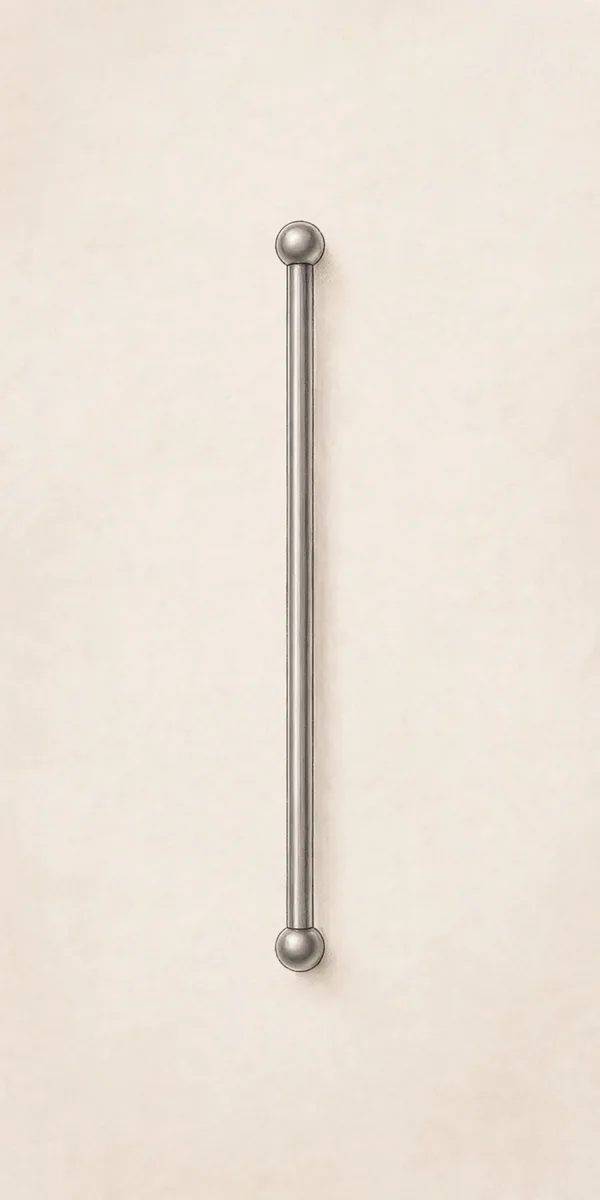
A straight barbell in implant-grade titanium is the standard starter jewelry; some piercers prefer a slight curve to match the bridge contour. Keep the starter bar in for the full healing period. Decorative ends can be added later, but heavy or dangling pieces stress a surface piercing and invite migration.
How Much Does a Bridge Piercing Cost?
Expect $60–$100 plus jewelry in most US studios — more than a nostril piercing because the placement is trickier and the jewelry is specialized. Complex anatomy or premium jewelry pushes it higher.
Nose Bridge Piercing FAQs
How long do bridge piercings last?
It varies widely. Some last many years; others migrate within months. Experienced piercer, correct jewelry, and careful aftercare give the longest lifespan.
Does a bridge piercing leave a scar?
A removed bridge piercing usually leaves two small marks between the eyes. Removing jewelry at the first sign of migration — rather than after full rejection — keeps scarring minimal.
Can anyone get a bridge piercing?
No. You need enough loose skin on the bridge to support the barbell. A reputable piercer will check your anatomy and decline if it is not suitable.
Can I wear glasses with a bridge piercing?
Yes, but carefully — especially while healing. Glasses pressing on fresh piercings cause irritation and can encourage migration. Adjust the fit or switch to contacts during early healing.
Keep exploring: our nose piercing guide hub links every article in this cluster.