
A nose piercing takes two to six months to heal, depending on the type. A standard nostril piercing looks healed in two to four months and fully settles by six; a septum heals a little faster at six to eight weeks on the surface; bridge and double piercings follow the nostril timeline but stay vulnerable to irritation longer.
The number most people need: plan for the longer end of the range. A piercing that looks fine on the outside can still be fragile underneath, and changing jewelry too early restarts the clock.
For the full journey from appointment to healed piercing, see our complete nose piercing guide.
Nose Piercing Healing Time by Type
- Nostril piercing: 2–4 months surface healing, up to 6 months fully settled.
- Septum piercing: 6–8 weeks surface healing, 3–4 months fully settled.
- Bridge piercing: 2–3 months surface healing, with ongoing migration risk after.
- Double nose piercing: same as a single nostril per piercing — 2–4 months surface, up to 6 months full.
- High nostril piercing: 3–6 months, slightly longer due to thicker tissue.
These are averages for healthy healing with proper aftercare. Infections, irritation bumps, or low-quality jewelry all extend the timeline.
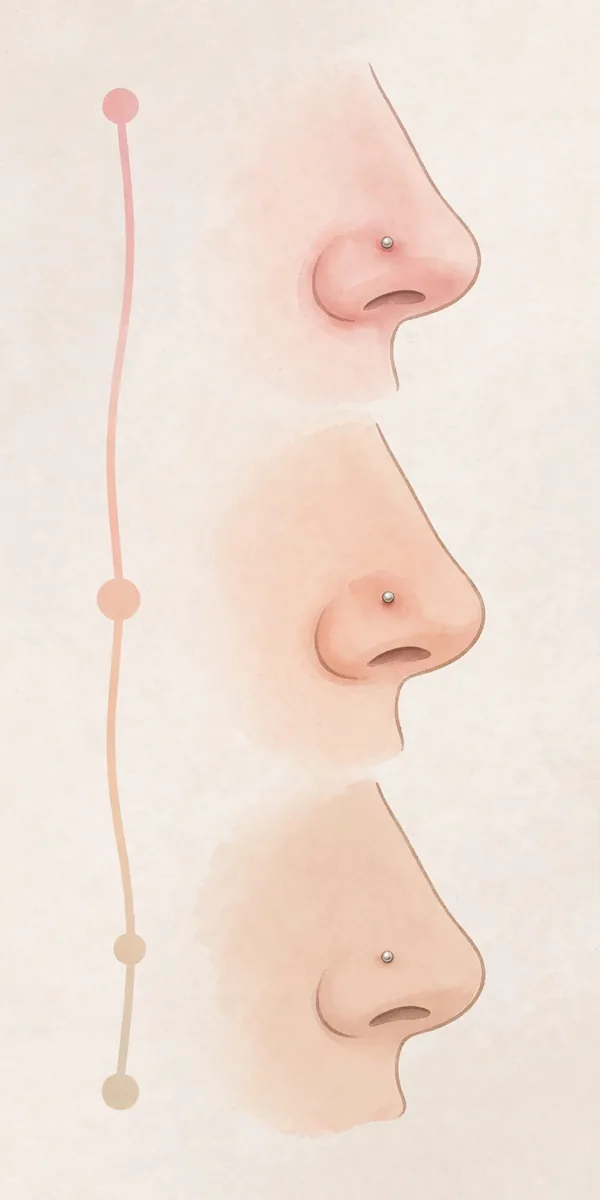
The Stages of Nose Piercing Healing
Stage 1: The First Week (Inflammatory)
Mild pain, redness, swelling, and clear fluid that dries into a crust. This is your body starting repairs — not infection. Keep cleaning with sterile saline and do not touch the jewelry.
Stage 2: Weeks 2–6 (Proliferative)
The skin builds a protective layer around the jewelry channel. Redness fades, tenderness drops, and the piercing starts to feel ‘normal.’ It is not healed yet — the new tissue is still fragile.
Stage 3: Months 2–6 (Maturation)
The channel strengthens and the piercing stabilizes. This is the stage most people skip mentally, but it matters: jewelry changes, bumps, and infections in this window set healing back to stage one.
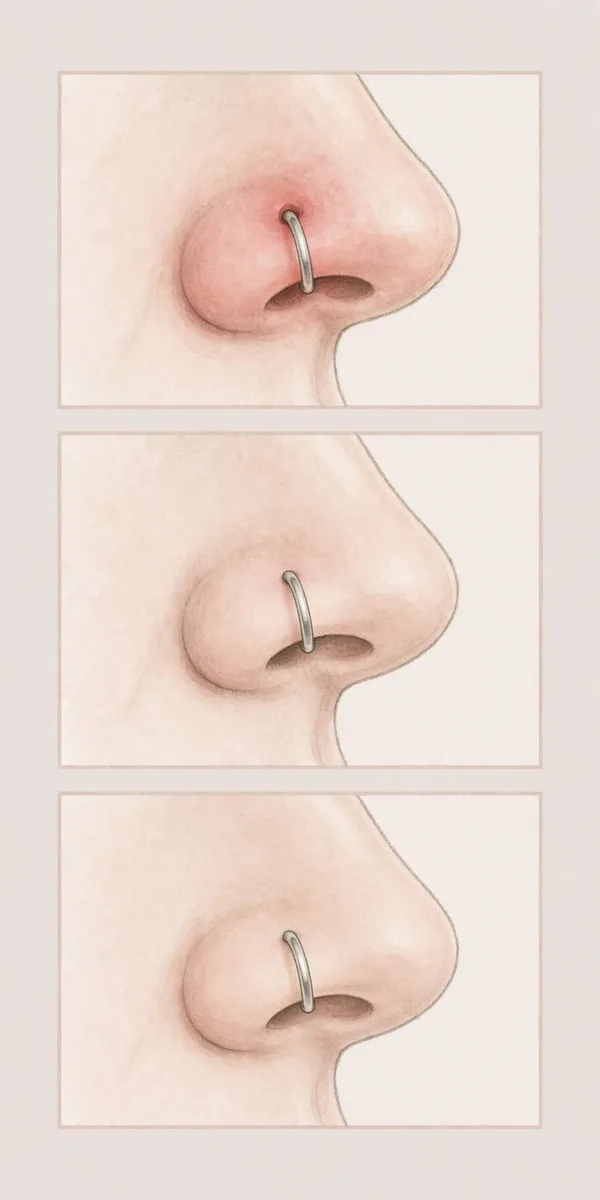
Signs Your Nose Piercing Is Fully Healed
- No redness, swelling, tenderness, or discharge for several weeks.
- The jewelry moves freely without resistance or crust.
- The skin around the hole looks like the surrounding skin.
- You can gently clean around it without any soreness.
If all four are true, you are likely healed — but when in doubt, ask your piercer to confirm before switching jewelry.
What Slows Down Healing?
- Touching or twisting the jewelry.
- Changing jewelry too early — the most common setback.
- Sleeping on the piercing or snagging it on masks and glasses.
- Harsh cleaners like alcohol or hydrogen peroxide.
- Swimming before the piercing has healed.
- Low-quality or nickel-heavy jewelry.
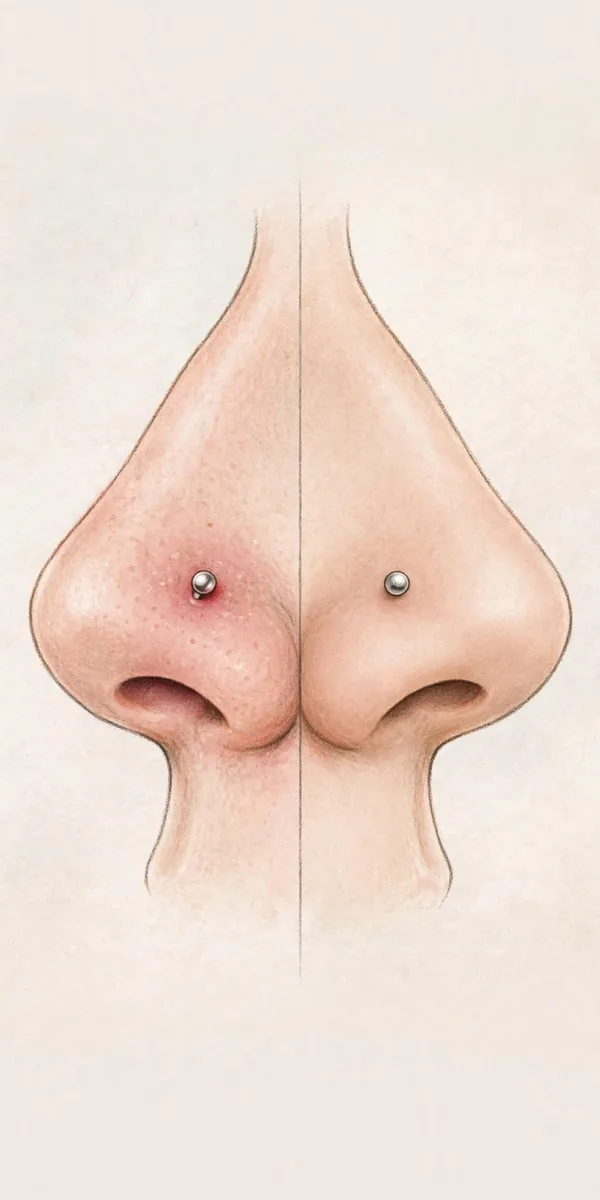
How to Heal a Nose Piercing Faster (Safely)
There is no shortcut past biology, but you can avoid delays: clean with sterile saline twice daily and otherwise leave it alone, sleep on your back, keep hair products and makeup away from the site, eat and sleep well, and do not change jewelry early. Most ‘slow healers’ are simply piercings that got disturbed.
Nose Piercing Healing FAQs
Can a nose piercing heal in a month?
No — not fully. It may look calm after a few weeks, but the tissue underneath needs months. Treat the one-month mark as ‘doing well,’ not ‘done.’
Why is my nose piercing still red after two months?
Lingering redness at two months is common and usually fine if pain and swelling are gone. Persistent redness with pain, swelling, or discharge deserves a piercer’s or doctor’s look.
Does a septum heal faster than a nostril?
Yes, typically — the septum’s thin tissue heals faster on the surface (six to eight weeks), though full settling still takes a few months.
When can I change my nose piercing jewelry?
After full healing — four to six months minimum for a nostril. Our nose piercing guide covers the first jewelry change in detail.
Keep exploring: our nose piercing guide hub links every article in this cluster.