
Button Nose Anatomy: The Cartilage and Bone Structure Behind the Shape
Visible shape reflects underlying structure

Quick Summary
The anatomy of a button nose explains why it appears compact and rounded. While the external shape is easy to recognize, the internal framework involves a complex interaction of bone, cartilage, and soft tissue. Understanding this structure helps separate visual appearance from biological function.
A button nose is defined by a short nasal bridge and a rounded tip created by the Lower Lateral Cartilages (the two flexible plates at the end of the nose). Anatomically, it often features a high degree of tip rotation (an upward tilt) and minimal projection (it stays close to the face). These features are supported by soft tissue that smooths the transitions between the bone and cartilage sections.
| Anatomical Feature | Component Involved | Impact on Shape |
| Upper Bridge | Nasal Bones | Determines profile height |
| Nasal Tip | Alar (Lower Lateral) Cartilage | Creates rounded “button” look |
| Profile Angle | Septum & Rotation | Determines the “upturned” tilt |
| Surface Detail | Dermal Soft Tissue | Smooths or defines edges |
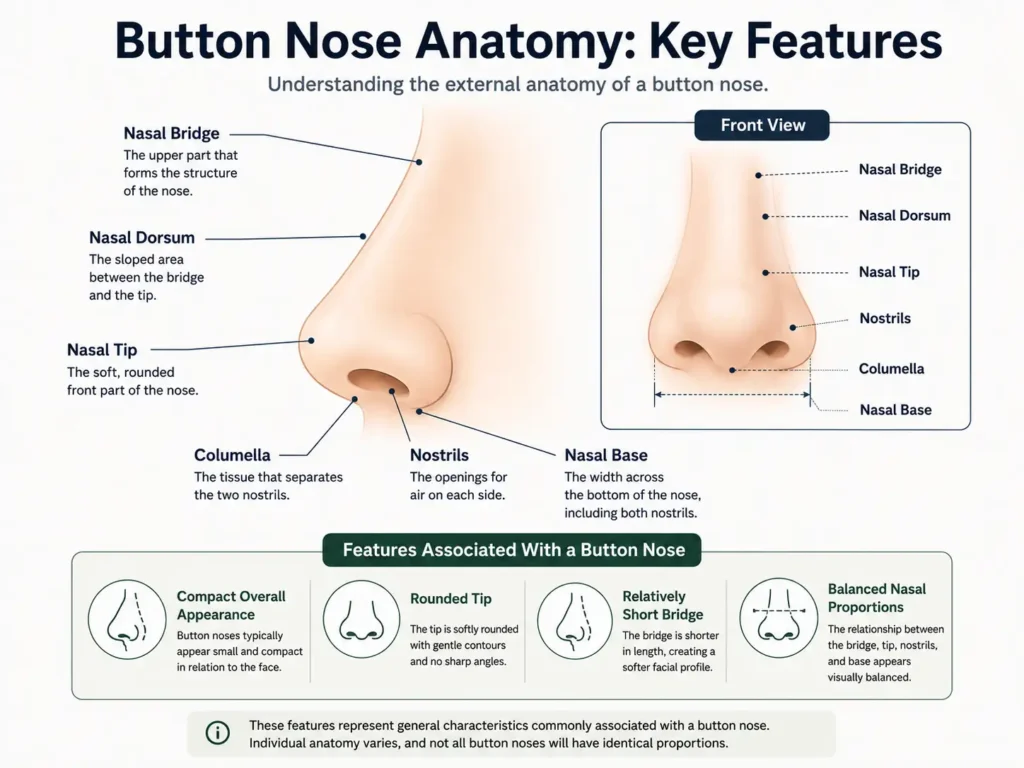
Basic Nose Anatomy Overview
The nose consists of bone, cartilage, soft tissue, and skin working together. The upper portion contains bone that connects to the skull. The lower portion relies on cartilage for shape and flexibility. Soft tissue and skin cover these structures and influence the external appearance.
Nasal structure varies between individuals due to genetics and development. The framework determines how the nose appears from the outside. Cartilage shapes the tip and lower areas. Bone supports the upper bridge. Together, these parts form the visible nose.
This basic framework helps explain why noses look different. Small changes in cartilage position can alter shape. Variations in bone structure also affect appearance. Soft tissue thickness influences how much detail shows through the skin.
Blood vessels and nerves run throughout the nose. They support tissue health and sensation. Mucous membranes line the interior passages. These elements support normal nasal function. The external shape reflects the structure beneath the skin.
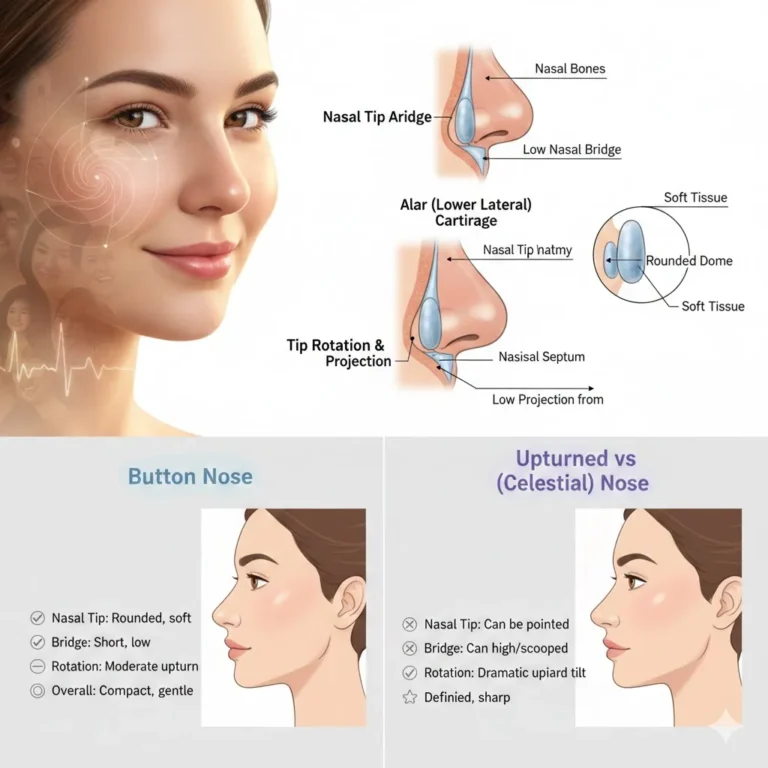
The Framework: Bone and Cartilage
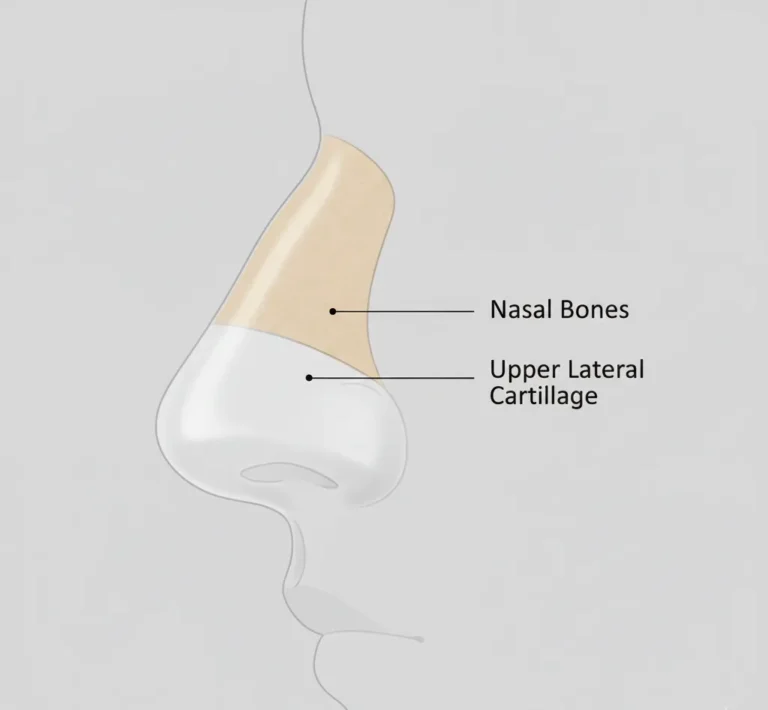
The nose consists of a rigid upper frame and a flexible lower frame. The upper portion contains the nasal bones that connect directly to the skull. In a button nose, these bones are typically shorter or sit lower, which creates a gentle, low-profile bridge.
Below the bone, the Upper Lateral Cartilages (the middle section of the nose) continue the bridge toward the tip. In button-shaped noses, the transition between the bone and this cartilage is exceptionally smooth. This lack of a “hump” or sharp angle is what gives the bridge its characteristic soft appearance.
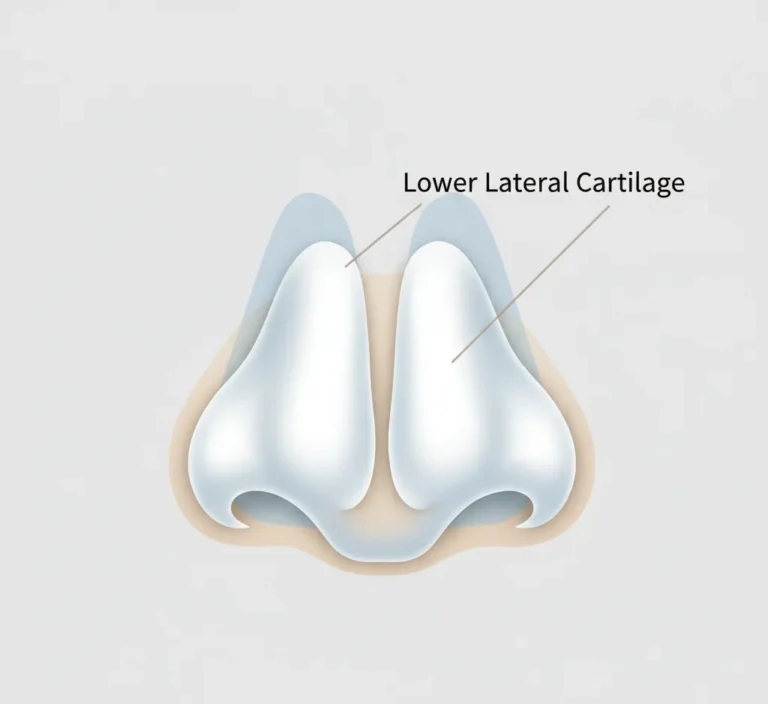
Nasal Tip Anatomy and the “Alar” Cartilage
The most defining feature of this nose type is the Lower Lateral Cartilage (also known as the Alar Cartilage). This paired structure mirrors itself on both sides of the nose to form the tip and the nostril rims.
In a button nose, these Alar cartilages are curved and positioned closely together. Rather than forming sharp points, they create a rounded “dome.” The thickness of the soft tissue (the skin and padding) covering these domes adds fullness, hiding the cartilage edges and creating the soft, circular end that many people recognize.
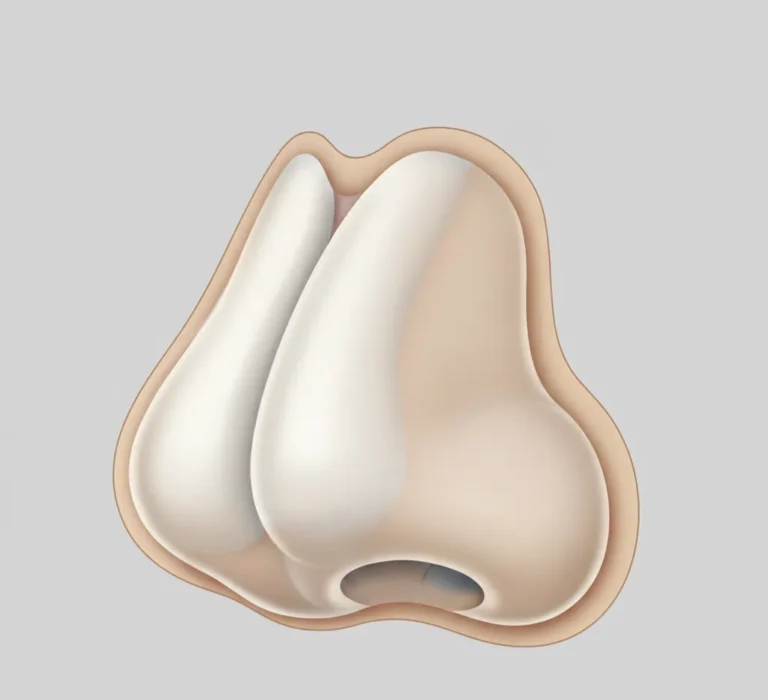
Nasal Bridge Structure
The nasal bridge begins with bone at the top of the nose. Two nasal bones extend downward from the skull. They form the firm upper portion of the bridge. Below this area, cartilage continues the structure.
Upper lateral cartilages connect to the nasal bones. They extend downward to meet the lower cartilages. These parts form the middle section of the nose. Their size and angle affect bridge height and width.
A softer bridge appearance often comes from less prominent nasal bones. Lower bone height creates a gentler profile. The transition from bone to cartilage remains smooth. Bridge width also influences appearance.
Soft tissue and skin cover the bridge framework. Thicker tissue can soften the underlying shape. Thinner skin allows more detail to show. The combination of structure and tissue creates the final look.
Structural Characteristics of a Button Nose
Several anatomical features combine to create this nose shape. Cartilage arrangement plays a major role. Bone structure contributes to support. Soft tissue distribution influences how smooth the surface appears.
Understanding Tip Rotation and Projection
Two technical terms are essential for understanding how a nose looks from the side: Rotation and Projection.
- Tip Rotation: This describes the upward angle of the nose. A button nose usually has high rotation, meaning the tip points slightly toward the forehead rather than straight ahead. This is caused by the angle of the lower lateral cartilages and the support of the nasal septum (the wall inside your nose).
- Tip Projection: This measures how far the nose extends away from the face. Button noses typically have “low projection.” The nasal tip stays closer to the facial plane, contributing to a compact and petite profile.
Soft Tissue Thickness
Skin and soft tissue cover all nasal structures. Thickness varies between people and across different areas. Thicker tissue can soften the outline of cartilage. Thinner tissue allows more definition to show.
The nasal tip often has thicker soft tissue. This tissue includes glands and connective layers. It adds fullness to the tip. Thickness affects how rounded the tip appears.
In this nose shape, soft tissue smooths the cartilage framework. Edges appear less defined. The surface looks curved rather than angular. This contributes to the gentle overall appearance.
Skin thickness also affects how the nose responds to changes. Thicker skin maintains shape more consistently. It hides subtle structural detail. This can enhance the smooth quality people observe.
Internal Anatomy & Breathing Role
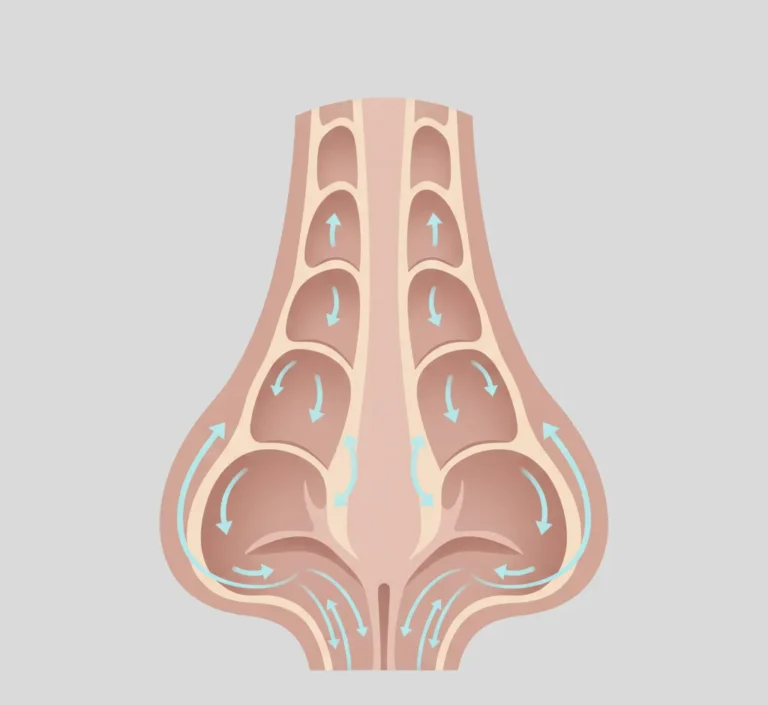
The internal structures of the nose support breathing and air filtration regardless of the external shape. Air passes through the nasal valve—the narrowest part of the internal airway—before reaching the lungs.
The Nasal Septum acts as the central wall dividing the nose into two passages. While the external shape of a button nose is small, the internal passages are usually perfectly sized for healthy airflow. Deep inside, the Turbinates (small structures covered in tissue that look like shelves) humidify and warm the air. These biological functions remain consistent across all nose shapes, ensuring that a “button” shape is as healthy and functional as it is aesthetic.
Nasal Septum
The nasal septum divides the nose into two passages. It runs down the center from front to back. Cartilage forms the front portion. Bone supports the back section.
The septum connects to the tip structures. This connection helps support tip position. Septum shape varies between individuals. Many people have slight natural deviation.
In this nose shape, the septum supports tip projection. Its cartilage allows some flexibility. The bony portion remains fixed. External appearance does not determine septum position.
A straight septum allows balanced airflow. Deviations may affect airflow patterns. Septum position and external shape can vary independently.
Nasal Valve
The nasal valve is the narrowest part of the airway. It sits near the front of the nose. Both internal and external areas form this region.
Cartilage position influences valve width. The angle between septum and side cartilage shapes the internal valve. The nostril opening forms the external valve. These areas guide airflow.
Most people maintain adequate valve space. The valve opens during inhalation. It narrows slightly during exhalation. This movement helps regulate airflow.
External nose shape does not predict valve function. Internal structure plays a larger role. People with many nose shapes breathe comfortably.
Turbinates’
Turbinates project from the side walls inside the nose. Three turbinates sit on each side. They consist of bone covered by specialized tissue.
These structures increase surface area inside the nose. This helps warm and humidify air. They also help trap particles.
Turbinate size varies naturally. They can swell during allergies or irritation. This swelling may affect breathing comfort.
Turbinate’s function the same way across nose types. Their role remains consistent. External appearance does not change their purpose.