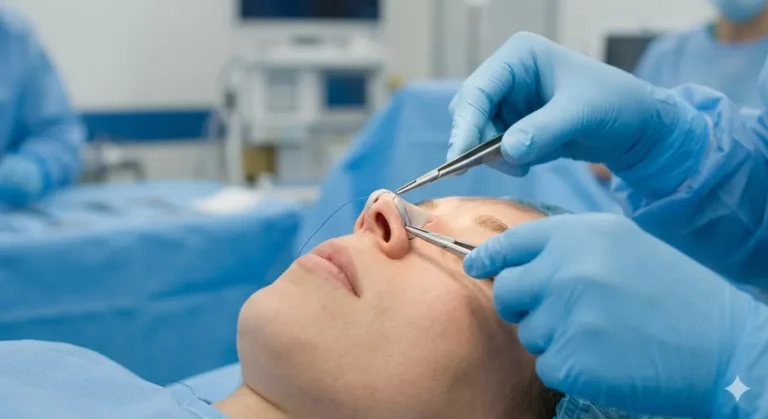

Good candidates for button nose rhinoplasty are adults whose facial growth is complete, who are in good general health, and who have a clear and realistic understanding of what the procedure can achieve for their specific anatomy. Most healthy adults meet the basic criteria. The factors that determine how much visible change is achievable — particularly skin thickness over the nasal tip — are less commonly discussed and matter more for button nose work than for any other type of rhinoplasty.
Why Button Nose Candidacy Is Different From General Rhinoplasty
Button nose rhinoplasty focuses almost entirely on the nasal tip — the lower lateral cartilages, the nasolabial angle, and the soft tissue that sits over the apex. This is a narrower and more precise target than bridge reduction or overall nasal reshaping. The anatomical variable that most determines the outcome of tip work is one that general rhinoplasty candidate guides rarely address in detail: the thickness of the skin covering the nasal tip.
Thicker skin over the nasal tip acts as a mask over the cartilage work beneath it. A surgeon can make precise and well-executed adjustments to the lower lateral cartilages — refining the dome, rotating the tip, narrowing the apex — and the result will still be limited by how much definition can show through the overlying tissue. This is not a complication. It is a predictable anatomical reality. Patients with thicker nasal tip skin consistently see more subtle results than patients with thinner skin over the same structural framework, and healing takes longer. Understanding the full structural anatomy behind this is explained in the button nose anatomy guide.
This does not mean thicker skin disqualifies someone from rhinoplasty. It means the outcome looks different, and the expectation needs to match that reality. Surgeons who specialise in rhinoplasty assess skin thickness during consultation specifically because of this relationship. It is one of the most honest and useful things a consultation can reveal about what is achievable.
The Core Candidacy Criteria for Button Nose Rhinoplasty
Facial Growth Must Be Complete
Rhinoplasty is not performed on a nose that is still developing. For women, facial growth is typically complete by age 17 to 18. For men, development continues slightly later, making 18 to 19 a more common lower threshold. The reason is structural: a nose that has not finished growing will continue to change after surgery, potentially shifting the surgical result as the cartilage and bone develop further. Operating before growth is complete risks creating asymmetries or disproportions that did not exist at the time of surgery. Age alone is not the determining factor — development is. A surgeon will assess growth completion during consultation, sometimes using facial imaging.
General Health and Medical History
Rhinoplasty is performed under general anesthesia in most cases, which places the same baseline health requirements on the patient as any surgical procedure. Uncontrolled diabetes, bleeding disorders, autoimmune conditions, and active infections are factors that affect surgical eligibility. Medications that affect clotting — aspirin, ibuprofen, and certain supplements — are typically stopped two weeks before surgery. Patients with well-managed chronic conditions are often still eligible, but the final assessment is made by the surgical and anesthesia team based on individual history.
Smoking and Its Effect on Candidacy
Smoking is a contraindication for rhinoplasty. Nicotine constricts blood vessels and reduces the oxygen supply to healing tissue. In nasal surgery — where the skin must remain well-perfused while adapting to underlying structural changes — this reduction in blood flow increases the risk of tissue damage, poor wound healing, and infection. Most surgeons require patients to stop smoking for a minimum of four to six weeks before surgery and maintain that abstinence through the recovery period. Nicotine patches and gums carry the same vascular effects as cigarettes and are also typically restricted in the pre-operative period.
Realistic Expectations Tied to Individual Anatomy
Realistic expectations are not a vague soft requirement. They are the difference between surgical satisfaction and dissatisfaction, and the research reflects this clearly. Patients who enter rhinoplasty with a specific structural goal — understood in the context of their own facial anatomy, skin type, and what their cartilage allows — consistently report higher satisfaction than those who bring photos of another person’s nose as the target. A nose that looks like a specific result on a different person’s face may not be anatomically achievable or proportionate on a different facial structure. The goal of button nose rhinoplasty is a nose that looks natural on your face — not a transplanted result from someone else’s.
Psychological Readiness
Surgery motivated by external pressure — a partner’s preference, social comparison, or a specific life event like a school reunion or a breakup — is associated with lower satisfaction outcomes in cosmetic surgery research. Candidacy includes the psychological dimension. Most surgeons will defer or decline to operate on patients who appear to be making the decision reactively or under external influence. This is not gatekeeping. It reflects a consistent pattern in outcomes data: people who make the decision for their own clearly defined reason, with time to consider it, report better results even when the surgical outcome is identical to someone who decided impulsively.
What Can Affect the Visible Result — Beyond Basic Candidacy
Passing the basic candidacy criteria determines whether rhinoplasty can be performed safely. The variables below determine how visible and precise the result will be — and they apply specifically to button nose tip work rather than general rhinoplasty.
Skin Thickness Over the Nasal Tip
Thin skin shows cartilage refinements clearly and heals faster. Thick skin shows refinements more subtly and takes longer to settle — often twelve months or more before the final tip shape is fully apparent. Neither is a disqualifying factor, but each requires a different expectation. Patients with thicker nasal tip skin who expect a sharply defined, highly refined button nose apex may be disappointed regardless of the technical quality of the surgery. Patients who understand that their skin type produces a softer, more gradual result tend to assess the outcome more accurately.
Existing Cartilage Structure
The lower lateral cartilages — the paired cartilages that form the nasal tip — vary in strength, flexibility, and shape between individuals. Stronger, more defined cartilage responds to suture techniques and repositioning with more predictable precision. Weaker or more flexible cartilage is harder to control and may require cartilage grafting to provide the structural foundation for the desired tip shape. A surgeon assesses cartilage structure during consultation through physical examination and, in some cases, imaging. This assessment directly influences which techniques are used and what outcomes are realistic.
Nasal Tip Projection and Starting Angle
The nasolabial angle — the angle between the base of the nose and the upper lip — determines how much rotation is needed to achieve the button nose range of 95 to 110 degrees. A nose with a starting angle of 85 degrees needs more rotation than one starting at 92 degrees. More rotation requires more surgical adjustment, which affects recovery time, swelling duration, and the timeline to final results. A nose already sitting close to the target range may need only minor refinement and will show results sooner.
Who Is Not a Suitable Candidate
Several conditions and circumstances indicate that rhinoplasty is not appropriate at a given time. Active skin conditions affecting the nose — such as severe acne rosacea over the nasal tip — may need to be managed before surgery. Notable weight changes can affect facial proportions and are a reason to wait until weight is stable. A history of body dysmorphic disorder is a recognised contraindication for elective cosmetic surgery across all specialties, because the underlying condition rather than the surgical outcome drives satisfaction. Any surgeon assessing candidacy will screen for these factors as part of the consultation process.
Age at the younger end of the eligible range warrants careful consideration. A seventeen-year-old woman who meets the physical development criteria may still benefit from waiting — not because surgery is unsafe, but because the motivation, expectations, and understanding of permanence that inform good outcomes tend to deepen with time. There is no universal right answer here. It is a conversation between patient, family, and surgeon.
What Happens at a Rhinoplasty Consultation
A rhinoplasty consultation for button nose work typically covers four areas. The surgeon examines the nasal anatomy — tip shape, bridge height, nostril width, skin thickness, cartilage strength — and discusses what is structurally present and what is achievable. The patient’s goals are discussed, and the surgeon explains which procedures address those goals. Imaging or digital simulation may be used to give a visual reference for expected changes. Finally, the surgical plan, costs, recovery timeline, and risks are outlined. Coming prepared with a clear description of the specific change wanted — rather than a photo of another person’s nose — produces the most productive consultation.
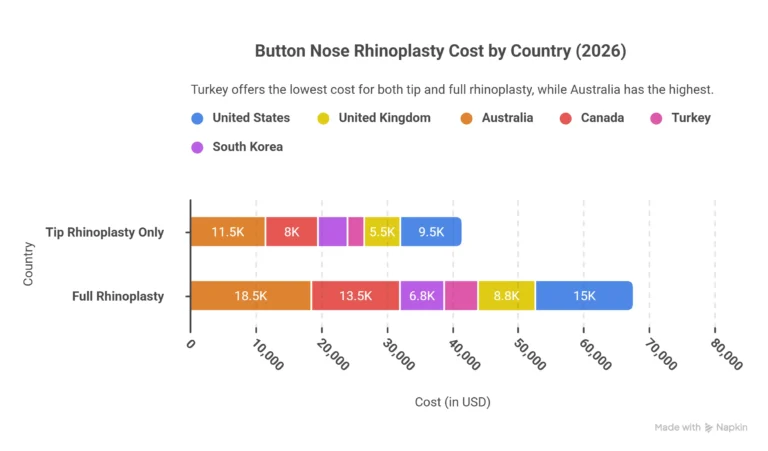
Questions worth asking during consultation include the surgeon’s annual rhinoplasty volume, their specific experience with tip rhinoplasty for button nose profiles, their personal revision rate, and what the full itemised cost will be. The full cost breakdown is covered in the button nose rhinoplasty cost guide. The complete overview of surgical options is in the button nose rhinoplasty pillar page.
When Non-Surgical Options Are Worth Considering First
Non-surgical rhinoplasty using hyaluronic acid filler is an option for people who want to assess the aesthetic effect before committing to permanent surgery. Filler can add volume to the bridge to create a straighter appearance, or fill depressions that make the tip appear unrefined. It cannot reduce size, rotate the nasal tip structurally, or change the nasolabial angle in any lasting way. For patients who are uncertain about surgery or who fall outside the candidacy criteria temporarily — smokers planning to quit, younger patients waiting for growth completion — non-surgical options provide a lower-commitment starting point. The non-surgical button nose options guide covers what is achievable through each approach.
How to Know If You Are Ready
Candidacy for button nose rhinoplasty is not a binary pass or fail. It is a layered assessment of physical eligibility, anatomical expectations, and personal readiness. Most healthy adults over 18 meet the physical criteria. The questions that are harder to answer — whether the expectation matches what anatomy allows, whether the motivation is personal and considered, whether the timing in life is right — are the ones that determine long-term satisfaction more than any surgical variable.
A consultation with a board-certified surgeon who specialises in rhinoplasty is the starting point for answering those questions with real information rather than general guidance. No online resource, including this one, can substitute for that individual assessment. What this guide provides is the foundational understanding to enter that conversation prepared, knowing which questions to ask and which anatomical factors to raise.